
How Catering Business Owners Approach a Commercial Mortgage
Buying the premises your catering business cooks and dispatches from is a defining step, and it turns years of fit-out spend into an asset you own. At Ardent Capital Group we speak with catering operators about this kind of commercial property purchase, and this guide walks through how a lender reads the deal and what moves the number.
Ardent Capital Group is a specialist commercial mortgage brokerage, and moving a catering business from tenant to owner is exactly the kind of purchase we advise on. Our team can help you buy the premises you cook and dispatch from, with clear lending advice on structure and strategy.
- Access finance from $100,000 to $10,000,000 and beyond, across bank and non-bank lenders.
- Over $500,000,000 in funding facilitated over the last decade.
- Service coverage across Sydney, Melbourne, Brisbane, Perth, Adelaide, Canberra, Hobart and surrounding regional towns.
- End-to-end support on structure, from owner-occupier to SMSF and investment holds.
Why catering business owners choose to buy
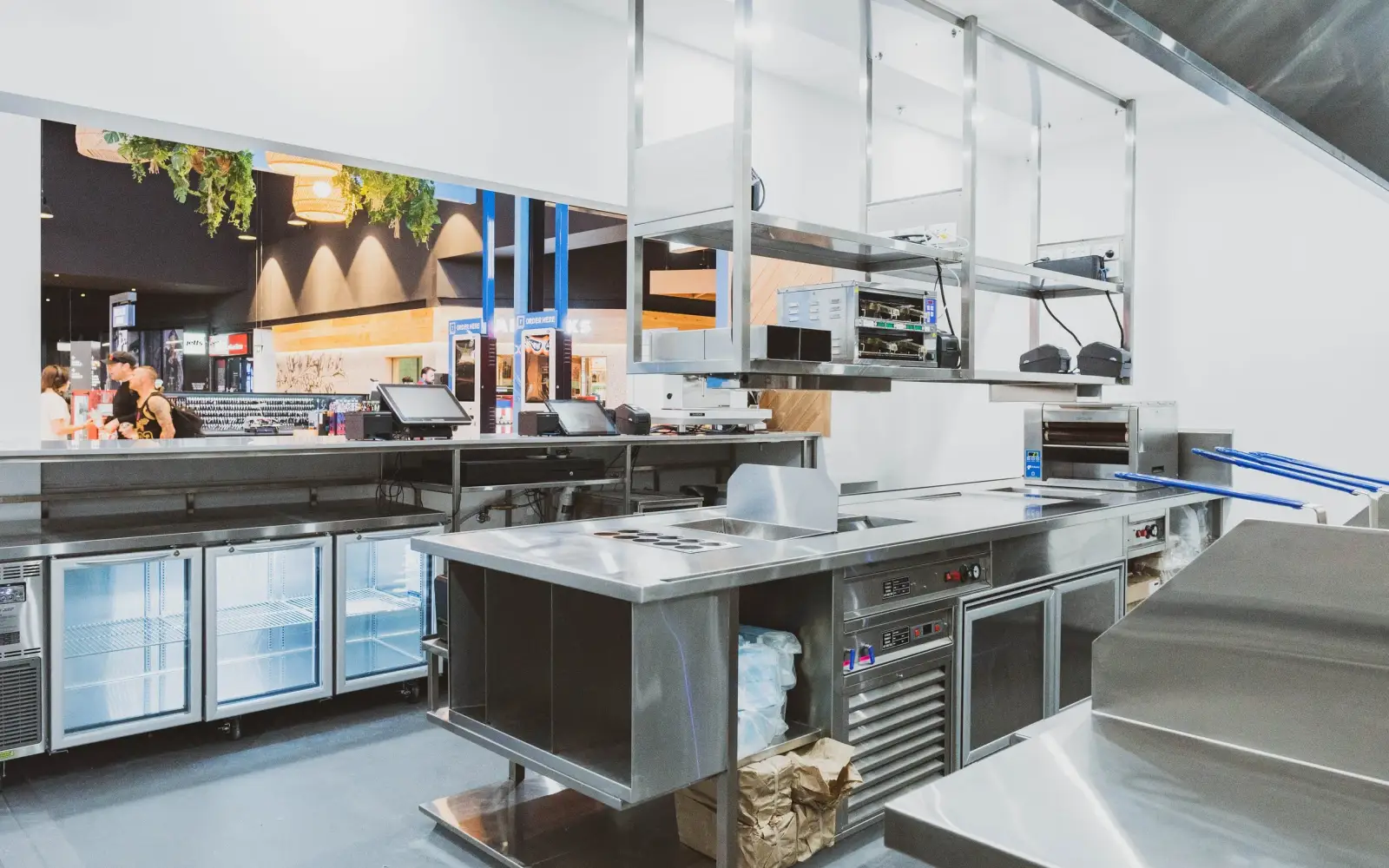
A catering operation is built around a production kitchen. The fit-out is heavy and costly: extraction and make-up air, grease arrestors, gas reticulation, three-phase power, cool rooms, blast chillers, combi ovens, dishwashers, racking, food-safe floors and drainage. Location ties directly to client access and delivery efficiency, for example proximity to CBD event venues, hospitals, corporate campuses and major arterials for pre-dawn dispatch. Owning lets you build to your workflow, run longer hours within planning rules, and hold a base you can shape over time. Mortgage repayments build equity in a real asset rather than funding a landlord's return, which is why a catering property loan appeals to established operators.
Main drivers for catering businesses:
- Control of site-critical infrastructure like exhaust risers, roof penetrations and grease management that landlords resist or price in at lease renewal.
- Fit-out spend in the hundreds of thousands to millions that stays within your property, not left behind at lease expiry.
- Operational continuity near major customers and delivery routes, with reduced relocation risk.
- Scope to leverage your equity later for new vans, additional kitchen lines or a second site.
- Potential tax and cash flow advantages from owning as an owner-occupier, subject to your structure.
Buying may not suit every operator. If you expect to outgrow the site within a short lease horizon, if a move to a different catchment is planned, if council approvals look uncertain for the works you need, or if capital is better deployed into contracts, staff, vehicles or equipment over the next 12 to 24 months, staying a tenant a while longer can be the stronger play. The decision sits with you, and we are glad to talk it through either way.
How lenders approach a catering business purchase
- Deposit and LVR. A commercial or industrial building fitted out as a kitchen is assessed as owner-occupier commercial property, and finance commonly gears to around 80 per cent of value, so the deposit can start near 20 per cent. Where the site is highly specialised and a valuer treats the improvements as special-purpose, the working LVR sits a little lower. A 100 per cent LVR is reached only where additional security, such as equity in another property, is added to the deal, and our broker team can explain when that applies.
- Loan term and structure. Terms commonly run to about 15 years with a bank and 25 to 30 years with a non-bank lender. Many owners choose principal and interest for steady equity build, or interest only for a period to prioritise cash flow during fit-out and ramp-up.
- Security and serviceability. The property is the primary security. Lenders assess business financials, cash flow stability, contract pipelines, seasonality, and the shift from tenancy costs to loan repayments.
- Owner-occupier treatment. Lenders generally view owner-occupier purchases favourably, especially where the business shows stable margins, diversified customer contracts and evidence that the fit-out improves productivity and revenue capacity.
Ownership structures a lender sees
Many catering operators hold the freehold in a separate entity, a company or a trust, and lease it back to the trading business at commercial rent. A lender then reads that inter-entity rent as the serviceability line and treats the property as the primary security, which keeps operating risk separate from the real asset and makes the rental flow visible for servicing tests.
For some operators an SMSF holds the premises. Commercial premises generally qualify as business real property, so the fund can own the building and lease it to the trading entity at market rent, with any borrowing done through a limited recourse arrangement and a bare, or custodian, trust. The appeal includes longer-term wealth building inside the fund, alongside contribution limits, borrowing rules and documentation to manage. Ardent arranges and structures the finance to fit the ownership you use, while your accountant, and a licensed SMSF adviser for any fund purchase, confirms the tax and compliance detail before you commit.
The lender's checklist
- Business financials and contracts: profitability, margins on functions and corporate catering, revenue concentration, and renewal history on anchor contracts.
- Serviceability: historic and forecast cash flows, seasonality around peak months, and buffers for utilities, waste collection and compliance costs.
- The property and valuation: zoning for food production, condition of roof and slab, power capacity, gas availability, ventilation paths and compliance with council and health requirements.
- Deposit and equity position: cash on hand, equity available in other property, and evidence of fit-out costings.
- Lease and occupancy: if buying a tenanted site, the lease terms and make-good obligations; if owner-occupying, the timing of vacant possession and approvals for alterations.
A specialist broker who understands catering production, site compliance and lender appetite can shorten decision times and add certainty in this sector.
One way this can play out
This is an illustrative scenario that shows the kind of situation we can assist with, and how the thinking might run.
- Profile: an established corporate caterer in Melbourne with $4,800,000 annual revenue, a solid three-year profit history and two refrigerated trucks, leasing a 900 square metre kitchen-warehouse in an inner-south industrial pocket.
- Objective: secure the current premises, or a nearby larger site, to allow a second hot line and extra chilling capacity before spring event season.
- Options mapped:
- Buy the current site at $1,950,000 on an LVR near 70 per cent, with a deposit around $585,000 from cash plus equity in the director's home, interest only for 24 months during fit-out, then principal and interest once final progress claims settle.
- Buy a larger site at $2,600,000 in a neighbouring estate, with the LVR depending on valuation and a power upgrade, and about $450,000 of fit-out funded through equipment and fit-out finance alongside the mortgage to preserve deposit cash.
- Explore a partial SMSF purchase where fund balance and rollover capacity allow, then lease to the trading company at market rent, with borrowing limits and timing mapped in advance.
- Structures considered: the property in a trust with a corporate trustee and a leaseback to the trading company, or an SMSF hold with a bare trust for the borrowing.
- How we would approach it: we would map the ranges, structures and repayments, fund the fit-out and equipment separately to keep the mortgage clean, and present the options so the owner can weigh timing, cash flow and growth capacity. The figures above are illustrative, not confirmed outcomes.
Finance we arrange for catering businesses
- Asset finance for commercial kitchen equipment: combi ovens, tilt kettles, blast chillers, dishwashers, vacuum packers, cool rooms and refrigerated vans, funded against useful life and residual values through catering equipment finance.
- Fit-out and refurbishment finance: floors, drainage, extraction risers, grease arrestors and HACCP-grade finishes funded alongside works programs.
- Working capital: short-term liquidity to cover peak-season staffing, perishables and event deposits while invoices clear, with working capital for a caterer kept separate from the mortgage.
- Business overdraft: flexible headroom for utilities spikes, fuel and last-minute equipment repairs.
- Refinancing and debt consolidation: restructure multiple facilities to reduce total cost and align terms with asset life.
- Construction and renovation: build or expand production kitchens, add a mezzanine dry store, or upgrade power and gas capacity.
- Business or premises acquisition finance: buy the freehold, buy into an existing catering business, or buy out a partner on aligned terms.
Owning the premises can free equity for growth, and a refinance can consolidate shorter facilities to simplify cash flow.
Ardent Capital Group, specialist brokers for catering premises
Ardent Capital Group advises catering business owners buying the premises they trade from. We structure the finance around how you plan to hold and occupy the property, then align supporting facilities to your production model. Our team services Sydney, Melbourne, Brisbane, Gold Coast, Perth, Adelaide, Canberra and surrounding metro and regional areas, and we have helped facilitate over $500,000,000 in funding across a decade for more than 1,000 borrowers. This is the kind of purchase where structure and strategy matter as much as the rate, and we give clear advice on both so the finance supports the wealth you are building and the years ahead.
Questions we're often asked
What deposit do I need for a catering premises purchase? For a conventional commercial or industrial building, the deposit can start near 20 per cent, in line with gearing to around 80 per cent of value. Highly specialised sites can call for more, and equity in another property can reduce the cash you contribute.
Can I use my SMSF to buy the kitchen property and lease it to my business? Commercial premises usually qualify as business real property, so an SMSF can own the building and lease it to your trading entity at market rent. Borrowing limits, documentation and timing all need to be managed, and your accountant confirms the detail.
How do lenders treat heavy fit-out like extraction, cool rooms and grease traps in the valuation? Valuers look at the property as real estate first. Items affixed to the building can support value, while movable equipment is treated as plant and equipment and funded separately.
Should I choose interest only at the start while I fit out the kitchen? Many owners take interest only for a defined period to preserve cash flow during works and commissioning, then move to principal and interest once production stabilises.
What if most of my revenue comes from a few corporate contracts? Lenders focus on contract quality, renewal history and your pipeline. Documented agreements and evidence of delivery capacity strengthen the file.
Can I buy a warehouse with mixed use, for example kitchen, dry storage and an office? Yes, provided the zoning supports food production and the site can be brought to compliance. Lenders will assess the share of specialised improvements and the general appeal of the location.

Written by
Nick Chong
Managing Director, M.AppFin, Dip. Mortgage Mgmt
Nick holds a Bachelor of Agricultural Economics, a Master of Applied Finance and an Advanced Diploma in Financial Planning. He founded Ardent Capital in 2016 after more than a decade in financial planning and mortgage broking. For the past ten years he has led a team of finance specialists, mortgage advisers, brokers and credit analysts, all working to secure optimal outcomes for clients and always acting in their best interests. The team brings both a qualitative and a quantitative approach to every deal.