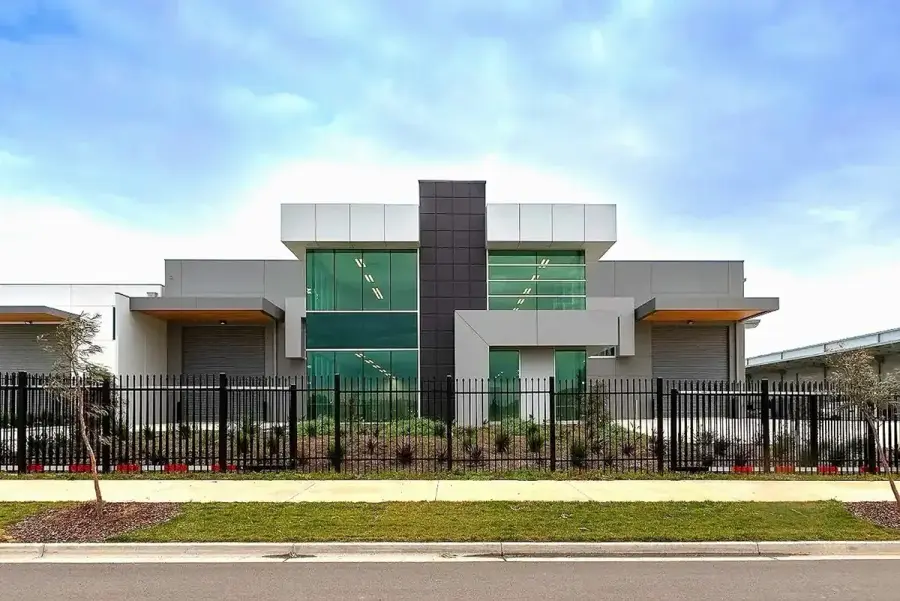

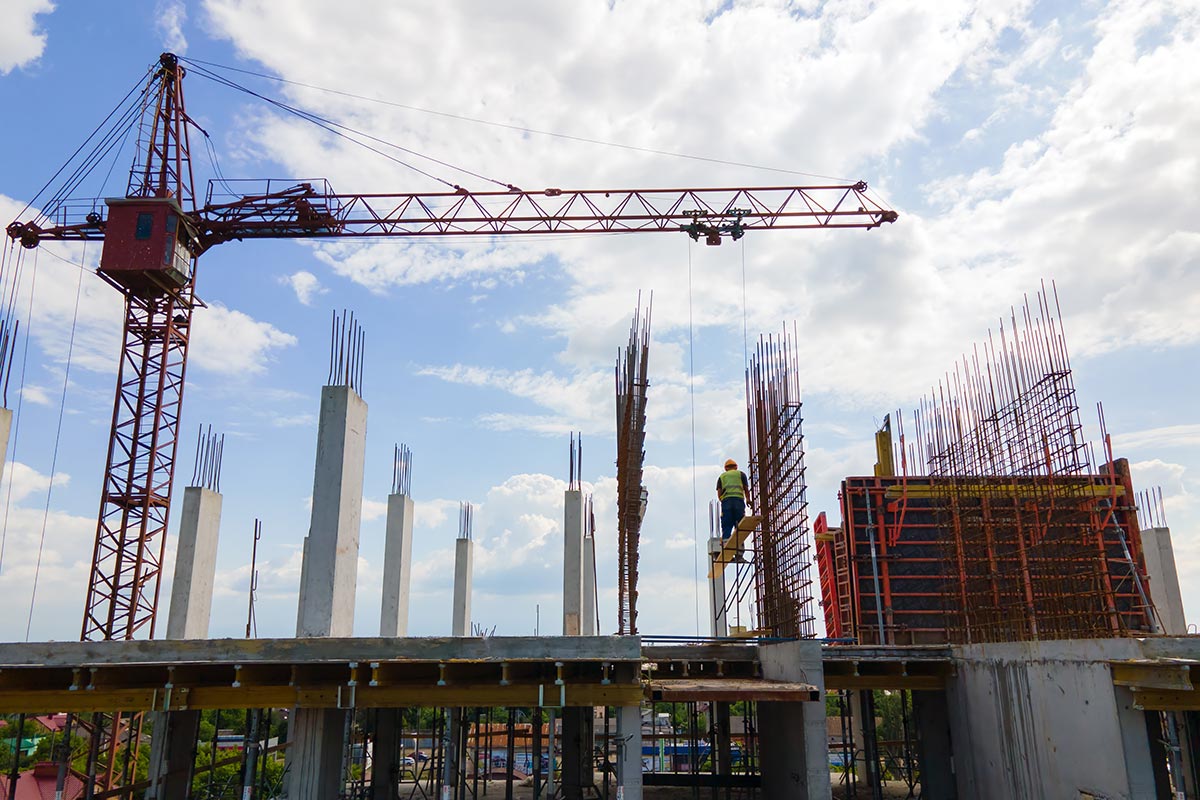
Commercial construction finance broker
Funding your commercial or residential build
Planning a commercial build?
Building rather than buying gives you control over the end product. It also requires a lender who understands construction risk, progressive drawdown facilities and the difference between end value and build cost. We know which lenders do.
We can help you:
- Build the premises your business will operate from
- Fund a residential or commercial construction
- Borrow up to 65% of the end value at the majors and up to 70% at non-bank lenders
- Draw progressively against construction milestones
- Develop multi-unit residential or commercial projects
- Build a purpose-built warehouse or industrial facility
- Plan a construction-to-hold or construction-to-refinance exit
- Convert to a term loan on completion
- Get the exit strategy right from the start
Who we help:
- Established business owners who require finance between $50K to $30M
- First-time borrowers who need a beginner-friendly strategy
- Sophisticated borrowers and investors who need a unique strategy and deal structure
- Urgent, time-sensitive deals that need to move quickly
- Self-employed and trust-structured borrowers who need their income presented properly
- Commercial property owners with multi-tenancy plans



Speak to a specialist today
1,000+
loans settled
$2B+
funded
Construction finance
Getting your build funded the right way
We help owner-occupiers, investors and developers access construction finance for commercial and residential builds. Construction loans are assessed and structured differently from standard property purchase lending, and the lender choice matters significantly. We find the right lender, structure the facility correctly from the start, and manage the process through to completion.
Funding from $50K to $30M
from over 60 bank & non-bank lenders












- ANZ
- Bankwest
- Bluestone
- Bank of Queensland
- Commonwealth Bank
- Firstmac
- ING
- Macquarie
- NAB
- Pepper Money
- Suncorp Bank
- Thinktank
Construction finance specialists
We act frequently for builders, developers and owners building their own premises. Construction finance is a specialist area. The projects we can fund include:
- Owner-occupier commercial builds (warehouse, office, medical)
- Residential construction (single dwelling, duplex, townhouse)
- Residential development (multi-unit, apartment projects)
- Commercial development (retail, industrial, mixed-use)
- Industrial and warehouse construction
Construction loans run interest-only through the build, drawn in stages against certified works, then convert to a term loan on completion. Lenders size them on the end value of the finished project, up to 65% at the majors and up to 70% at non-bank lenders, rather than on the land value or build cost.
Why businesses choose Ardent Capital Group as their broker
Execution and strategy
Strategy first, then execution. We structure your deal properly and take it to the lenders genuinely comfortable with it, so you are not chasing each one yourself.
Clear advice for smart lending
Straight answers on LVR, structure and timing, including when a deal does not stack up.
A long-term partner
We stay with you well beyond settlement, with lasting relationships and ongoing support from the team.
Construction types
Construction scenarios we can help finance
Construction finance is not one product. An owner-occupier building their own business premises needs a different structure to a developer pre-selling a multi-unit residential project. Below is an overview of the most common construction scenarios we work with.
Owner-occupier commercial build
You are building the premises your business will trade from, whether that’s a medical suite, a workshop, a showroom or an office. The lender looks at two things at once: the projected value of the finished building, and whether your business can service the debt once you move in and stop paying rent.
Ardent reads your fixed-price building contract and your builder the way a credit assessor will, then places the facility with a lender that funds your asset type at your scale. We set the drawdown structure so your cash stays in the business until each stage is actually built.
- Fund to up to 65% of the “as if complete” value at the majors and up to 70% at non-bank lenders, with the balance from land equity or cash
- No draw is released until the development approval and construction certificate are in place
- A quantity surveyor certifies each progress claim before the lender releases funds
- Interest is charged only on the balance drawn, not the full facility
- The loan converts to a commercial term loan at practical completion
- Retention of around 5% is typically held until defects are made good
- Banks reward an owner-occupier already trading; non-bank lenders suit newer entities
Residential construction
This suits an investor or owner building a single dwelling or a small residential project. Residential construction draws on a wider pool of active lenders than commercial, so terms are generally more competitive, provided a registered builder holds the contract.
We tell you what a lender needs to see before you apply, check the contract and builder against lender policy, and match the facility to how you intend to hold or sell the finished home.
- Standard builds fund to around 80% of “as if complete” value; owner-builder projects are assessed more conservatively
- Lenders require the builder’s licence, home warranty cover and builder’s all-risk insurance
- Progress payments follow the standard stages: slab, frame, lock-up, fit-out and completion
- Each stage is inspected before the drawdown is released
- Fixed-price contracts are preferred; cost-plus contracts narrow the lender list
- A contingency of around 5% covers variations without a fresh application
- Any cost-to-complete shortfall must be funded before the facility proceeds
Residential development (multi-unit)
You are building several dwellings on one site, so the lender assesses the project on its feasibility, its pre-sales position and the gross realisation once every unit settles. It is judged as a development, not a home loan, and appetite tightens as the unit count rises.
Ardent prepares the feasibility and pre-sales evidence in the form a credit team expects, identifies lenders whose policy fits your site and staging, and manages the drawdown schedule so trades are paid on time.
- Facilities are commonly sized to around 65% of total development cost or 70% of gross realisation, whichever is lower
- Pre-sales to unrelated purchasers, with the cover required varying by lender, are usually a condition of the first draw
- A quantity surveyor signs off the initial cost report and every later progress claim
- The land is usually held in a special-purpose entity, with directors’ guarantees
- Mezzanine or preferred equity can bridge a gap between senior debt and your contribution
- GST and the margin scheme should be settled before the feasibility is finalised
- The display unit and marketing timeline affect how quickly the pre-sales condition is met
Commercial development
This covers retail centres, industrial estates, mixed-use buildings and office projects, where repayment depends on income once the building is leased. The lender weighs the feasibility, the end value, the pre-lease position and your record delivering similar work.
Ardent finds lenders with real appetite for your asset type and market, tests the feasibility and pre-lease position against their policy, and structures the facility around the construction programme and its drawdowns.
- Facilities reach up to 80% of total development cost at the majors and up to 85% at non-bank lenders
- A pre-lease to an anchor or government tenant strengthens both the valuation and the terms
- Value is assessed on a capitalisation of the projected net rent, not on build cost
- Lease length and covenant strength feed the “as if complete” valuation, so a longer WALE helps
- Established precincts and B5, B7 or industrial zonings draw the widest lender interest
- Larger facilities may carry an interest-rate hedge or a line fee on the undrawn limit
- A leasing-up period after practical completion is built into the exit timeline
Industrial and warehouse construction
Some owners and investors build an industrial or warehouse facility rather than buy existing stock, shaping the building around loading, clearance heights, power supply and office ratio. The lender funds the build but also asks whether the finished asset holds value beyond your own occupation.
Ardent confirms the end-value basis before you apply, reviews the contract and builder, and places the facility with a lender that genuinely funds industrial construction at your scale and location.
- Owner-occupier builds are assessed case by case against the “as if complete” value
- The land component often forms most of your equity, reducing the cash deposit required
- Accepted zonings include IN1 General Industrial, IN2 Light Industrial and E4 General Industrial
- Clearance height, floor loading and three-phase power all affect the end valuation
- Hardstand, awnings and gantry cranes are treated as fixtures, not separate equipment finance
- A wide truck apron or B-double access supports a stronger standalone value
- Speculative builds without a signed occupier are assessed more conservatively
Construction-to-hold and construction-to-refinance
Your exit decides the construction lender. If you build to hold, the facility should roll into a competitive term loan the day the building is finished; if you build to refinance out, you need a lender that will value the finished, leased asset rather than what it cost to build.
Ardent sets the exit at application, aligns the construction and conversion terms, and lines up the take-out facility early so you are not refinancing under pressure at practical completion.
- Construction interest is usually capitalised, then principal and interest begins once the term loan starts
- The take-out is sized on the stabilised, income-producing value, which can exceed total build cost
- A lease signed before completion lifts the refinance valuation and widens your lender choice
- Construction-to-hold avoids a second set of establishment fees and a fresh valuation
- Allow for a vacancy or leasing-up window between practical completion and the refinance
- Fixed-rate construction facilities can carry break costs if you refinance early
- A short bridging facility can cover the gap if the take-out lands after completion
Our complete list of services
- Build the premises your business will operate from
- Fund a residential or commercial construction
- Borrow up to 65% of the end value at the majors and up to 70% at non-bank lenders
- Draw progressively against construction milestones
- Develop multi-unit residential projects
- Fund commercial, retail or mixed-use development
- Build a purpose-built warehouse or industrial facility
- Plan a construction-to-hold exit
- Plan a construction-to-refinance exit
- Convert to a term loan on completion
- Arrange mezzanine or equity-gap funding
- Structure pre-sales or pre-lease requirements
- Review the build contract and builder credentials
- Confirm the end-value lending basis
- Coordinate drawdowns through the build
- Support first-time owner-occupier builders
Our process
How it works
✓We understand your scenario
We talk through the property, your business and timeline, and any complexity in your structure.
✓We find the right lender
We match your deal to the lender on our panel best suited to it.
✓You receive clear terms and guidance
We present indicative terms and explain what we recommend, and why.
✓We stay with you beyond settlement
We manage everything through to settlement, then stay in your corner well beyond it, with ongoing support from the team.
Lender features compared
How construction finance compares across lenders
| Construction finance feature | Major banks | Non-bank lenders | Availability |
|---|---|---|---|
| Maximum LVR (of GRV) | Up to 65% | Up to 70% | Standard |
| Total development cost (TDC) | Up to 80% | Up to 85% | Important |
| Presales requirement | Often required | More flexible | Critical |
| Progressive drawdowns | Standard | Standard | Common |
| Interest during construction | Capitalised | Capitalised | Common |
| Term | 12 to 24 months | 12 to 24 months | Flexible |
| Approval timeframe* | 4 to 8 weeks | 2 to 5 weeks | Varies |
| Best suited for | Experienced builders, presold stock | Tighter presales, specialised builds, speed | — |
*IMPORTANT: These are indicative figures only. Terms, LVRs and approval timeframes vary with borrower capacity, security type and individual lender criteria, and are subject to change. Figures are a general guide, not a quote or an offer of finance, and not a representation that finance is available on these terms.
Frequently asked questions
What is construction finance?
Construction finance funds the building of a new property or a substantial renovation. Funds are released progressively as building milestones are reached, not as a lump sum, and lenders assess the loan against the end value of the completed project. Ardent Capital Group is a Sydney-based finance brokerage arranging construction finance across Australia.
Why do borrowers prefer Ardent Capital Group as their lending specialist?
Ardent Capital Group brings the same method to every client: execution and strategy, clear advice for smart lending, and long-term growth. That means the right lender, structure and timing, straight advice so you borrow with confidence, and today's deal built toward where you want to be tomorrow. The point of a construction facility is drawdowns that land as each stage needs them, so the trades never wait on the money. We set it up with lenders who read programmes and cost plans the way builders actually work rather than slowing every claim, and stay close as you move onto the next project and the one after. Every figure is subject to serviceability, lender appetite and approval.
How much finance can you help me access?
Construction funding through us runs from $50K up to $30M, which covers a warehouse extension or fit-out at one end and a ground-up commercial build at the other. Lenders size these against the fixed-price contract, the end value and your contribution, then release funds as each stage is certified.
What is a progressive drawdown and how does it work?
A progressive drawdown construction loan releases funds in stages as construction milestones are reached, rather than as a lump sum at the start. Typical milestones include slab, frame, lock-up, fit-out and completion. Before each drawdown is released, the lender's valuer or quantity surveyor inspects the build to confirm the milestone has been reached. You only pay interest on the funds drawn, not the total facility amount, which reduces the cost of carry during the build period.
How is the loan amount calculated for a construction loan?
Construction loans are assessed on the end value of the completed project, not the current land value or build cost. The lender's valuer assesses what the completed building will be worth on the open market, and the loan is sized as a percentage of that figure. This means the available loan amount can be higher than the actual build cost where the end value exceeds total project costs.
What documents do I need to apply for construction finance?
Most lenders require a fixed-price building contract, the builder's licence and insurance documentation, the development approval or building permit, plans and specifications, a quantity surveyor report for larger projects, and standard financial documentation for the borrower. Having these ready before applying significantly reduces the time to approval.
Do I need a licensed builder?
For most construction finance, yes. Owner-builder arrangements are accepted by some lenders but attract more conservative LVRs and a shorter list of willing lenders. Most lenders require a registered builder with a fixed-price contract and adequate insurance coverage. We can advise on what is required for your specific project.
How long does construction finance take to arrange?
For a well-prepared application with a fixed-price contract, DA approval and clean financials, most clients receive credit approval within one to two weeks. The overall timeline also depends on the valuation process, which for construction loans involves assessing the end value of the completed project. We give you a realistic timeline based on the specific project.
Can I use construction finance for a renovation or extension?
Yes, for significant works. Construction finance is appropriate where the works are substantial enough to warrant a progressive drawdown structure and the end value of the improved property can be independently assessed. Minor works are typically funded through standard commercial facilities or equipment finance rather than a construction loan.
Do you charge fees for arranging construction finance?
Most of the time, no. Where a deal requires significant preparation or involves unusual complexity, a small mandate fee may apply. We will always be upfront about this before any work begins.
What areas do you service?
Although we are based in Sydney, we service clients across all major Australian cities, including Melbourne, Perth, Brisbane, the Gold Coast, Adelaide, Canberra and Hobart, along with their surrounding regional areas. Wherever you are building, we can arrange your finance.
What other finance can you assist with?
Beyond your construction facility, we can help with asset finance and working capital. On asset finance, that covers plant and machinery, excavators, formwork and site equipment, and commercial vehicles. On working capital, we arrange business overdrafts, lines of credit and cash-flow funding to cover progress-payment gaps, subcontractors and materials.
I've been a business owner for a few years now, but this will be my first loan. Are you beginner friendly?
Yes. That is our core ethos, helping you understand the right strategy, structure and clear advice from the very first conversation. Our main borrower profiles are established builders, developers and business owners seeking finance from $50,000 upwards for their company, so a first commercial loan is well within our wheelhouse. Smaller sole-trader and consumer-style ABN lending sits outside our field.
Can you give financial advice?
No. Arranging finance and advising on financial products are two different disciplines, and we do the first. What we bring is the credit analysis lenders require, the structuring of the facility, and the strategy for putting your application in front of lenders whose appetite matches it.
Because we act as a credit representative under an Australian Credit Licence, we do not give financial product, superannuation, taxation or legal advice, and nothing we provide should be taken as such. Where your circumstances need that input, we are happy to work with your accountant, financial adviser and solicitor to understand the full picture before anything is submitted.
The information on this page is general in nature and does not take account of your objectives, financial situation or needs.
Construction finance
Commercial builds we finance
What a lender tests changes with the build. A business constructing its own premises is assessed on trading income; a build for sale is assessed on end value. We have written a page for each.