
How Commercial Kitchen Owners Approach a Commercial Mortgage
Owning the kitchen you cook from is a natural next step once the fit-out, the contracts and the reputation are yours. At Ardent Capital Group we speak with commercial kitchen operators weighing exactly this move, and this guide explains how a lender reads a food-production premises and what shapes your borrowing position.
Ardent Capital Group is a specialist in commercial mortgages for commercial kitchen operators across Australia. Our team can help you move from tenant to owner, and give you clear lending advice on structure and strategy.
- Finance range: Funding from $100,000 to $10,000,000+, arranged to match your operating profile.
- Track record: Over $500,000,000 facilitated across a decade for more than 1,000 borrowers.
- National coverage: Sydney, Melbourne, Brisbane, Gold Coast, Perth, Adelaide, Canberra, Hobart and surrounding regional towns.
- Lender panel: Major banks and non-bank lenders, structured to suit industrial, strata and freehold kitchen assets.
For a clear read on your borrowing position, a commercial kitchen property loan is usually where the conversation starts.
Why commercial kitchen owners choose to buy
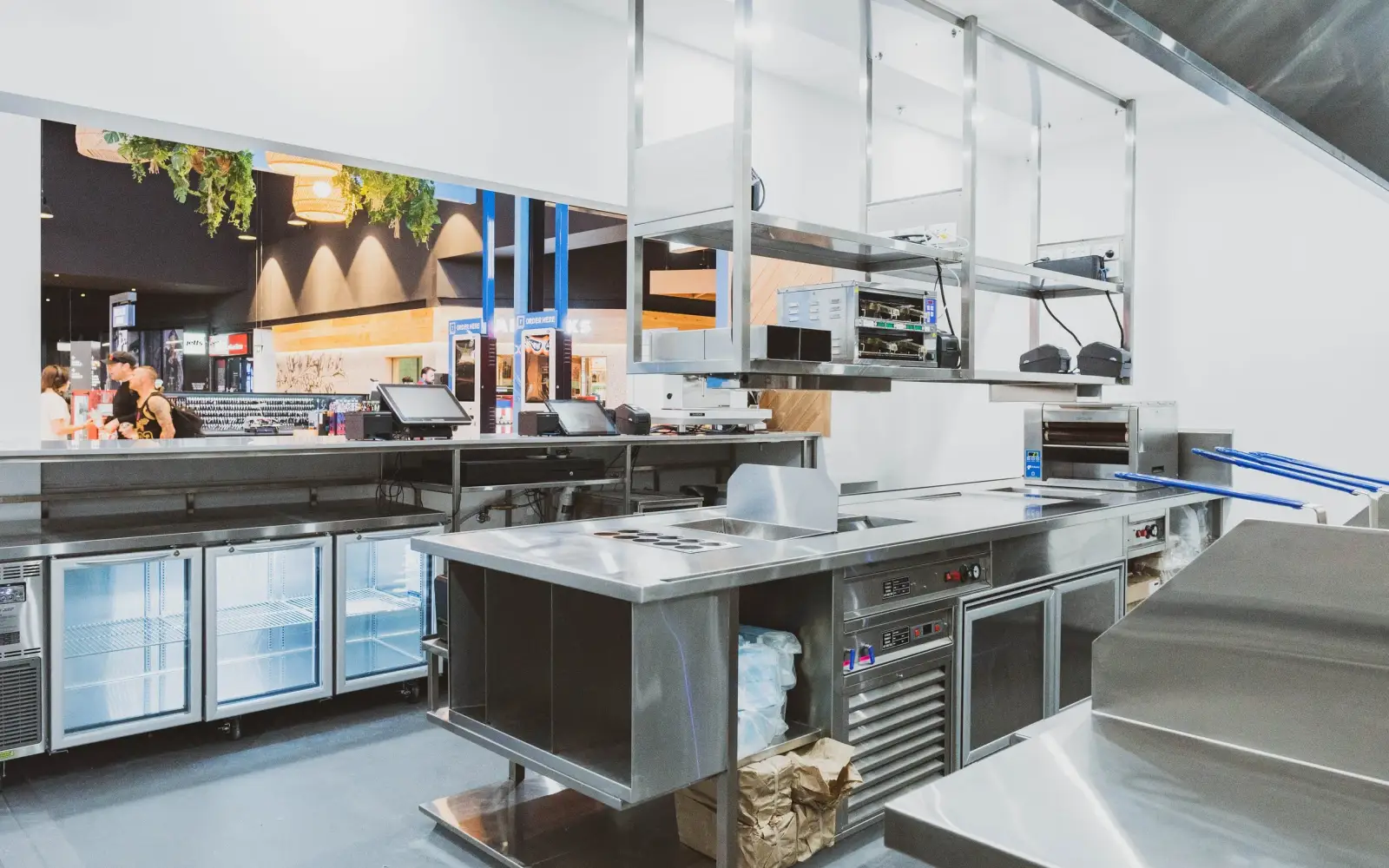
A compliant kitchen build is capital intensive. You have invested in cool rooms, exhaust and make-up air, fire suppression, grease arrestors, floor drains, epoxy flooring, stainless benches, three-phase power and gas upgrades. Much of that build becomes part of the property. Owning can capture that value rather than leaving it with the landlord.
Location drives your revenue. Proximity to customers and delivery corridors, truck access for chilled logistics, 24-hour permissible use, parking for vans and staff, and zoning that supports food production all tie to the address. Ownership reduces relocation risk and controls rent escalations. Repayments build an owned asset over time.
Key drivers:
- Control of fit-out and compliance: Secure ventilation shafts, trade-waste capacity and power upgrades without negotiating every improvement.
- Operational certainty: Long-term tenure supports HACCP certification, wholesale supply contracts and platform service agreements that demand reliability.
- Cost management: Replace unpredictable rent reviews with known repayments and capture tax outcomes available on interest and building works.
- Asset growth: Direct cash flow into an appreciating property that matches your production footprint.
Buying suits some horizons better than others. If a relocation for growth is likely, or capital would work harder in ovens, blast chillers, vehicles and sales channels, keeping the option open and revisiting once operations settle is a sound call. A specialist can map both paths with you before you commit.
How lenders approach a commercial kitchen purchase
- Deposit and LVR: A commercial kitchen in a strata or freehold industrial unit is standard commercial security, so owner-occupiers typically gear to around 80 per cent, which means a deposit near 20 per cent. Owner-occupiers usually access the better terms; heavily specialised premises can sit a little lower.
- Loan term and structure: Terms run to 25 to 30 years with non-bank lenders, while the banks commonly publish 10 to 15 years. Choose principal and interest to steadily retire debt, or interest only for a period to support cash flow during commissioning, fit-out or seasonal peaks.
- Security and serviceability: The property is the primary security. Lenders assess business financials, BAS and tax returns, bank statements and existing commitments. They may take a general security agreement over the trading entity and director guarantees. If the property sits in a separate entity, the lease income is included in serviceability.
- Owner-occupier treatment: Lenders generally favour owner-occupiers with sharper pricing, broader policy tolerance and higher LVRs than pure investments.
Ownership structures a lender sees
Many operators hold the premises in a separate entity, such as a company or trust, and lease it to the trading business at a commercial rent. A lender then reads that inter-entity rent as the serviceability line, and the arrangement gives a clean tenancy record for assessment while keeping the property and the trade in separate hands.
For some operators, a self-managed super fund holds the premises. Commercial kitchen premises generally qualify as business real property, so an SMSF can acquire the building under a limited recourse borrowing arrangement, through a bare (custodian) trust, and lease it back to the business at market rate. A lender assesses fund contributions and the market rent as serviceability, and the loan is limited in recourse to that single asset. Trade-offs include contribution caps, borrowing constraints and liquidity inside the fund. The lending is what we structure and place, and your accountant and, for a fund, a licensed SMSF adviser confirm the tax and ownership detail before anything is settled.
The lender's checklist
- Business financials: Turnover by channel, margins on catering, wholesale and platform sales, wage and utility ratios, and evidence of stable or growing demand.
- Serviceability metrics: Debt service cover, add-backs where rent is replaced by interest, stress testing for energy prices and food input volatility.
- Property and valuation: Zoning and permitted use, council approvals, grease trap capacity, extraction and discharge rights, power and gas availability, cool room specifications and the valuer's split between fixtures built into the building and movable equipment.
- Deposit and equity: Cash on hand, equity in other property, potential vendor terms and any mezzanine layers.
- Lease and occupancy: If a related entity will trade, lenders look for a market-rate lease, subleases to third-party food operators and any licence agreements.
- Guarantor profile: Director balance sheets, credit history and collateral strength.
- Compliance and risk: Fire systems, food safety certifications, asbestos or contamination reports and trade-waste agreements.
A specialist broker who understands kitchen fit-outs, food production compliance and lender policy helps you reach the lender that suits your file in the commercial kitchen sector.
One way this can play out
This is an illustrative scenario that shows the kind of situation we can assist with, and how the thinking might run.
- Profile: Melbourne caterer with $3,200,000 revenue, leasing a 550 sqm production kitchen in Brunswick at $228,000 per annum, with prior fit-out spend of $420,000 embedded in the site.
- Objective: Buy a nearby 600 sqm strata industrial unit at $2,400,000 and add a second cool room and expanded prep line.
- Options we would map: An owner-occupier loan around 80 per cent LVR on a 20 to 25 year term, with the deposit made up of cash and equity available in the principal residence; an SMSF purchase where the fund balance and contribution headroom support it, with a market-rate lease back to the trading company.
- Structures we would weigh: Property held in a unit trust with a corporate trustee, a commercial lease to the trading entity at market rent, a general security agreement over the trading entity and director guarantees.
- How we would approach it: We would map the LVR ranges, structures and repayment shapes for principal and interest against interest only, factoring rent replacement and seasonal cash flow. The figures above are illustrative, not confirmed outcomes, and the decision stays with you.
Other lending we can help with
- Asset finance for kitchen equipment: Fund combi ovens, blast chillers, planetary mixers, dishwashers, cooklines, refrigeration, smallwares and refrigerated delivery vans through commercial kitchen equipment finance.
- Fit-out and refurbishment finance: Cover extraction and ducting, fire suppression, cool rooms, epoxy floors, floor drains, grease arrestors, gas and electrical upgrades.
- Working capital loans: Smooth ingredient purchases, packaging runs and payroll ahead of event seasons and corporate contract peaks; working capital for a commercial kitchen can bridge the gap between platform payouts and supplier terms.
- Business overdraft: Manage the weekly cash cycle between platform payouts, catering invoices and wholesale terms.
- Refinancing and debt consolidation: Replace short-term expensive facilities with a structured package matched to asset life and cash flow.
- Construction and renovation: Convert a warehouse to a HACCP-compliant kitchen, add a mezzanine, upgrade to higher trade-waste capacity and three-phase power.
- Business or premises acquisition finance: Buy a competitor's book and equipment, buy out a partner, or secure the neighbouring unit to expand your line.
Owning the premises can stabilise occupancy and free equity that supports equipment finance or a refinance that consolidates multiple facilities into a cleaner structure.
Talk to a commercial kitchen finance specialist
ACG arranges and structures commercial mortgages for commercial kitchen operators, aligned to how you plan to hold and occupy the property. We understand food production fit-outs, compliance and how lenders read these assets.
We service Sydney, Melbourne, Brisbane, Gold Coast, Perth, Adelaide, Canberra and surrounding metro and regional areas. This is the kind of purchase where the structure and the strategy matter as much as the rate, so we give clear advice on both, keep the finance aligned to the wealth you are building, and stay with you through settlement and the years after. If you are weighing up a commercial kitchen purchase, we would be glad to talk it through.
Questions we're often asked
What deposit do I need to buy a commercial kitchen property? A commercial kitchen is standard commercial security, so owner-occupiers typically gear to around 80 per cent, which means a deposit near 20 per cent. Heavily specialised sites can sit a little lower.
Can my SMSF buy the kitchen and lease it to my business? Commercial premises generally qualify as business real property, so an SMSF can hold the asset and lease it back at market rent under a limited recourse borrowing arrangement, subject to fund liquidity and documentation.
How do lenders view heavy kitchen fit-outs in valuation? Valuers separate fixtures that become part of the building from movable equipment, and lenders prefer flexible spaces with compliant services such as trade-waste, extraction and power already in place.
Do owner-occupier loans price differently to investment loans? Owner-occupiers usually receive sharper pricing, higher LVRs and broader policy tolerance compared to investor loans secured by the same asset.
What documents will strengthen my application as a kitchen operator? Two years of financials, BAS, bank statements, equipment lists, current council approvals, trade-waste agreements, HACCP or similar certifications and a draft lease if using a holding-company structure.
What costs should I plan for beyond the purchase price? Allow for stamp duty, legal and valuation fees, building and compliance reports, any GST considerations on the purchase, and fit-out or upgrade contingencies to meet your production plan.

Written by
Nick Chong
Managing Director, M.AppFin, Dip. Mortgage Mgmt
Nick holds a Bachelor of Agricultural Economics, a Master of Applied Finance and an Advanced Diploma in Financial Planning. He founded Ardent Capital in 2016 after more than a decade in financial planning and mortgage broking. For the past ten years he has led a team of finance specialists, mortgage advisers, brokers and credit analysts, all working to secure optimal outcomes for clients and always acting in their best interests. The team brings both a qualitative and a quantitative approach to every deal.