

Understanding Commercial Mortgages for a Fleet Vehicle Workshop
Buying the workshop your fleet maintenance business already runs from is a defining step for any operator. At Ardent Capital Group we speak with fleet workshop owners about this kind of commercial property purchase, so this guide walks through how a lender sees the shed, the hardstand and the fit-out, and what actually moves the number.
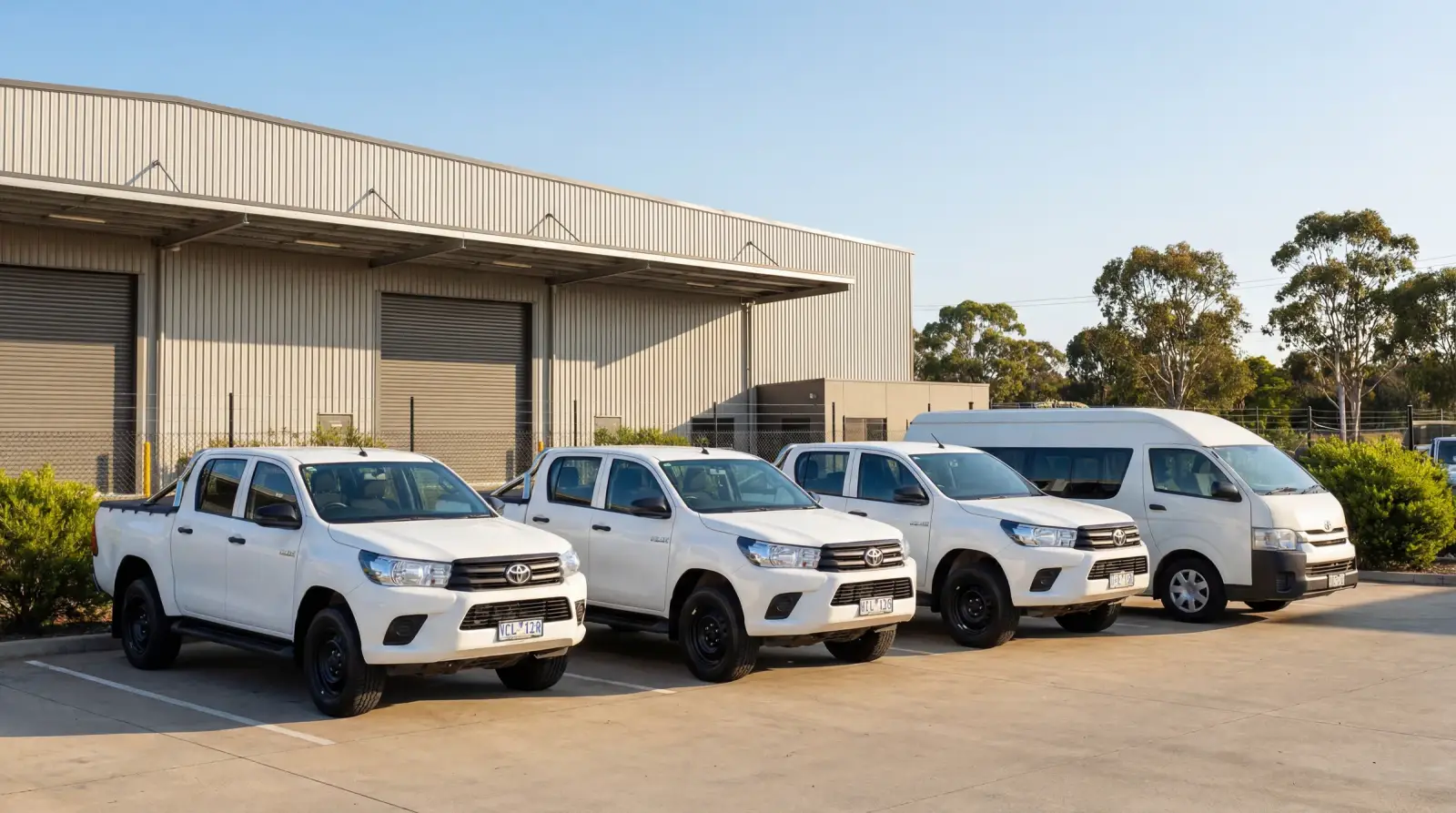
Ardent Capital Group is a specialist in commercial mortgages for fleet vehicle workshop operators across Australia. Our team can help you move from tenant to owner, and give you clear lending advice on structure and strategy.
- Access finance from $100,000 to $10,000,000+, matched to your workshop profile and plans.
- Over $500,000,000 funded across a decade to Australian businesses.
- Servicing Sydney, Melbourne, Brisbane, Perth, Adelaide, Canberra, Hobart and surrounding regional towns.
- Bank and non-bank lender panel, with options for owner-occupiers, investors, trusts and SMSFs.
Why buy rather than lease your fleet vehicle workshop
Fit-outs in this sector are specialised and expensive to move. Heavy-duty slabs for hoists and pits, three-phase power, compressed air reticulation, oil-water separators, wash-down bays with trade waste, gantry cranes, high roller doors and secure hardstand are tied to the building. Location also drives customer retention. Proximity to arterial roads, logistics corridors and client depots reduces downtime and keeps service intervals predictable for fleet managers. The sector is resilient, anchored by scheduled servicing, roadworthy and compliance work, contract maintenance and less discretionary demand. Mortgage repayments build equity in a property aligned to your operations.
Key drivers for ownership:
- Control over access, hours, heavy vehicle movements and layout that strata and short leases can restrict.
- Protect the value of your fit-out and hardstand investment within a freehold you control.
- Security of tenure to tender for longer maintenance contracts and retain technicians.
- Potential rental efficiency when your holding entity sets a market rent to the trading business.
- Ability to plan upgrades for EV service bays, battery isolation areas and additional three-phase capacity on your timeline.
Buying may not suit if your lease horizon is short with a planned relocation, the workshop footprint will change materially, or capital is better deployed into equipment, staffing and contract delivery right now. The decision sits with you.
The mechanics of a fleet vehicle workshop mortgage
- Deposit and LVR. Owner-occupiers can borrow up to 80 per cent of the property value on standard commercial terms, so the deposit can start from 20 per cent. The major banks do not publish an owner-occupier commercial LVR, which is where a broker earns their place. Hardstand and vacant yard gear lower than covered shed, so a site that is mostly open ground borrows closer to 65 per cent.
- Loan term and structure. Banks commonly publish terms of 10 to 15 years, while non-bank lenders extend to 25 to 30 years. Repayments can be principal and interest for steady amortisation, or interest only for a period if cash flow prioritises staffing, inventory and contract mobilisation.
- Security and serviceability. The property is the primary security. Lenders assess business financials, tax and BAS statements, stability of workshop revenue, margin profile, and the ability to service repayments with headroom.
- Owner-occupier treatment. Lenders generally view owner-occupied industrial more favourably than pure investment, given the trading business drives the cash flow and the property has tangible utility to that business.
Structuring the finance
Many fleet vehicle workshop operators hold the freehold in a separate entity, a company or a family trust, and lease it to the trading business at a market rent. A lender then reads that inter-entity rent as the serviceability line and assesses the operating company as the tenant, which keeps the property and the operating risk in separate hands for clearer accounting on rent, outgoings and fit-out.
Some operators hold the premises in an SMSF, where a commercial workshop generally qualifies as business real property and can be leased back to the trading company at market rent. SMSF borrowing runs through a limited recourse arrangement with a separate holding (custodian) trust, carries lower LVRs and has its own liquidity considerations. We map and place the lending to suit your structure, then your accountant, and a licensed adviser for an SMSF, confirm the tax, super and ownership specifics.
How lenders size up the deal
- Business financials and stability. Profit and loss, balance sheet, BAS and tax returns, payroll composition and customer concentration from fleet contracts.
- Serviceability metrics. Cash flow coverage of repayments, sensitivity to interest rate movements, seasonality from contract cycles.
- The property itself. Zoning, building condition, eave height, power supply, roller door clearance, hardstand, truck access and turning circles.
- Environmental and compliance. Oil-water separators, trade waste approvals, bunding, wash bays, ventilation for brake and tyre work, contamination risks.
- Valuation and marketability. Valuer assessment of building and hardstand, comparable sales, strata rules if applicable.
- Deposit and equity position. Cash on hand, retained earnings, or the ability to leverage your equity in other property.
- Lease and occupancy. If investment, lease terms and covenants. If owner-occupier, the leaseback terms between entities.
A specialist broker who understands fleet workshop operations helps translate your fit-out, contract mix and access requirements into a bank-ready credit story.
A scenario worth considering
This is an illustrative scenario that shows the kind of situation we speak with owners about, and how the thinking might run.
A Brisbane workshop with eight bays and 1,500 square metres of hardstand has a lease expiring in 18 months and long-term contracts with two logistics groups. The owner wants control over access hours and room to add EV isolation bays. Here is how the options could be mapped.
- Options mapped: a freestanding industrial site nearby, a larger strata unit with shared access, or land for a build-to-suit with staged construction.
- The freestanding site carries the most hardstand, which gears lower than covered floor area.
- The strata unit means the body corporate sets the rules on hours, vehicle size and wash bays.
- Deposit sources: trading profits and retained earnings, with a plan to leverage your equity in an existing investment property to reduce the cash outlay.
- Structures compared: a family trust holding entity with a corporate trustee leasing back to the trading company at market rent, or an SMSF purchase with a leaseback if super balances and contribution limits support it.
- Lending discussed: up to 80 per cent LVR for an owner-occupied freestanding shed in a strong industrial precinct, with the covered building gearing higher than the open yard, plus potential working capital and asset finance alongside the mortgage upon settlement.
- Cash flow shape: principal and interest for stability, or an initial interest only period to fund technician hires and inventory for new contracts.
How we would approach it: we would map the ranges, structures and repayments, set out the risks and trade-offs, and leave the decision with you. The figures above are illustrative, not confirmed outcomes.
Related finance for a fleet vehicle workshop
- Asset finance for workshop equipment. Fund hoists, wheel alignment systems, brake rollers, diagnostic scan tools, compressors and mobile service utes with workshop equipment finance on terms aligned to useful life.
- Fit-out and refurbishment finance. Add wash bays, EV isolation workstations, additional three-phase, oil-water separation and secure parts storage without draining working capital.
- Working capital loans. Smooth cash flow for parts inventory, tyres and contract mobilisation with working capital for a workshop when payment terms stretch.
- Business overdraft. Cover timing gaps between parts accounts and fleet client remittances with a revolving limit.
- Refinancing and debt consolidation. Reprice your mortgage, tidy multiple equipment schedules and simplify repayments across the workshop entities.
- Construction and renovation funding. Build extra bays, extend hardstand or reconfigure access for larger vans and trucks as contracts grow.
- Business or premises acquisition finance. Buy in or buy out a partner, acquire a competitor's workshop or purchase the freehold from a retiring landlord.
Owning the premises can align rent and cash flow, and a refinance can consolidate facilities to release capacity for growth.
Specialist finance for fleet vehicle workshop premises
Ardent Capital Group arranges and structures commercial mortgages for fleet vehicle workshops, built around how you intend to hold and occupy the property. We handle the lender selection, loan structure and the supporting facilities your operation needs.
We service Sydney, Melbourne, Brisbane, Gold Coast, Perth, Adelaide, Canberra and surrounding metro and regional areas. We have helped facilitate over $500,000,000 in funding over a decade for over 1,000 borrowers.
If buying your premises is on the horizon, we can structure the workshop property loan around your fit-out, contract mix and access needs, then map the numbers with you. Talk to us about your plans and how to position the deal for optimal financial outcomes.
Frequently asked questions
How much deposit do I need to buy my workshop as an owner-occupier?
Plan for a deposit from 20 per cent, aligned with owner-occupier LVRs up to 80 per cent for a workshop on standard commercial terms. A site weighted toward open hardstand rather than covered shed will gear lower.
Can my SMSF buy the workshop and lease it back to my business?
Yes, commercial premises generally qualify as business real property, and the SMSF can lease to your trading company at market rent, within SMSF borrowing and liquidity rules.
Will lenders count fleet maintenance contracts toward serviceability?
Lenders assess historical and current financials first. Signed contracts, renewal histories and diversified clients support stability, but serviceability still needs to be evident in cash flow.
Is a freestanding site better than a strata unit for a fleet workshop?
Freestanding sites offer control over access, hours and truck movements with more hardstand. Strata units can work for light commercial fleets, but check the by-laws for operating hours, vehicle size and wash-bay rules.
How are environmental features treated in valuations and credit?
Valuers and lenders review oil-water separators, trade waste, bunding, wash bays and contamination risk. Fit-out items may be valued differently to the building, which affects LVR and terms.
Can I use equity in my home or another property to reduce the cash deposit?
You can leverage your equity to secure additional lending or reduce the cash deposit, subject to credit and security support. This can also fund fit-out and setup costs upon settlement.
What loan term and repayment profile suits a fleet workshop?
Terms of 10 to 15 years are common with the banks, while non-bank lenders extend to 25 to 30 years. Many owners use principal and interest for steady amortisation, with interest only periods considered to prioritise staffing and parts inventory during growth.

Written by
Nick Chong
Managing Director, M.AppFin, Dip. Mortgage Mgmt
Nick holds a Bachelor of Agricultural Economics, a Master of Applied Finance and an Advanced Diploma in Financial Planning. He founded Ardent Capital in 2016 after more than a decade in financial planning and mortgage broking. For the past ten years he has led a team of finance specialists, mortgage advisers, brokers and credit analysts, all working to secure optimal outcomes for clients and always acting in their best interests. The team brings both a qualitative and a quantitative approach to every deal.