

Understanding Commercial Mortgages for a Veterinary Clinic
Buying the premises your veterinary clinic already works from is a defining step for any practice owner. At Ardent Capital Group we speak with vets regularly about this kind of commercial property purchase, so this guide walks through how a lender reads a clinic, what shapes the loan, and the structures worth knowing before you buy.
Ardent Capital Group is a specialist in commercial mortgages for veterinary clinic operators across Australia. Our team can help you move from tenant to owner, and give you clear lending advice on structure and strategy.
- Funding capacity: Ardent can help you access finance of $100K to $10M+, matched to your practice profile and property type.
- Track record: We have helped facilitate over $500M in funding for over 1,000 borrowers across the last decade.
- National coverage: We service Sydney, Melbourne, Brisbane, Perth, Adelaide, Canberra, Hobart and surrounding regional towns.
- Sector focus: Deep experience across healthcare and veterinary premises, including strata suites, freestanding clinics and purpose-built hospitals.
Why buy rather than lease your veterinary clinic
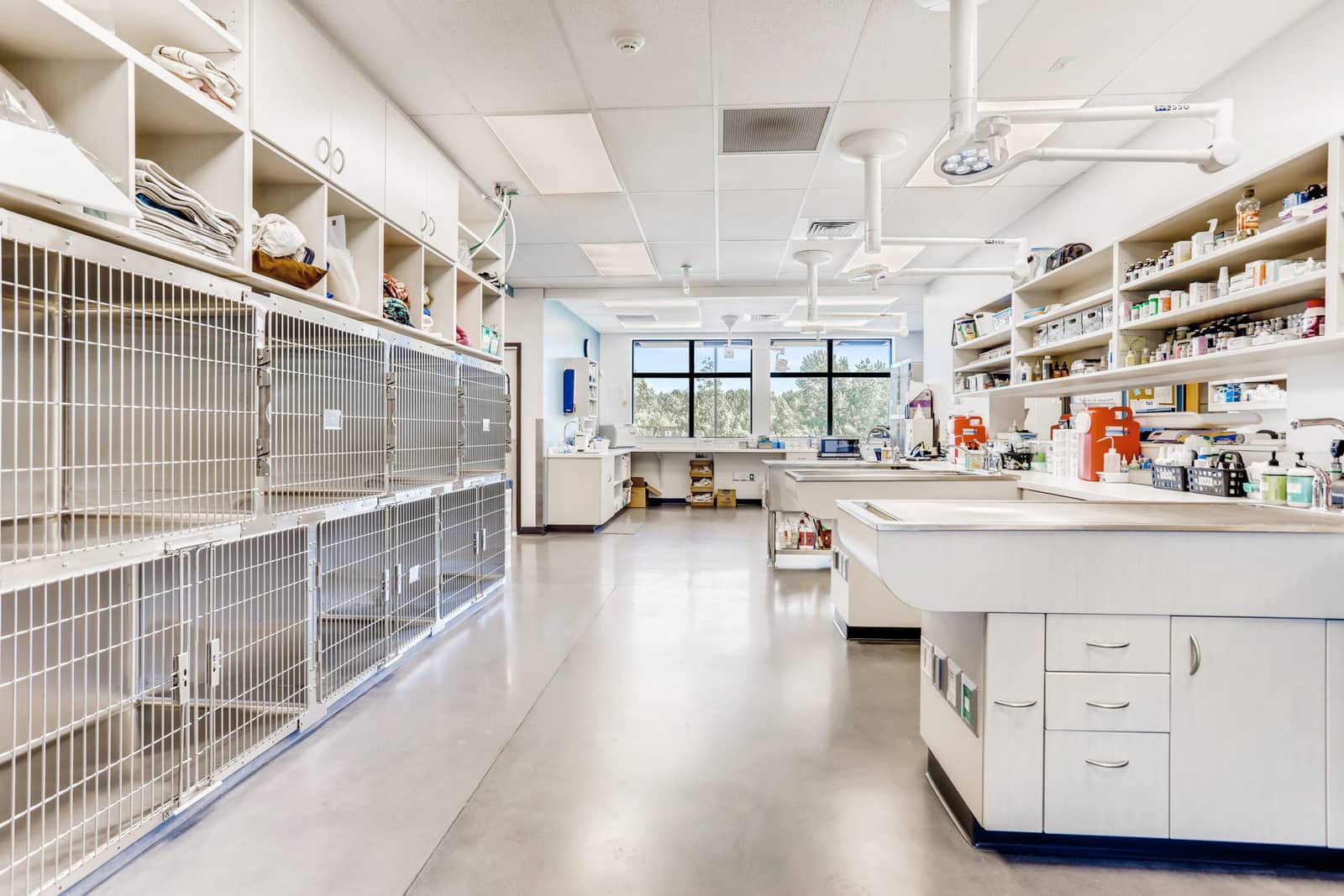
Your fit-out is highly specific to veterinary care and expensive to duplicate. Treatment rooms, surgical theatres, sterile zones, a lead-lined imaging room, wet and dry prep areas, recovery bays and compliant waste and medical gas setups embed your practice in the building. The address ties directly to your client base, with parking, access for nervous animals, noise controls and local reputation hard to replicate elsewhere. Sector revenue is resilient, supported by strong Australian pet ownership and a healthcare-adjacent service model. Redirecting rent into repayments builds equity in a clinic property you control.
Main drivers:
- Control of clinical environment: Shape a layout arranged around consult flow, surgery, imaging and inpatient care without refit approvals from a landlord.
- Location equity: Keep parking, visibility, council permissions and referral patterns that your client base relies on.
- Cost stability: Insulate the practice from rent escalations with a known repayment path that builds ownership.
- Fit-out longevity: Spread the cost of surgical, imaging and sterilisation infrastructure across ownership rather than sunk tenant improvements.
- Future optionality: Hold an asset that can be retained at retirement with an arm's length lease to a successor vet.
Buying may not suit if your lease has a short runway and a planned relocation is likely, if you expect to outgrow the space within a few years, or if capital is better deployed into high-return items such as digital radiography, ultrasound, dental suites, staff expansion or an additional location. The choice rests with you and your practice plan.
The mechanics of a veterinary clinic mortgage
Deposit and LVR. For a clinic held as standard commercial security, lending commonly reaches up to 80 per cent of the property value, which means a deposit of around 20 to 25 per cent. Veterinary owner-occupiers recognised by specialist healthcare lenders can go further: lenders such as BOQ Specialist and Medfin fund up to 100 per cent of the purchase price on the clinic property alone, without taking your home as extra security. LVR is measured against the lender's valuation, not the price.
Loan term and structure. Terms commonly run 10 to 15 years with a bank and up to 25 to 30 years with a non-bank lender. Repayments can be principal and interest for steady equity build, or interest only for a period if cash flow needs priority during fit-out, equipment upgrades or staffing ramps.
Security and serviceability. The property is the primary security. Lenders assess business financials, stability of billings, operating margins, and your capacity to service the debt after clinic expenses and owner drawings. For an owner-occupier, the rent the practice currently pays can be counted toward servicing the new loan. They review valuation, location, parking, council compliance and any specialised use clauses.
Owner occupier treatment. Lenders generally favour an owner occupied veterinary clinic due to sticky tenancy, essential service demand and lower observed default risk. This can assist with pricing and terms.
Structuring the finance
Many veterinary clinic operators hold the freehold in a separate entity, often a company or trust, and lease it to the trading practice at a commercial rent. A lender then reads that inter-entity rent as the serviceability line and takes the property as security, with the trading company and directors typically providing guarantees. The arrangement keeps the property and the practice on separate balance sheets and supports succession where the real property is retained.
With a background in financial planning, Nick and the Ardent Capital Group team can help shape a finance strategy around your set-up, then work with your accountant to confirm the tax and ownership detail before anything is settled.
SMSF purchases. Commercial premises generally qualify as business real property, so a self-managed super fund can hold the building and lease it to your trading company at market rent through a limited recourse borrowing arrangement and a bare trust. SMSF lending gears lower than a standard purchase, commonly 65 to 75 per cent, and the full-price veterinary product cannot be used inside super. Ardent arranges the finance around your fund's set-up; your accountant and SMSF adviser confirm the super, tax and ownership detail before anything is locked in.
How lenders size up the deal
- Business financials: Two to three years of financial statements, BAS and tax returns, with attention to turnover trends, gross margin on services and pharmacy, and normalised owner drawings.
- Serviceability: Cash flow after staff costs, consumables, rent or proposed mortgage, equipment finance, and add-backs such as one-off refit costs.
- Property and valuation: Zoning for veterinary or medical use, car parking ratios, acoustic treatment, lead-lining in imaging rooms, compliance with council and environmental rules, and the independent valuation outcome.
- Deposit and equity position: Cash savings, retained profits, or the ability to leverage your equity in residential or other commercial property.
- Lease and occupancy: For strata or investment structures, terms of the lease, options to renew, and rent at market levels. For owner occupiers, the internal lease between entities and use clauses.
A specialist broker who understands veterinary premises, fit-out intensity and lender appetite helps shape a stronger submission and reduces avoidable delays.
A scenario worth considering
This is an illustrative scenario that shows the kind of situation we can assist with, and how the thinking might run.
- Situation: A two-partner small animal clinic with $2.6M annual billings occupies a 280 sqm strata suite with 8 car parks. The landlord plans to sell within 12 months. The partners want to secure the site and upgrade imaging and dental.
- Options that could be mapped: Buy the current strata lot at $2.1M, buy a freestanding site nearby at $2.8M with room for expansion, or relocate to a medical precinct strata with higher visibility but limited parking.
- Structures that could be considered: Purchase in a unit trust with 50:50 units and a commercial lease to the trading company. An alternative would be one partner's SMSF acquiring 50 per cent and the trust acquiring 50 per cent, each on market rent.
- Deposit and equity: Combined cash of $350K, plus capacity to leverage your equity in one partner's home for an additional $250K.
- Indicative lending: At 75 per cent LVR on the strata option, senior debt of about $1.575M, with a potential top-up through an equipment facility for imaging and dental upgrades.
- How we would approach it: We would map the serviceability, sequence the equipment finance, and lay out the parking and disruption tradeoffs so the choice stays with you. The figures above are illustrative, not confirmed outcomes.
Other finance ACG can arrange for veterinary clinic owners
- Asset finance for veterinary equipment: Fund digital radiography, ultrasound, anaesthesia machines, surgical tables, dental X-ray, autoclaves and in-house pathology so the clinic can operate at standard without straining cash flow.
- Fit-out and refurbishment finance: Cover theatre upgrades, lead-lined imaging rooms, HVAC, medical gases, kennels and acoustic treatments aligned to council and building rules.
- Working capital loans: Smooth seasonality around holiday periods, staff hiring, vaccine and pharmaceutical stock, and short-term marketing pushes after a move.
- Business overdraft: A revolving limit tied to clinic trading that handles timing gaps between supplier payments and receipts.
- Refinancing and debt consolidation: Re-set multiple equipment and unsecured facilities into a clearer structure that aligns with property ownership.
- Construction and renovation: Build or extend a freestanding clinic, add consult rooms, or reconfigure treatment flow inside a larger tenancy.
- Business or premises acquisition finance: Buy in as a partner, buy out a retiring principal, or acquire the freehold or strata lot your practice occupies.
Beyond the mortgage, many clinics pair the purchase with vet equipment finance for imaging, surgical and in-house pathology gear, and with working capital for a vet clinic to smooth wages, drug stock and after-hours staffing through busy periods.
Specialist finance for veterinary clinic premises
Ardent Capital Group is a specialist in commercial mortgages for veterinary clinics. We structure funding around how you plan to hold and occupy the property, with clear advice on entities, internal leases and the mix between property and equipment facilities.
We service Sydney, Melbourne, Brisbane, Gold Coast, Perth, Adelaide, Canberra and surrounding metro and regional areas. We have helped facilitate over $500M in funding over a decade for more than 1,000 borrowers.
If you want a clear view of your options and finance that supports the wealth you are building, talk to us. Our team can help you map it out.
If buying your premises is on the horizon, our vet clinic property loan team can map the numbers with you.
Veterinary clinic commercial mortgage FAQs
What deposit do I need to buy my clinic premises? Most lenders look for around 20 to 25 per cent, aligned to an LVR up to 80 per cent for a clinic held as standard commercial security. Veterinary owner-occupiers recognised by specialist healthcare lenders can access more against the practice property itself.
Can my SMSF buy the clinic building and lease it to my practice? Commercial premises generally qualify as business real property. An SMSF can hold the building and lease it back to your trading company at market rent, subject to fund rules and lending limits.
How do lenders view owner occupier veterinary clinics versus investments? Owner occupied clinics are often viewed favourably due to essential service demand and tenancy stability. Pure investments are assessed on lease term, tenant quality and yield.
Will the valuation include my fit-out and equipment? Valuations focus on the real property. Fixed fit-out elements may be reflected in value, but clinical equipment is typically financed separately under asset finance.
Can I use interest only repayments during a refit or expansion? Many lenders allow interest only periods to support cash flow during fit-out, relocation or staff expansion, then roll to principal and interest.
What documents will I need for approval? Expect business financials for two to three years, BAS, tax returns, bank statements, a summary of equipment facilities, a tenancy schedule if applicable, and identification and entity documents.

Written by
Nick Chong
Managing Director, M.AppFin, Dip. Mortgage Mgmt
Nick holds a Bachelor of Agricultural Economics, a Master of Applied Finance and an Advanced Diploma in Financial Planning. He founded Ardent Capital in 2016 after more than a decade in financial planning and mortgage broking. For the past ten years he has led a team of finance specialists, mortgage advisers, brokers and credit analysts, all working to secure optimal outcomes for clients and always acting in their best interests. The team brings both a qualitative and a quantitative approach to every deal.