

How Bus and Coach Depot Owners Approach a Commercial Mortgage
Buying the depot your bus or coach operation already runs from is a defining step for any fleet owner. At Ardent Capital Group we speak with transport operators about this kind of commercial property purchase regularly, so this guide walks through how a lender values a depot, the deposit to plan for, and the levers that move the number.
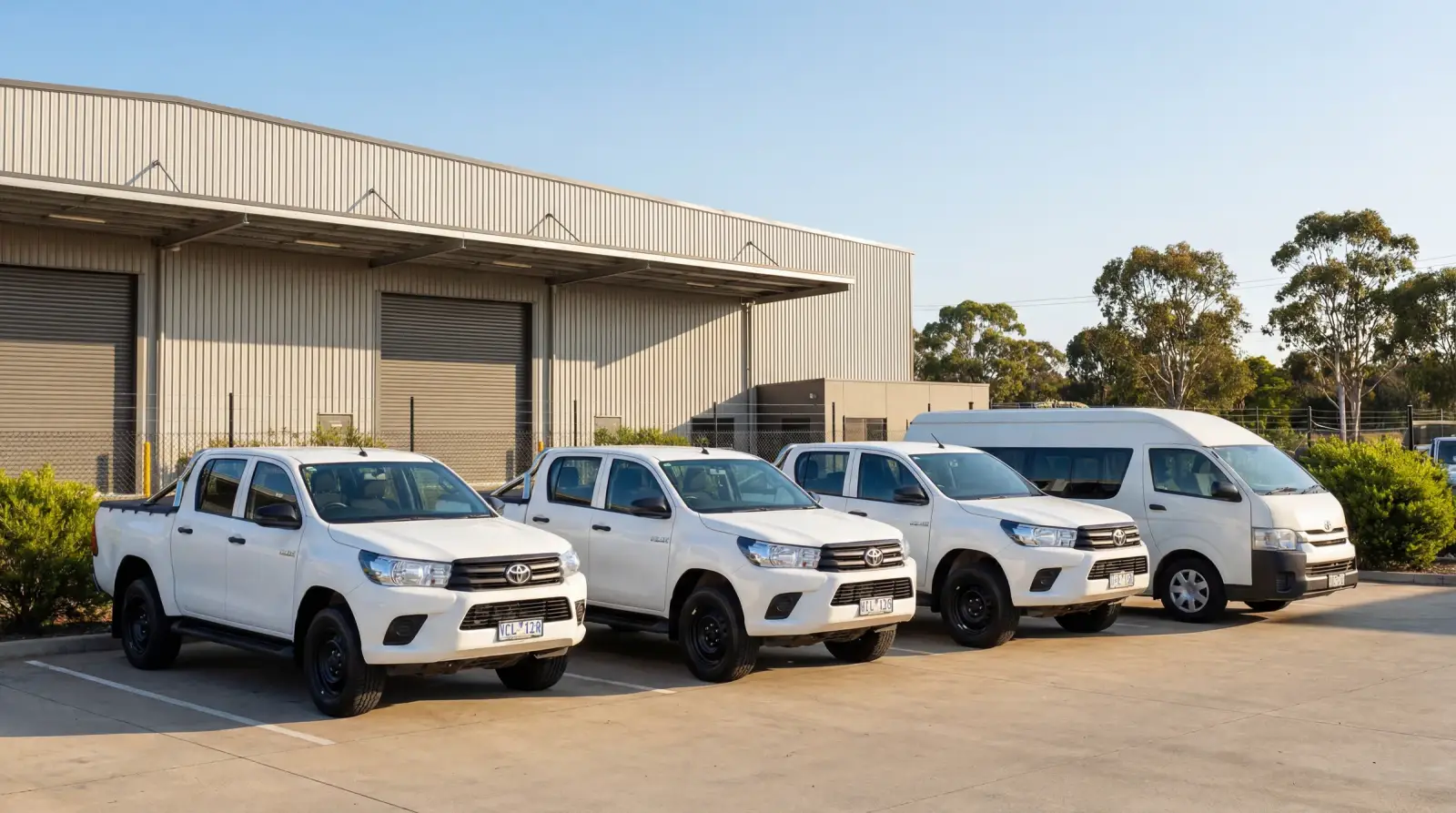
Ardent Capital Group is a specialist in commercial mortgages for bus and coach depot operators across Australia. Our team can help you move from tenant to owner, and give you clear lending advice on structure and strategy.
- Access finance from $50K to $30M+, structured to fit your fleet size and cash flow profile.
- We have helped facilitate over $2B in funding over a decade for Australian businesses.
- We service Sydney, Melbourne, Brisbane, Perth, Adelaide, Canberra, Hobart, and surrounding regional towns.
- Direct access to bank and non-bank lenders with appetite for depot and industrial property.
If buying your premises is on the horizon, our depot property loan team can map the numbers with you.
Why bus and coach depot owners choose to buy
Depots are high-spec industrial assets. Hardstand is thicker, turning radii are larger, and the site must handle refuelling, wash-down, brake testing and repairs. Location ties your route coverage, charter catchment and driver pool to a single address. Each year you occupy and improve a rented depot, you build the value of the landlord's asset rather than your own. Ownership fixes your base for tenders and shifts repayments into an asset on your balance sheet.
Key drivers for ownership:
- Control over site layout, including 18 metre articulated movements, queueing, fuelling, wash bays, pits and hoists.
- Protect route coverage and service reliability by locking in a location near arterials, schools, depots for interchange and night parking.
- Convert fit-out spend into owned improvements such as heavy-duty pavement, oil separators, bunding and fire systems.
- Stabilise occupancy cost, with repayments building equity and a defined end to the loan term.
Buying may not suit every operator. Where your route contract horizon is short, a relocation is likely after a tender round, environmental risks are uncertain, or capital is better deployed into fleet replacement, emissions upgrades or telematics, leasing can remain the sharper call. The decision sits with you.
How lenders approach a bus and coach depot purchase
Deposit and LVR. Depot property is standard commercial security, valued on comparable sales and achievable rent, the same category as a warehouse or factory. Owner-occupier purchases gear up to around 80 per cent, which puts the deposit near 20 per cent. The one variable specific to a depot is the balance of yard to building: a large hardstand or vacant-land component is valued closer to 65 per cent, while a site with substantial workshop and office improvements sits nearer the 80 per cent end. The major banks publish no owner-occupier commercial LVR at all, which is one reason a broker who knows which lender to approach earns their place in the deal.
Loan term and structure. Terms range from 10 to 15 years with the banks to 25 to 30 years with non-bank lenders. Repayments can be principal and interest for steady amortisation, or interest only for a defined period where cash flow is directed to fleet, staff or capex.
Security and serviceability. The depot is the primary security. Lenders assess business performance and serviceability using historical and year-to-date financials, route and charter contracts, and your existing rent profile. Depreciation and one-off repairs are commonly reviewed as addbacks. Long-dated school or government service contracts often strengthen the serviceability position.
Owner-occupier treatment. Lenders generally view owner-occupied purchases favourably due to lower vacancy risk, clearer control over the asset, and stronger alignment between the property and operating cash flows.
How finance for a depot purchase is typically structured
Many bus and coach depot operators hold the freehold in a separate entity, often a company or trust, that leases the depot to the trading business at a commercial rent. A lender reads that as two connected files: the property entity as borrower, and the inter-entity rent as the serviceability line. Holding the asset apart from trading risk is a common arrangement, and lenders are used to assessing the finance around it, which also clarifies tax and cash flow treatment across the entities.
Where an operator uses a self-managed super fund, a depot can qualify as business real property, so the fund can hold the site and lease it back to the business at market rent through a limited recourse borrowing arrangement and a bare (custodian) trust. The appeal is asset protection and a retirement-focused position. The lending caps out in the standard commercial band, cannot be cross-collateralised, and the market-rent and compliance rules are strict. Ardent arranges and structures the finance to fit the ownership you use, while your accountant, and a licensed SMSF adviser for any fund purchase, confirms the tax and compliance detail before you commit.
The lender's checklist
- Business financials and contracts: three-year financials, current management accounts, route and school contracts, charter seasonality and margins.
- Serviceability metrics: interest cover and debt service ratios, rent histories that translate to proposed loan repayments, and stress testing for fuel and wage variability.
- The property and its valuation: land area, heavy-duty hardstand, workshop improvements, fuel storage compliance, wash-down and oil separation, access for 12.5 to 18 metre vehicles, power supply, zoning and planning overlays.
- Environmental and compliance: a Preliminary Site Investigation where fuel storage or wash bays are present, evidence of approvals for tanks and bays, stormwater management and any contamination history, since the duty to manage contaminated land runs with the site.
- Deposit and equity position: cash, retained earnings and the ability to leverage your equity in other property to reduce the cash deposit.
- Lease and occupancy: owner-occupier leaseback documentation or third-party lease terms, market rent support and outgoings responsibility.
A specialist broker who knows depot operations, valuation nuance and lender appetite reduces friction and helps present the file the way credit expects to see it.
One way this can play out
This is an illustrative scenario that shows the kind of situation we can assist with, and how the thinking might run.
A regional NSW operator runs 35 buses and coaches from a leased 7,500 sqm yard with heavy-duty pavements, a wash bay and 60,000 litre fuel storage. The adjoining freehold, 9,500 sqm with two workshops and a brake test lane, comes to market at $5,600,000. EBITDA supports the current rent of $38,000 per month, the operator holds long-dated school contracts alongside charter revenue, and there is equity in a residential property and a small industrial unit.
Options we would map:
- Owner-occupier purchase around 70 per cent LVR on a 20-year principal and interest term, with the deposit funded from cash and the sale of surplus plant, and repayments close to the current rent.
- A move toward 80 per cent LVR by offering additional property as security, reducing the cash deposit while keeping bank pricing aligned with owner-occupier settings.
- Funding up to 100 per cent of the purchase price by securing against the additional properties where the combined equity supports it, which preserves cash for resurfacing and a new automated wash bay.
- An SMSF pathway for part of the site through a limited recourse borrowing arrangement, recognising contribution and borrowing caps and the market-rent requirement.
- A non-bank option near 65 per cent LVR with interest only for two years while workshop upgrades complete, then a refinance to a bank once capex settles and trading stabilises.
How we would approach it: we would map the ranges, structures and repayments, likely a borrowing capacity in the $3,600,000 to $4,480,000 range depending on LVR and security mix. The operator would weigh contract horizons and capex timing against each option before deciding. The figures above are illustrative, not confirmed outcomes.
Other lending we can help with
- Asset finance: arrange bus and coach equipment finance for buses, coaches, telematics, CCTV, workshop hoists, brake testers, fuel bowsers and automated wash systems.
- Fit-out and refurbishment finance: fund heavy-duty pavement works, oil separators, bunding, fire systems and workshop upgrades that lift depot efficiency.
- Working capital: arrange working capital for a bus and coach operator to support school term ramp-ups, charter seasonality or parts inventory without straining day-to-day cash flow.
- Business overdraft: cover timing gaps on fuel, tyres and payroll while receivables from charter and contracts clear.
- Refinancing and debt consolidation: reset mismatched facilities, reduce total repayments and simplify security across property and plant.
- Construction and renovation: add canopy bays, extend hardstand or build additional workshop space with staged drawdowns.
- Business or premises acquisition finance: buy a competitor's runs, acquire the freehold you currently lease, or complete a buyout between owners.
Owning the depot can free equity for plant and fleet, while a refinance can consolidate multiple facilities into a structure that fits your operating rhythm.
Talk to a bus and coach depot finance specialist
Ardent Capital Group is a specialist in commercial mortgages for bus and coach depot property. We arrange and structure finance around how you intend to hold and occupy the depot, aligning loan terms, security and repayments with your contracts and fleet cycle.
We service Sydney, Melbourne, Brisbane, Gold Coast, Perth, Adelaide, Canberra and surrounding metro and regional areas. We have helped facilitate over $2B in funding over a decade for over 1,000 borrowers.
If you want clear options and a direct conversation, talk to us. Ardent Capital Group is a specialist in commercial mortgages and our team can help you today, with a focus on optimal financial outcomes.
Questions we're often asked
What deposit do I need to buy a bus or coach depot?
Plan for around 20 per cent where the site is building-led, since owner-occupier depot property gears up to about 80 per cent. A large hardstand or vacant-land component is valued closer to 65 per cent, so a yard-heavy site calls for a larger deposit or additional security.
Are bus and coach depots treated as specialised commercial property?
Generally no. A depot is standard commercial security, valued like a warehouse on comparable sales and achievable rent rather than as a specialised asset. The variable that matters is the mix of yard to building, not the trade you run, so the balance of the site influences the LVR more than the fact that buses park on it.
Can I buy the depot in an SMSF and lease it to my business?
Commercial depots generally qualify as business real property, so an SMSF can hold the asset and lease it back at market rent. The trade-offs are contribution limits, borrowing caps and compliance obligations that must be managed.
How do lenders view government and school bus contracts?
Positively where terms are clear and remaining tenure supports the loan. Lenders assess margin stability, indexation, renewal history and concentration risk across contracts.
What environmental items will a lender and valuer want to see?
Evidence of approvals for fuel storage, wash-down and oil separation, stormwater management, and a Preliminary Site Investigation where there is a fuel or contamination history. Prior site assessments and remediation records help credit sign-off, and the duty to manage contaminated land stays with the site regardless of who caused it.
Can goodwill from my contracts be used as security?
Goodwill supports serviceability but is not usually taken as primary security. Security is centred on the depot and, where relevant, additional property.
Can the loan include works like extra hardstand or a new wash bay?
Many lenders will fund a portion of capex tied to the depot upgrade, validated by quotes and a valuation with as-if-complete value. Structure and LVR determine how much can be included.

Written by
Nick Chong
Managing Director, M.AppFin, Dip. Mortgage Mgmt
Nick holds a Bachelor of Agricultural Economics, a Master of Applied Finance and an Advanced Diploma in Financial Planning. He founded Ardent Capital in 2016 after more than a decade in financial planning and mortgage broking. For the past ten years he has led a team of finance specialists, mortgage advisers, brokers and credit analysts, all working to secure optimal outcomes for clients and always acting in their best interests. The team brings both a qualitative and a quantitative approach to every deal.