
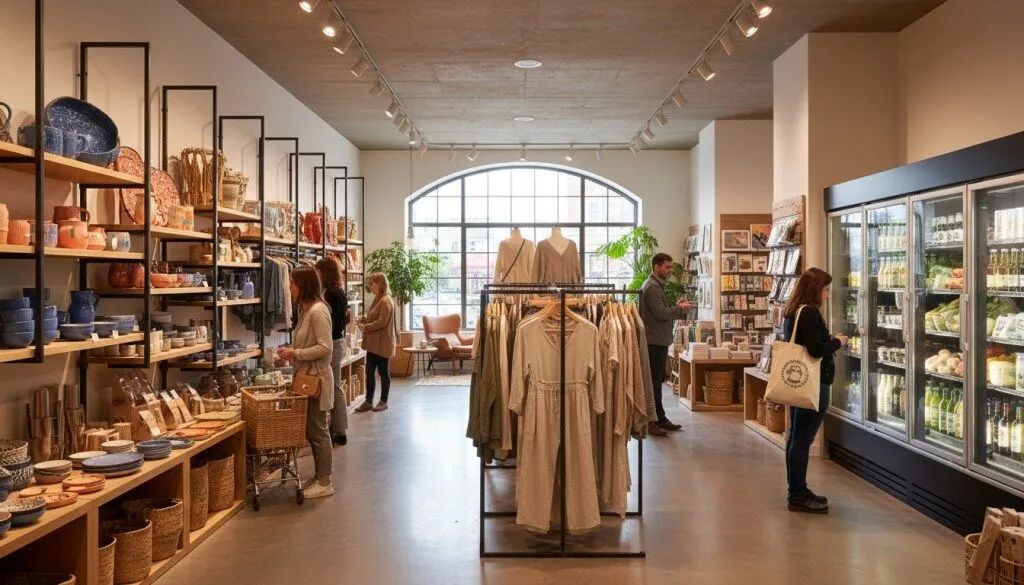
Supermarket property loans
Buying the supermarket premises you trade from
Thinking of buying your supermarket premises?
Independent grocery is a business of thin margins and heavy plant, and lenders who do not understand it read the accounts the wrong way. A supermarket shop is standard commercial security, so it borrows on the same basis as an office or a warehouse. The refrigeration inside it does not. We are commercial mortgage brokers and we fund the two separately, which is how these purchases actually get approved.
We can help you:
- Buy the supermarket or grocery premises you already trade from
- Borrow up to 75% to 80% of the property value on standard commercial security. Up to 100% of the purchase price is achievable where you add equity from a property you already own.
- Buy an independent supermarket trading under a banner group such as IGA, Foodland or FoodWorks
- Fund the refrigeration, checkouts and shelving separately from the property
- Buy the freehold and lease it back to your operating company
- Arrange finance for an SMSF purchase of your supermarket premises
- Refinance an existing store and fund a refit or an extension
- Improve the rate or conditions on your existing supermarket debt
- Free up working capital to carry stock through a seasonal swing
Who we help:
- Established business owners who require finance between $50K to $30M
- First-time borrowers who need a beginner-friendly strategy
- Sophisticated borrowers and investors who need a unique strategy and deal structure
- Urgent, time-sensitive deals that need to move quickly
- Self-employed and trust-structured borrowers who need their income presented properly
- Commercial property owners with multi-tenancy plans



Speak to a specialist today
1,000+
loans settled
$2B+
funded
Supermarket finance
Helping independent grocers buy their premises
We help independent supermarket owners buy the store they run, whether that is a strip-shop grocer, a full-line independent under a banner group, or a freehold bought and leased back to the operating company. We handle the lender research, the structuring and the application from start to finish, and we present the store the way a credit team needs to read it: the property on one basis and the plant on another. Whether this is your first store, a second site, or a purchase through a trust or SMSF, we take it to the lenders who fund grocery properly.
Funding from $50K to $30M
from over 60 bank & non-bank lenders












- ANZ
- Bankwest
- Bluestone
- Bank of Queensland
- Commonwealth Bank
- Firstmac
- ING
- Macquarie
- NAB
- Pepper Money
- Suncorp Bank
- Thinktank
Supermarket finance specialists
This is a specialist area we can assist with, for grocers buying the premises they trade from. The stores we can finance include:
- Independent supermarkets trading under a banner group
- Neighbourhood and strip-shop grocers
- Full-line independents with a fresh, deli and bakery offer
- Ethnic and specialty grocery stores with a loyal catchment
- Freehold stores bought and leased back to the operating company
A supermarket is two assets in one building. The shop is standard commercial security and values on comparable sales, the same as an office. The refrigeration is plant, and it is funded on its own facility. Lenders who treat them as one thing get the number wrong.
Why businesses choose Ardent Capital Group as their broker
Execution and strategy
Strategy first, then execution. We structure your deal properly and take it to the right lenders for your situation, so you are not enquiring lender by lender.
Clear advice for smart lending
Straight answers on LVR, structure and timing, including when a deal does not stack up.
A long-term partner
We stay with you well beyond settlement, with lasting relationships and ongoing support from the team.
Finance types
Supermarket scenarios we can help finance
Grocery runs high volume on thin margin, and stock turns fast. The shop values as standard commercial security, while the refrigeration that keeps it trading costs a great deal and secures very little. These are the purchases we can arrange.
The store you lease, bought outright
Grocery is a thin-margin trade, but the shop under it is not read that way. A lender prices it on comparable sales and achievable rent, the same bucket as an office or a warehouse, and that bucket gears higher than a trade-dependent one. We can help you:
- Borrow up to 75% to 80% of the property value on standard commercial security
- Count the rent you stop paying to a landlord, which a lender adds back when it tests whether you can service the loan
- Order a valuation of the shop on comparable sales and achievable rent, assessed separately from what the business earns
- Expect the major banks to assess an owner-occupier supermarket case by case rather than against a published limit
- Take a term to 25 to 30 years with the non-bank lenders, against the 10 to 15 years the banks commonly publish on a commercial facility
- Gather two to three years of financial statements, BAS lodgements and point-of-sale reports to support the income read
Buying an independent store under a banner
Most independent supermarkets trade under a banner. Metcash supplies more than 1,600 independent stores and licenses the banners over the door, including IGA, Foodland, Friendly Grocer and Eziway, so the supply arrangement sits inside the accounts a lender reads. We can help you:
- Present the banner agreement and the lease your solicitor has settled, which a lender reads together rather than one at a time
- Explain the supply arrangement in the submission, since Metcash has told the ACCC that IGA retailers acquire around 74% of their goods from Metcash on average
- Show the store assessed as standard commercial security whichever banner is over the door
- Set out the fresh, deli and bakery departments, which carry more plant and more staff than a dry-goods grocer
- Separate the shop from the business where both sell together, the shop on comparable sales and the business on its earnings
- Read the vendor's asking price as a multiple of earnings plus stock at value, the market convention, while a lender forms its own view
Cabinets, coolrooms and checkout terminals
Refrigeration is the largest plant cost in a supermarket and secures far less than it costs, since plant installed for one grocer is worth a fraction of that to anyone else. The premises carry a property facility and the plant carries its own. We can help you:
- Fund refrigeration, coolrooms and freezer plant by chattel mortgage or equipment finance, separately from the property
- Finance checkouts, self-service terminals, shelving, scales and the point-of-sale system the same way
- Expect a valuer to price the building and the fit-out that forms part of it, not the cabinets that can be unbolted and removed
- Price the refit before settlement where the store comes with tired plant, since it changes what you can afford to pay for the property
- Budget for refrigeration as the largest line on the power bill, where an ageing rack is a cost problem before it is a finance problem
- Include the refrigeration in the funding plan alongside the property, so the whole store is funded rather than the building alone
Landlord to your own grocery business
Holding the shop in one entity while the grocery business trades in another keeps the property when the store is sold or handed on. The split moves the security, the tax position and which lenders will look at it. We can help you:
- Present the lease from the property entity to the operating company, which your solicitor documents on commercial terms
- Plan for personal guarantees from directors and trustees, which lenders require whatever the structure
- Compare how discretionary trusts, unit trusts and company structures are each read by different lenders
- Settle the entity before the application goes in, since some lenders reduce the LVR for trust or company borrowers
- Confirm the stamp duty and capital gains position with your accountant before you sign, since splitting the entities afterwards costs far more
- Check the land tax treatment of a commercial freehold with your accountant, since it varies by state
An SMSF buying the supermarket premises
Yes, this can be done, and we arrange it. A self-managed super fund buys the store under a limited recourse borrowing arrangement, the property sits in a separate holding trust, and your operating company leases it back at market rent. It is a solid, compliant structure, and retail premises sit comfortably inside it. It is also unforgiving of detail, and the detail below is where these purchases are won or lost.
We know this sounds complicated, and we can assist to make things clearer. Reach out and we will guide you through the entire process. We structure the finance and tell you which lenders will take a supermarket as SMSF security and on what terms, and we bring in the SMSF specialists and licensed advisers who set the fund side up.
- From 10 August 2026 a new arrangement can only be used for business real property. A shop trading wholly as a business qualifies, and it does not matter whether you or a tenant runs it. A shop with a flat above it on the same title generally does not, which catches a lot of the shop-top strip retail on the market
- The property sits in a separate holding trust, and the lender's recourse is limited to that one asset
- Your operating company leases it back in writing, at market rent supported by an independent appraisal, and the rent has to actually be paid, or it can be taxed as non-arm's length income
- The arrangement funds a single asset, so the business, its stock and its refrigeration are financed separately, outside the fund
- Cross-collateralisation is not available inside super. The fund needs its own deposit, and the 100% LVR structures available outside super do not apply
- Lenders cap SMSF lending below a standard purchase, generally between 65% and 80%, and want cash left in the fund after settlement
Equity in the store, put to work
Refrigeration at the end of its life is a common reason a grocer refinances, alongside equity that has built in the property since settlement. On refinancing a supermarket we reassess the store on what it is worth now rather than what you paid. We can help you:
- Fund new refrigeration, checkouts and shelving by chattel mortgage rather than capitalising them into the property loan
- Move from a lender that has stepped back from retail to one actively writing it
- Order a revaluation on a stronger property market, which can release equity toward the refit
- Release equity from one store toward the deposit on a second, a common step for grocers building a small group
- Consolidate equipment finance, working capital and the property loan into one structure
- Weigh break costs and discharge fees against the projected saving
Cold chain, aisles and a bigger floor
A competitor opening nearby is the usual trigger for a refit, and aisle layout, checkouts and cold chain are replaced together. Where the work extends the building or forms part of a centre, our neighbourhood centre development finance page covers it. We can help you:
- Build the refit into the facility or draw it against progress invoices as the aisles come back online
- Sequence refrigeration and cold chain, commonly the largest single line in the works budget
- Stage the works so the store keeps trading through the program
- Expect an extension to be assessed as construction rather than as a refit
- Confirm power and refrigeration capacity before the layout is set
- Support a revaluation on the larger floor once the extension is complete
Our complete list of services
- Buy the supermarket premises you already trade from
- Borrow up to 75% to 80% of the property value on standard commercial security
- Buy an independent supermarket trading under a banner group
- Purchase the freehold of the store you currently lease
- Improve the rate or conditions on your existing finance
- Fund a store refit, an extension or a new aisle layout
- Release equity to refit or to fund a second store
- Finance refrigeration, coolrooms, freezers and the central rack
- Finance checkouts, self-service terminals, shelving and point-of-sale
- Free up your cash flow with working capital
- Fund the stock you carry through a seasonal swing
- Arrange finance for an SMSF purchase of your supermarket premises
- Arrange finance through a trust or company structure
- Bridge a settlement timing gap
- Refinance and consolidate existing business debt
- Arrange personal finance for owners, managers and board members
- Fund the business behind the property with supermarket business loans
Our process
How it works
✓We understand your scenario
We talk through the property, your business and timeline, and any complexity in your structure.
✓We find the right lender
We match your deal to the lender on our panel best suited to it.
✓You receive clear terms and guidance
We present indicative terms and explain what we recommend, and why.
✓We stay with you beyond settlement
We manage everything through to settlement, then stay in your corner well beyond it, with ongoing support from the team.
Lender features compared
How supermarket loans compare across lenders
| Supermarket loan feature | Major banks | Non-bank lenders | Availability |
|---|---|---|---|
| Maximum LVR (owner-occupier) | Not published, assessed case by case | Up to 75% to 80% | Standard |
| Valuation basis | Comparable sales and achievable rent | Comparable sales and achievable rent | Standard |
| Refrigeration and plant | Funded separately | Funded separately | Critical |
| SMSF purchase | Withdrawn from SMSF lending | Up to 65% to 80% | Popular |
| Interest-only periods | Up to 5 years | Up to 5 years | Common |
| Loan term | Commonly 10 to 15 years | Up to 25 to 30 years | Flexible |
| Trading history required | Two to three years preferred | Shorter history considered | Important |
| Approval timeframe* | 3 to 6 weeks | 2 to 4 weeks | Varies |
| Best suited for | Established grocers buying prime freehold | Secondary locations, higher LVR, trust and company structures | — |
*IMPORTANT: These are indicative figures only. Terms, LVRs and approval timeframes vary with borrower capacity, security type and individual lender criteria, and are subject to change. Figures are a general guide, not a quote or an offer of finance, and not a representation that finance is available on these terms.
Frequently asked questions
Why work with Ardent Capital Group on your finance?
Ardent Capital Group brings the same method to every client: execution and strategy, clear advice for smart lending, and long-term growth. That means the right lender, structure and timing, straight advice so you borrow with confidence, and today's deal built toward where you want to be tomorrow. We are specialists in helping business owners secure finance to purchase their own property, and we understand the complex structures that often sit around it, including multiple trusts, holding companies and self-managed super funds. Whether you are securing the site you already trade from or bringing a tenanted store into your portfolio, no two funders read a supermarket asset the same way, so it goes to the ones that value that kind of property fairly. Once you have settled, the team stays close as you trade up or add the next store. Sydney is our home market, and the Sydney commercial property lending page sets out how local zoning and valuers read a deal. Every figure is subject to serviceability, lender appetite and approval.
What LVR can I get to buy my supermarket premises?
Standard commercial security like a supermarket shop typically gears to 75% to 80% of the property value. Add equity from a property you already own and a cross-collateralised structure can reach up to 100% of the purchase price. The exact number depends on your file, so talk to us.
How much finance can you help me access?
Supermarket premises funding runs from $50K up to $30M, from an independent store through to an anchor tenancy in a neighbourhood centre. Trading history, the banner arrangement and the surrounding catchment all carry weight.
Is a supermarket treated as a specialised property by lenders?
No, and this is the most common misconception we correct. A supermarket shop is standard commercial security, in the same bucket as an office or a warehouse. It is valued on comparable sales and the rent it could command, not on what your business earns. That is quite different from a pub, a motel or a service station, where the property and the trade are valued as one thing and the lending gears lower as a result. Being in the standard bucket is why a supermarket freehold borrows further than most grocers expect.
How is the refrigeration financed?
Separately from the property, and that is deliberate. Refrigeration is the largest plant cost in a supermarket, and it secures far less than it costs, because a rack and a run of cabinets installed for your store are worth a fraction of that to anybody else. A valuer prices the building and the fit-out that forms part of it, not the cabinets that can be unbolted and taken away. So the premises carry a property facility and the plant carries its own, usually a chattel mortgage. Checkouts, shelving, scales and the point-of-sale system are funded the same way. Splitting them covers the store as well as the property, with each facility on a term matched to what it funds.
Does trading under IGA, Foodland or FoodWorks change the finance?
It changes the accounts a lender is reading, so explain it properly in the submission. Metcash supplies more than 1,600 independent supermarkets and licenses the banners they trade under, and it has told the ACCC that IGA retailers acquire around 74% of their goods from Metcash on average. That supply obligation is a real feature of the business, and a credit team that has not seen it before will ask about it. The property itself is assessed as standard commercial security regardless of which banner is over the door. We set the supply arrangement and the store economics out clearly rather than leaving an assessor to guess at them.
How is an independent supermarket business valued?
The business and the property are two separate valuations, done on two different bases, and conflating them is where a lot of grocers come unstuck. The shop is valued on comparable sales and achievable rent. The business is valued on what it earns. Market convention prices an independent grocery business on a multiple of earnings plus stock at value, and a vendor or a business broker will usually quote it on that basis, but it is a convention rather than a standard, and a lender will form its own view. If you are buying the freehold and the business together, expect the two to be assessed apart.
Can I buy the store I currently lease?
Yes, and it is the most common supermarket purchase we do. Because you already trade from the store, you know exactly what it earns, the lender can see a proven operator in the premises, and the rent you stop paying to your landlord is added back when a lender tests whether you can service the loan. The lease you are currently on is also the best available evidence of what the property is worth to a tenant, which helps the valuation rather than hindering it.
What trading history do lenders want to see?
Two to three years of business financial statements and tax returns for the store, BAS lodgements, and point-of-sale reports showing the sales mix across grocery, fresh, deli and bakery. Gross margin in grocery is thin and stock turns fast, so a lender is reading volume and consistency rather than a headline profit figure. Where the store has traded under a previous owner, the vendor’s figures are the starting point, and we help you interrogate them before you rely on them.
What documents do I need to apply?
For a full-doc application, most lenders want two to three years of business financial statements and tax returns, personal tax returns for all guarantors, the contract of sale, the lease or banner agreement, and the point-of-sale or trade reports. Plenty of grocers do not fit a standard full-doc assessment neatly. Alt-doc and low-doc routes exist, supported by an accountant’s declaration, BAS lodgements and business bank statements, at a slightly higher rate. We work through your income situation upfront to identify the best approach.
Can I use my SMSF to buy my supermarket premises?
Yes, it is possible, and we arrange these. Retail premises sit comfortably inside an SMSF purchase, more comfortably than most asset classes. It is also one of the more intricate purchases in commercial finance, and the detail is what decides whether it works. The fund borrows under a limited recourse borrowing arrangement, so the store sits in a separate holding trust and the lender can only come after that one property. From 10 August 2026 a new arrangement can only be used for business real property. A shop trading wholly as a business qualifies, and it does not matter whether you or a tenant runs it. A shop with a flat above it on the same title generally does not, which catches a lot of the shop-top strip retail on the market. Your operating company leases the store back from the fund, in writing, at market rent supported by an independent appraisal, and the rent has to actually be paid. Cross-collateralisation is not available inside super, so the fund needs its own deposit and the 100% LVR structures described elsewhere on this page do not work here. Lenders cap SMSF lending below a standard purchase, generally between 65% and 80%, and want cash left in the fund after settlement. We know this sounds complicated, and we can assist to make things clearer. Reach out to our team and we will guide you through the entire process. We structure the finance, tell you which lenders will take a supermarket as SMSF security and on what terms, and bring in the SMSF specialists and licensed advisers who set the fund side up. You will not be working it out on your own. Get that right and it is a solid, compliant structure. Our SMSF retail and consumer premises page covers how a fund buys the shop a business trades from and leases it back to it.
What if I am buying the business but not the building?
Then there is no property for a lender to mortgage, and it becomes a different kind of loan. You are buying goodwill, fit-out, plant and stock, along with the right to occupy under a lease, so the funding comes from your cash flow, from security you already hold, and from equipment finance over the plant. The loan term is also capped by the years left on the lease, so the more time your lease has to run, the longer the loan can be. We can arrange this, and we will tell you plainly which parts of it are fundable before you spend money on due diligence.
How long does my retail lease have to run?
It depends on your state, and the rule most people repeat is wrong. There is no statutory minimum term in New South Wales, where it was repealed in 2017, or in Queensland, which never had one. Victoria, South Australia, Western Australia, the ACT, the Northern Territory and Tasmania each set a five year default, and even there it can be waived by certificate. If you are buying a business rather than the freehold, what matters commercially is not the statutory minimum but how many years you actually have left, because that caps your loan term.
Can you help if my bank has declined my application?
Often, yes. A decline usually means the store went to a lender whose appetite did not match it, not that the store is unfundable. A common cause is a credit team treating a supermarket as a specialised trading asset when it is standard commercial security, and gearing it down accordingly. Non-bank and specialist lenders assess retail differently and several publish an LVR the majors will not commit to in writing. We will give you a straight answer on whether it is fundable elsewhere.
Why use a broker rather than going direct to my bank?
Going direct means one lender’s appetite and one set of criteria. In grocery, the spread between lenders is unusually wide: the majors do not publish an owner-occupier commercial LVR at all, while several non-banks publish 75% to 80% in their product guides, and the loan terms differ by more than a decade. A specialist broker knows which lenders are genuinely writing retail this quarter and how each one reads a supermarket. Presenting a store to the wrong credit team is how a fundable purchase gets declined.
Do you charge any fees for your service?
Most of the time, no. Where a purchase requires significant preparation due to its complexity, a small mandate fee may apply, and we will always be upfront about this before any work begins.
What areas do you service?
Although we are based in Sydney, we service clients across all major Australian cities, including Melbourne, Perth, Brisbane, the Gold Coast, Adelaide, Canberra and Hobart, along with their surrounding regional areas. Wherever your store is located, we can arrange your finance.
What other finance can you assist with?
Although our main speciality is property loans for business owners, we also assist with supermarket refrigeration finance and working capital for supermarkets. On asset finance, that covers refrigeration, coolrooms and freezer plant, checkouts and self-service terminals, shelving, scales and point-of-sale systems, and delivery vehicles. On working capital, we arrange business overdrafts, lines of credit and cash-flow funding to carry stock through a seasonal swing, to fund a refit between trading peaks, and to cover wages. We also arrange home loans, planned alongside your commercial borrowing: cross collateralisation, guarantees, shortfalls and trust income included. See home loans for business owners. Where you are developing rather than buying, we also arrange neighbourhood centre development finance.
I've been a business owner for a few years now, but this will be my first loan. Are you beginner friendly?
Yes. That is our core ethos, helping you understand the right strategy, structure and clear advice from the very first conversation. Our main borrower profiles are independent grocers and retail owner-occupiers seeking finance from $50,000 upwards, and buying the shop you already trade from is very often a first commercial purchase, so it is well within our wheelhouse. We will walk you through what the property will actually value at, how the refrigeration gets funded, and the deposit you will genuinely need, before you commit to anything.
Can you give financial advice?
No. Arranging finance and advising on financial products are two different disciplines, and we do the first. What we bring is the credit analysis lenders require, the structuring of the facility, and the strategy for putting your application in front of lenders whose appetite matches it.
Because we act as a credit representative under an Australian Credit Licence, we do not give financial product, superannuation, taxation or legal advice, and nothing we provide should be taken as such. Where your circumstances need that input, we are happy to work with your accountant, financial adviser and solicitor to understand the full picture before anything is submitted.
The information on this page is general in nature and does not take account of your objectives, financial situation or needs.
Commercial property finance specialists
Looking to buy your business premises? Whether you're buying your first commercial property or refinancing an existing one, we can get it sorted.





Contact Us
Takes 60 secondsYour funding needs
Tell us more about your requirements
The more you can tell us, the better we can understand your unique requirements. eg. property purchase price, address, any deadlines, any existing debt etc.
Who should we contact?
Our senior team will contact you within a few business hours.
Thanks, there.
Our team has received your enquiry. We'll be in touch within a few business hours.
All details are secure, encrypted, and confidential.