
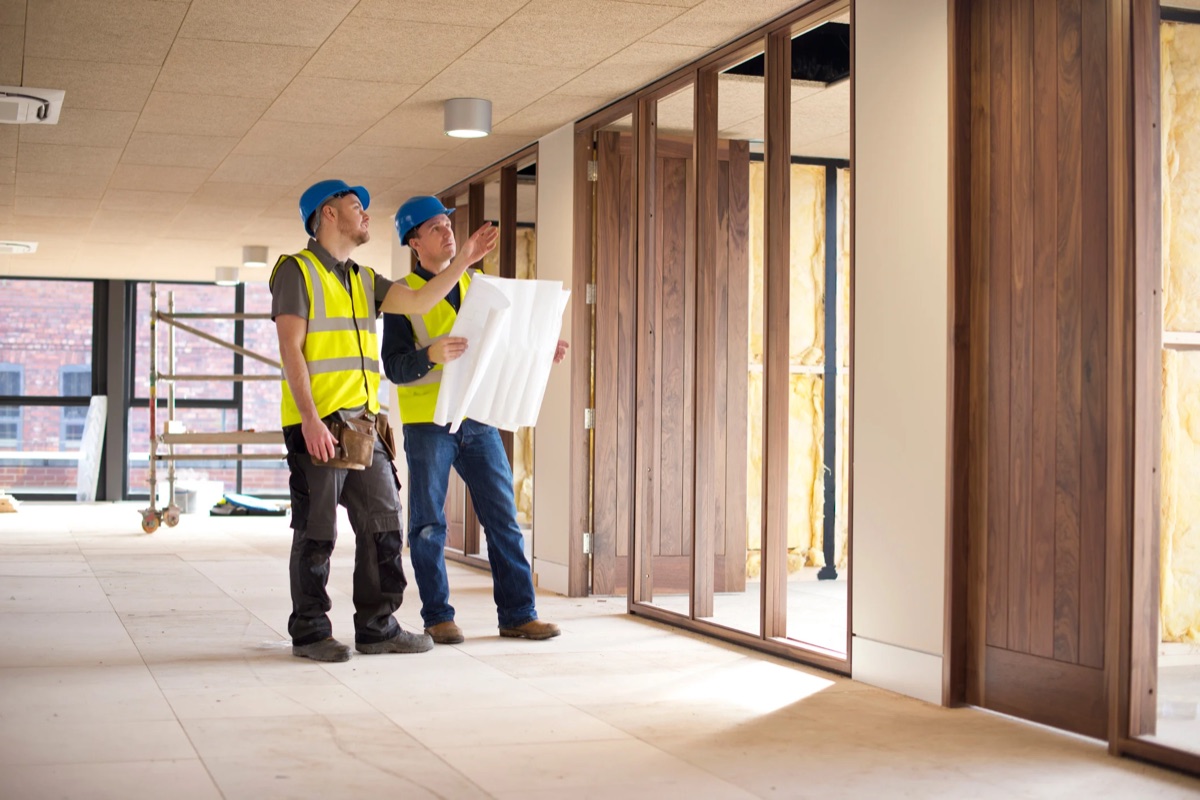
Commercial fitout and refurbishment finance
Funding works to premises you lease or already own
Fitting out or refurbishing commercial premises?
Fitout finance turns on one question the other construction pages never ask: do you own the building. If you lease it, the works improve someone else's asset and there is no property to secure against, so the funding is written against your business instead. If you own it, the building itself can carry the facility. Both are straightforward once the right structure is chosen, and we arrange from $50K to $30M.
We can help you:
- Fund the fitout of leased commercial premises where there is no property to secure against
- Fund refurbishment and works to a commercial building you already own
- Arrange facilities that fit inside the remaining term of your lease
- Fund works staged around a business that has to keep trading through them
- Structure funding around a landlord fitout contribution where one is being paid
- Fund plant, joinery, services and the trade works together rather than separately
- Arrange progressive drawdowns where the works run to a construction programme
- Refinance fitout costs already paid from working capital back onto a term facility
- Fund makegood works at the end of a lease
- Arrange finance from $50K to $30M nationally, from our Sydney office
Who we help:
- Established business owners who require finance between $50K to $30M
- First-time borrowers who need a beginner-friendly strategy
- Sophisticated borrowers and investors who need a unique strategy and deal structure
- Urgent, time-sensitive deals that need to move quickly
- Self-employed and trust-structured borrowers who need their income presented properly
- Commercial property owners with multi-tenancy plans



Speak to a specialist today
1,000+
loans settled
$2B+
funded
Fitout and refurbishment
Funding works to premises whether or not you own them
We arrange fitout and refurbishment funding for tenants moving into new premises, for businesses upgrading space they already occupy, and for owners refurbishing a building to lift what it earns. The works look similar in each case. What differs is the security available, and it sets how the facility is structured.
Funding from $50K to $30M
from over 60 bank & non-bank lenders












- ANZ
- Bankwest
- Bluestone
- Bank of Queensland
- Commonwealth Bank
- Firstmac
- ING
- Macquarie
- NAB
- Pepper Money
- Suncorp Bank
- Thinktank
Fitout and refurbishment finance specialists
Fitout and refurbishment is a specialist area, and one where the lease matters as much as the works. We can assist tenants taking new space and for owners upgrading a building they hold. The works we can finance include:
- Full fitouts of newly leased commercial premises
- Refurbishment and reconfiguration of space a business already occupies
- Upgrades to an owned building carried out to lift its rent or its value
- Works staged around a business that has to keep trading
- Makegood and reinstatement works at the end of a lease
A fitout to leased premises improves an asset the borrower does not own, so there is nothing to mortgage. The facility is written against the business and its trading, and the loan term has to sit inside the lease term. That is the constraint, and it is workable.
Why businesses choose Ardent Capital Group as their broker
Execution and strategy
Strategy first, then execution. We structure your deal properly and take it to the lenders genuinely comfortable with it, so you are not chasing each one yourself.
Clear advice for smart lending
Straight answers on LVR, structure and timing, including when a deal does not stack up.
A long-term partner
We stay with you well beyond settlement, with lasting relationships and ongoing support from the team.
Construction types
Fitout and refurbishment scenarios we can help finance
The useful thing to establish first is what security exists. From there the structure follows quickly, and so does the answer on how long the facility can run and what it will need from you at the start.
Fitting out leased premises
A tenant fitout is the most common project on this page and the one with the least security behind it. The works are physically attached to a building the landlord owns, and once they are installed they generally cannot be recovered, so a lender is not going to take a mortgage over them.
What that means in practice is that the facility is written against your business: its trading history, its cash flow and the strength of the lease you have signed. It is a normal and well established kind of lending, and the assessment looks much more like business lending than like a construction loan.
- Works attach to a building the landlord owns
- No property security available to the lender
- Facility written against the business and its trading
- The signed lease forms part of the assessment
- Assessed more like business lending than construction lending
- A normal and well established structure, not an exception
Landlord consent and fitout contributions
Almost every commercial lease requires the landlord to approve fitout works before they start, and a lender will want to see that consent alongside the plans. Works begun without it create a problem with the lease rather than with the loan, but it is the kind of problem that stops a drawdown.
Many leases also carry a landlord contribution toward the fitout, paid as a lump sum or taken as a rent free period. Where a contribution is being paid, it reduces what you need to borrow, and where it arrives later than the works are paid for, that timing gap is itself something the facility can cover.
- Landlord consent to the works confirmed before drawdown
- Plans and scope provided as part of the application
- A landlord contribution reduces the amount required
- Contributions paid as a lump sum or taken as rent free time
- The gap between paying for works and receiving a contribution can be funded
- Worth confirming the lease terms before the works are committed
Lease term and loan term
A facility for leased premises cannot sensibly run longer than your right to occupy them. Lenders set the term inside the remaining lease, and where an option to renew exists it is generally treated as an option rather than as certainty, because it has not been exercised.
The practical consequence is that a long fitout on a short lease has to be repaid faster than the works will last, which changes what the repayments look like. Where a lease is being renewed or extended, having that settled before the facility is arranged usually opens a longer term and a more comfortable structure.
- Facility term set inside the remaining lease term
- Unexercised options generally not counted as certainty
- A short lease means faster repayment of the same works
- Settling a renewal before applying can open a longer term
- Remaining lease term confirmed at the start of the application
- The constraint is the lease, not the works themselves
Makegood and the end of a lease
Most commercial leases require the premises to be returned to an agreed condition at the end, which can mean stripping out the fitout that was installed at the start. It is a real cost and it arrives at the least convenient moment, often while a business is also paying for the fitout of the premises it is moving into.
That cost can be funded rather than absorbed. Where a business is relocating, the makegood on the old premises and the fitout of the new can be arranged together, which keeps the whole move on one facility instead of taking two bites out of working capital in the same quarter.
- Leases commonly require reinstatement to an agreed condition
- The cost lands while a new fitout is also being paid for
- Makegood can be funded rather than taken from working capital
- Old premises makegood and new premises fitout arranged together
- Keeps a relocation on a single facility
- Worth quantifying from the lease well before the term ends
Refurbishing a building you own
Where you own the building the position changes completely, because there is security. The works can be funded against the property, either by increasing an existing commercial mortgage or by a facility that draws progressively as the work proceeds, and the term is set by the property rather than by a lease.
Refurbishment carried out to lift a building's rent or its value is assessed partly on what the completed building is worth, which brings it closer to the construction assessment used elsewhere in this section. Where the works are substantial the lender will want a scope, a fixed price where possible, and an as-if-complete valuation.
- The property itself provides security for the works
- Funded by increasing an existing facility or by a drawing facility
- Term set by the property rather than by a lease
- Assessed partly on the value of the completed building
- Substantial works need a scope and an as-if-complete valuation
- Closer to a construction assessment than a tenant fitout is
Keeping trading while the work happens
Very few businesses can close for a refurbishment, so most of this work is staged around trade: a section at a time, after hours, or across a quiet period. Staging costs more than doing it in one run and it protects the revenue that services the facility, which lenders understand and account for.
What matters for the funding is that the programme and the cash flow are read together. A staged job draws over a longer period and the business trades at reduced capacity while it happens, so the facility should be sized against that reality rather than against a normal trading month.
- Works staged in sections, after hours or across a quiet period
- Staging costs more and protects the revenue behind the facility
- Drawdowns spread across a longer programme
- Reduced trading capacity accounted for in the sizing
- Programme and cash flow assessed together
- Sized against the trading reality, not a normal month
Our complete list of services
- Commercial fitout and refurbishment finance
- Owner occupier construction finance
- Warehouse and factory construction finance
- Progress payment and drawdown finance
- Cost-to-complete and overrun finance
- Commercial property loans
- Commercial refinancing
- Working capital and business overdrafts
- Business loans
- Equipment and plant finance
- Urgent and bridging finance
- Property development loans
- Land acquisition finance
- SMSF commercial property finance
- Warehouse and industrial property finance
- Residential and investment home loans
Our process
How it works
✓We understand your scenario
We talk through the property, your business and timeline, and any complexity in your structure.
✓We find the right lender
We match your deal to the lender on our panel best suited to it.
✓You receive clear terms and guidance
We present indicative terms and explain what we recommend, and why.
✓We stay with you beyond settlement
We manage everything through to settlement, then stay in your corner well beyond it, with ongoing support from the team.
Lender features compared
How fitout and refurbishment finance compares across lenders
| Fitout and refurbishment feature | Major banks | Non-bank lenders | Availability |
|---|---|---|---|
| Leased premises, no property security | Available | Available | Common |
| Owned premises, secured against the property | Available | Available | Common |
| Assessed on trading income | Yes | Yes | Critical |
| Term limited by remaining lease | Yes | Yes | Critical |
| Unexercised renewal options counted | Generally not | Case by case | Important |
| Makegood and reinstatement funded | Case by case | Available | Popular |
| Shorter trading history | Rarely considered | Considered | Critical |
| Progressive drawdowns on larger works | Available | Available | Common |
| Approval timeframe* | 2 to 6 weeks | 3 days to 2 weeks | Varies |
| Best suited for | Established businesses with long leases and clean financials | Shorter leases, faster settlement, businesses in growth | — |
*IMPORTANT: These are indicative figures only. Terms, LVRs and approval timeframes vary with borrower capacity, security type and individual lender criteria, and are subject to change. Figures are a general guide, not a quote or an offer of finance, and not a representation that finance is available on these terms.
Frequently asked questions
What makes Ardent Capital Group the right broker for you?
Ardent Capital Group brings the same method to every client: execution and strategy, clear advice for smart lending, and long-term growth. That means the right lender, structure and timing, straight advice so you borrow with confidence, and today's deal built toward where you want to be tomorrow. On a fitout the security position and the lease term decide the structure, and most people find that out after they have committed to the works. We start there.
Can I get finance for a fitout if I lease the premises?
Yes, and it is the most common project we see here. Because the works attach to a building you do not own there is no property to mortgage, so the facility is written against your business and its trading, with the lease forming part of the assessment. It is well established lending rather than an exception.
How much can I borrow for a fitout or refurbishment?
We arrange from $50,000 to $30 million. What is available to you depends on whether there is property security. On leased premises it is driven by your trading income and the remaining lease term. On premises you own it is driven by the property and the value of the completed works.
Do I need my landlord to approve the works?
Almost always, because commercial leases generally require consent to fitout works. A lender will want to see that consent alongside the plans before releasing funds. Starting works without it creates a problem under the lease, and it is the kind of problem that stops a drawdown.
How long can the loan run for?
On leased premises, inside the remaining term of your lease. Lenders generally will not run a facility past your right to occupy, and an unexercised option to renew is usually treated as an option rather than as certainty. On premises you own, the term is set by the property in the ordinary way.
My landlord is paying a fitout contribution. Does that change things?
Yes, in your favour. A contribution reduces what you need to borrow. Where it is paid as a lump sum after the works are complete, or taken as a rent free period, there is a timing gap between paying for the works and receiving the benefit, and that gap can itself be funded.
Can you fund makegood at the end of my lease?
Yes. Reinstatement is a real cost and it usually arrives while you are also paying for the fitout of your new premises. Where you are relocating, the makegood on the old site and the fitout of the new one can be arranged together on one facility rather than taking two bites out of working capital.
Can I refinance fitout costs I have already paid for?
Often yes. Where a business has funded works out of working capital, those costs can frequently be moved onto a term facility afterwards, which puts the cash back into the business. How far back a lender will look varies, so ask sooner rather than later.
Is this different to a construction loan?
On leased premises, substantially. There is no security, no as-if-complete valuation and no sale, so it is assessed on your business. On a building you own, larger works are closer to a construction facility, with a scope, a fixed price where possible and a valuation of the completed building.
Can the work be staged so we can keep trading?
Yes, and most of this work is staged that way. A section at a time, after hours or across a quiet period. Staging costs more and protects the revenue that services the facility. The programme and your cash flow are assessed together, so the facility is sized against reduced trading rather than a normal month.
Does the plant and equipment come under the same facility?
It can, and it is usually simpler that way. Joinery, services, kitchen and workshop plant, signage and the trade works can be arranged together rather than split across several agreements. We will tell you where combining them helps and where it does not.
How quickly can this be arranged?
Faster than most construction lending. Fitout facilities on leased premises are commonly settled in days to a couple of weeks through the non-bank panel, and in two to six weeks through a major. Where a landlord has given you a date to be out of your existing premises, tell us that at the start.
What documents do you need to get started?
Your signed lease or the agreement for lease, the landlord consent where it has issued, the fitout quote or scope of works, your last two years of business financials and recent management accounts. Where you own the building, the title and details of any existing mortgage as well.
Do you charge fees for your fitout finance service?
Most of the time, no. Where a project requires significant preparation due to its complexity, a small mandate fee may apply, and we will always be upfront about this before any work begins.
What areas do you service?
Although we are based in Sydney, we service clients across all major Australian cities, including Melbourne, Perth, Brisbane, the Gold Coast, Adelaide, Canberra and Hobart, along with their surrounding regional areas. Wherever your premises are located, we can arrange your finance.
What other finance can you assist with?
Although our main speciality is property loans for business owners, we also assist with asset finance and working capital. On asset finance, that covers the plant and equipment that goes into the premises, from kitchen and workshop plant to vehicles. On working capital, we arrange business overdrafts, lines of credit and cash-flow funding to carry a business through a refurbishment or a relocation.
We are moving premises for the first time. Are you beginner friendly?
Yes. That is our core ethos, helping you understand the right strategy, structure and clear advice from the first conversation. A first relocation carries more moving parts than people expect, with makegood on one site and fitout on another landing in the same period. We will walk you through what can be funded, what your lease allows and how the timing works, before you commit to anything.
Can you give financial advice?
No. Arranging finance and advising on financial products are two different disciplines, and we do the first. What we bring is the credit analysis lenders require, the structuring of the facility, and the strategy for putting your application in front of lenders whose appetite matches it.
Because we act as a credit representative under an Australian Credit Licence, we do not give financial product, superannuation, taxation or legal advice, and nothing we provide should be taken as such. Where your circumstances need that input, we are happy to work with your accountant, financial adviser and solicitor to understand the full picture before anything is submitted.
The information on this page is general in nature and does not take account of your objectives, financial situation or needs.