

A Commercial Mortgage Guide for Trade Supplies Warehouse Owners
Buying the warehouse and yard your trade supplies business already runs from is a defining step for any operator. At Ardent Capital Group we speak with owners about this kind of commercial property purchase regularly, so this guide walks through how a lender reads a trade supplies site and what moves the numbers.
Ardent Capital Group is a specialist in commercial mortgages for trade supplies warehouse operators across Australia. Our team can help you move from tenant to owner, and give you clear lending advice on structure and strategy.
- We arrange finance from $50,000 to $30,000,000+, matched to the asset and your cash flow.
- We have helped facilitate over $2B in funding over a decade for over 1,000 borrowers.
- We service Sydney, Melbourne, Brisbane, Perth, Adelaide, Canberra, Hobart and surrounding regional towns.
- We structure loans for owner-occupiers across companies, trusts and SMSFs, aligned to your tax and risk settings.
We handle the warehouse property loan end to end, from lender selection through to settlement.
What ownership gives a trade supplies warehouse operator
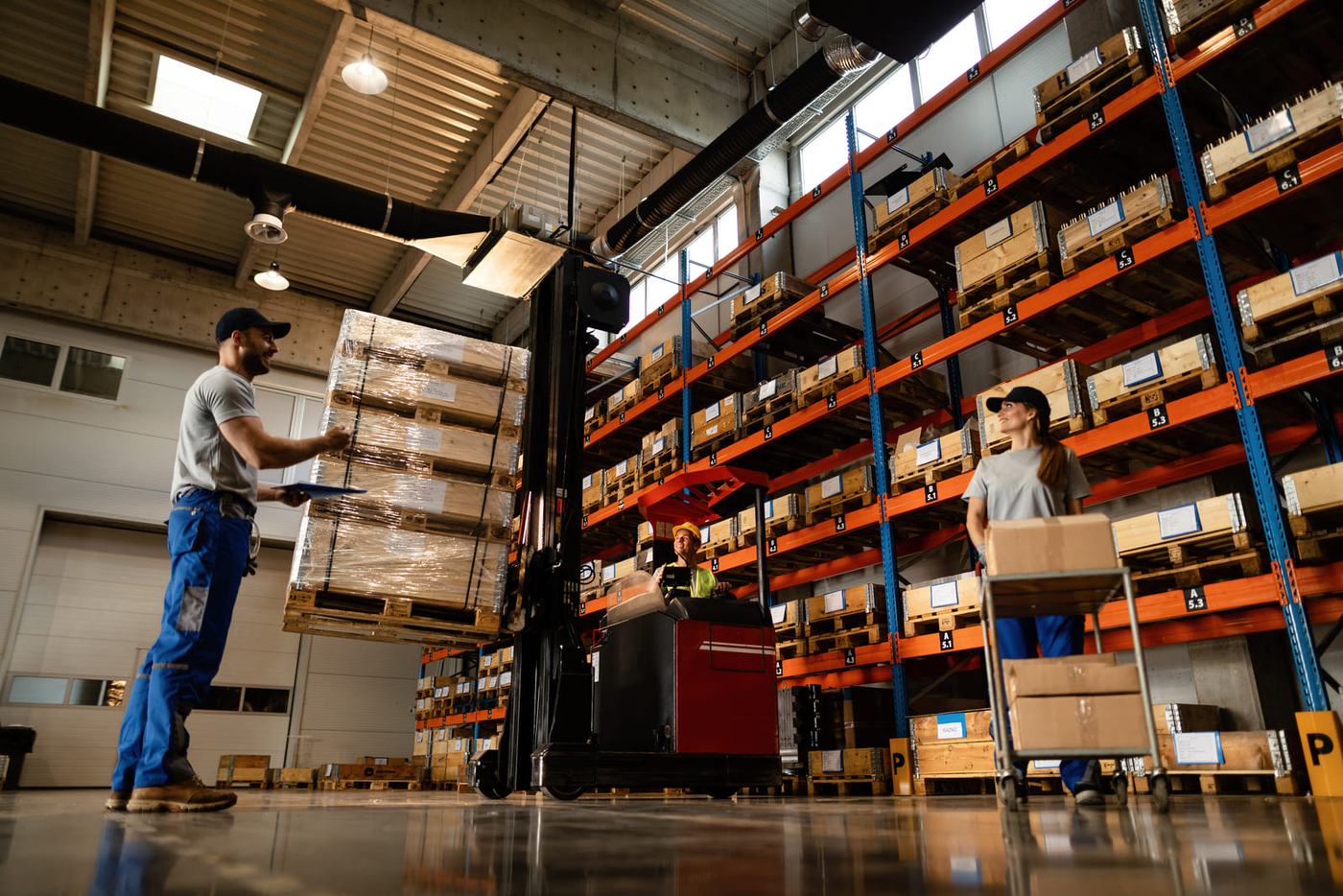
A trade supplies site is specific. You need high-clearance warehousing, a forklift-rated slab, B-double access or at least a wide crossover, a drive-through timber yard, cantilever racking, covered loading, compliant storage for paints and chemicals, CCTV and alarms, and room for early-morning tradie traffic. Those elements make relocation costly and tie customer habits to your address. Ownership secures the site and converts rent into an asset you hold.
Main drivers for ownership:
- Lock in a strategic location near arterial roads, construction corridors and your tradie catchment, protecting the flow of builders, plumbers and electricians at opening time.
- Preserve fit-out value where you have invested in pallet and cantilever racking, mezzanine, point-of-sale counters, security and yard hardstand.
- Replace rent escalations with loan repayments that build equity over time, supported by depreciation on the building and fixtures.
- Improve control over yard operations and opening hours, including noise, traffic management and signage that may be constrained under a landlord.
When buying may not suit:
- A short remaining lease, a planned relocation to a larger site, or uncertain demand in your local construction market can favour staying flexible.
- Capital may be better deployed into inventory expansion, new delivery vehicles, a second location or technology upgrades, with premises ownership sequenced later.
- If the site is constrained by zoning, truck access or yard size, it can be worth waiting for a better asset rather than forcing a purchase.
How a trade supplies warehouse purchase is funded
- Deposit and LVR. A trade supplies warehouse is standard commercial security, so it gears up to 80 per cent for owner-occupiers, which puts the deposit near 20 per cent. The major banks publish no owner-occupier commercial LVR at all, so knowing which lenders gear this asset to 80 per cent is where a broker earns their place. Where you hold equity in other residential or commercial property, that equity can lift the effective funding toward 100 per cent of the purchase price and costs, so more cash stays in the business.
- Loan term and structure. Terms run about 10 to 15 years with the banks and 25 to 30 years with non-bank lenders. You can structure repayments as principal and interest to build equity steadily, or interest only for a period to prioritise cash flow during growth or refurbishments.
- Security and serviceability. The property is the primary security. Lenders assess business financials, trading history, margins, inventory profile, and your capacity to service the debt from business cash flow. They will consider secondary security where relevant.
- Owner-occupier treatment. Lenders generally favour owner-occupier purchases for well-located industrial and bulky goods assets, which can translate to sharper pricing and more flexible structures.
Common holding structures
Many trade supplies operators already hold the freehold in a separate entity, a company or a unit trust, and lease the premises back to the trading business at a commercial rent. A lender reads that inter-entity rent as the serviceability line and takes the property as security, which keeps the operating business and the asset cleanly separated for finance and succession. The lending is arranged around the arrangement you already use, not the other way around.
Where an SMSF is part of the picture:
- Commercial premises generally qualify as business real property, so an SMSF can hold the warehouse through a bare trust and lease it to the trading company at a market rate under a limited recourse borrowing arrangement.
- The appeal sits in holding the asset inside super for the long term, alongside strict contribution caps, the limited recourse borrowing rules and the documentation an LRBA requires.
- Standard commercial security held in an SMSF gears up to 80 per cent, within the 65 to 80 per cent band lenders publish for SMSF commercial purchases, and the paperwork differs from a company or trust purchase.
The finance is ours to arrange, your accountant confirms the tax and entity detail, and a licensed SMSF adviser signs off the fund side where one is used.
What a lender looks at
- Business financials: profit, EBITDA, cash conversion, inventory turns and seasonality tied to building cycles.
- Serviceability: historical and forecast capacity to meet repayments, including sensitivity to higher interest rates.
- The property and valuation: land size, warehouse clearance, yard access, hardstand quality, power supply, environmental risk and comparable sales. The shed and hardstand value together on comparable sales, so the balance of covered warehouse to open yard is worth knowing before you make an offer.
- Deposit and equity position: cash, term deposits, equity in other property, or the ability to leverage your equity in residential or commercial assets.
- Lease and occupancy: owner-occupier intention, any sub-leases, zoning compliance for trade supplies use and operating permits.
A specialist broker who works in the warehouse and industrial sector keeps your file aligned with lender policy and presents the asset in the right way.
An illustrative scenario
This is an illustrative scenario that shows the kind of situation we can assist with, and how the thinking might run.
- Profile and objective: an outer-Melbourne trade supplies operator leasing a 3,200 square metre warehouse with a 4,500 square metre drive-through yard, strong early-morning trade, weighing up buying the current site or stepping up to a larger yard to add masonry and landscaping lines.
- Options mapped:
- purchase the current site at a negotiated price geared to around 80 per cent;
- purchase a larger site in a growth corridor with room for more cantilever racking and semi-trailer circulation;
- secure land and build to suit with a construction facility.
- Holding arrangements considered: hold in a unit trust with a corporate trustee and lease to the trading company at market rent, or bring an SMSF in for part of the ownership with the trust holding the balance.
- Funding mix: a base mortgage against the property value, equipment finance for new forklifts and a side-loader, and a small working capital line for the inventory build upon settlement.
- How we would approach it: we would map the ranges, structures and repayments for each path so the operator can compare them side by side. The figures here are illustrative, not confirmed outcomes, and the decision stays with the operator.
Ways we can fund a trade supplies warehouse business
- Asset finance for warehouse equipment. Fund forklifts, reach trucks, order pickers, side-loaders, delivery utes and trucks, racking and mezzanine platforms that keep your yard moving. Where the fit-out is a separate spend, warehouse equipment finance can cover it on its own facility.
- Fit-out and refurbishment finance. Cover cantilever racking for timber, trade counter and point-of-sale, safety barriers, lighting, CCTV and compliant storage for paints and chemicals.
- Working capital loans. Smooth inventory builds ahead of peak construction periods, with limits matched to supplier terms and stock turns. Working capital for a warehouse keeps stock on the floor without draining cash reserves.
- Business overdraft. Provide headroom for day-to-day cash flow around early-morning trade and end-of-month contractor accounts.
- Refinancing and debt consolidation. Rebase existing facilities to improve rate, term and security position, and align repayments with seasonal cash flow.
- Construction and renovation. Acquire land and build a purpose-designed warehouse and drive-through yard, or extend canopies and hardstand on your current site.
- Business or premises acquisition finance. Buy out a partner, acquire a competitor's yard and customer book, or settle on the freehold you currently occupy.
Owning the premises can free equity for equipment and working capital over time, and a refinance can consolidate multiple facilities to simplify management.
How Ardent helps trade supplies warehouse buyers
Ardent Capital Group arranges and structures commercial mortgages for trade supplies warehouse owners, across purchase, refinance and equity release. With a background in financial planning, Nick and the team can shape a finance strategy around how you hold and operate the site, including the lease between your property entity and trading company, then work with your accountant to confirm the final structure.
We service Sydney, Melbourne, Brisbane, Gold Coast, Perth, Adelaide, Canberra and surrounding metro and regional areas. We have helped facilitate over $2B in funding over a decade for over 1,000 borrowers.
Ardent Capital Group is a specialist in commercial mortgages and our team can help you today. Talk to us about a clear, low-pressure plan to pursue optimal financial outcomes.
Questions worth asking
How much deposit do I need to buy a trade supplies warehouse? Owner-occupiers can plan for around a 20 per cent deposit on standard commercial security, and equity you hold in other property can reduce the cash you need to put in.
Can my SMSF buy the warehouse my business operates from? Yes. Commercial premises generally qualify as business real property, so the SMSF can hold it through a bare trust and lease it back at market rent under a limited recourse borrowing arrangement.
Will lenders value the yard, canopy and mezzanine? Valuers include land, building and improvements such as hardstand, canopies and compliant mezzanines, with weight placed on condition, approvals and comparable industrial sales.
Do owner-occupiers get different terms to investors? Owner-occupiers often see sharper pricing and may access higher LVRs than pure investors, especially for well-located industrial assets with strong access.
Can I fund racking, trade counters and security with the mortgage? Removable items are usually financed separately via asset or fit-out facilities, while fixed building works can sometimes be included where the valuation supports it.
What environmental checks apply to paint, fuel or chemical storage on site? A commercial valuation carries a site contamination questionnaire, so where paints, solvents or fuel have been stored on site, a valuer may flag the need for a Preliminary Site Investigation, with any identified issues addressed before settlement.
Can I leverage my equity in my home or another property to minimise cash outlay? Yes, additional residential or commercial security can lift the effective LVR and reduce your cash deposit, which preserves working capital at the cost of cross-securitisation risk.

Written by
Nick Chong
Managing Director, M.AppFin, Dip. Mortgage Mgmt
Nick holds a Bachelor of Agricultural Economics, a Master of Applied Finance and an Advanced Diploma in Financial Planning. He founded Ardent Capital in 2016 after more than a decade in financial planning and mortgage broking. For the past ten years he has led a team of finance specialists, mortgage advisers, brokers and credit analysts, all working to secure optimal outcomes for clients and always acting in their best interests. The team brings both a qualitative and a quantitative approach to every deal.