

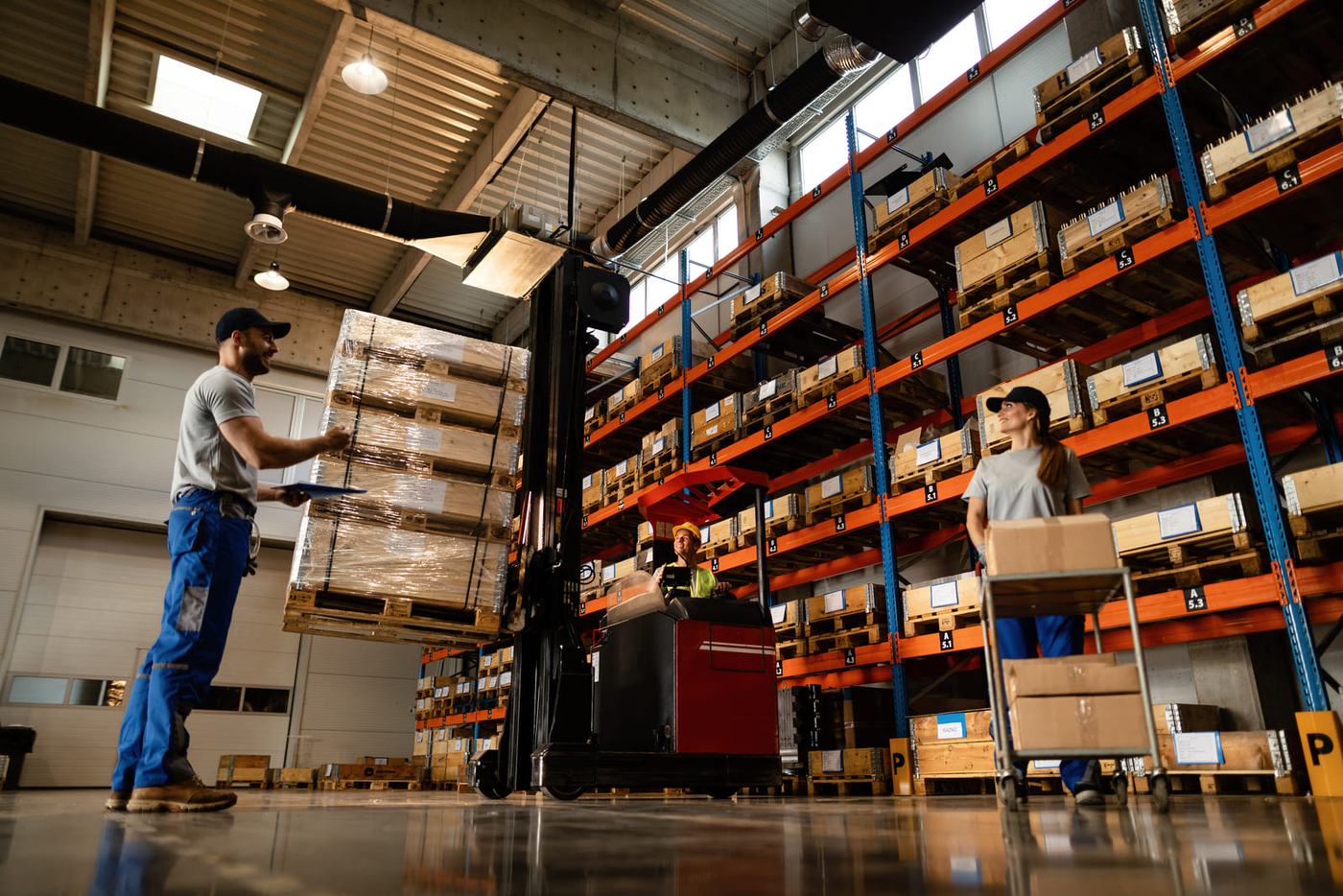
Business loans for wholesalers and distributors
Inventory and working capital finance for wholesalers and distributors
Looking for a business loan for your wholesale business?
At Ardent Capital Group, we help wholesalers and distributors access finance for inventory holding on 30 to 60 day terms, bulk import buy-ups, business overdrafts, warehouse racking and forklifts, acquiring a competitor or product line, and the warehouse they operate from.
We can help you:
- Buy inventory and hold stock while customers pay on 30 to 60 day terms
- Open a business overdraft or line of credit over your trading account
- Fund a container buy-up or a bulk import at a supplier discount
- Bridge the gap between paying suppliers and collecting from debtors
- Fit out the warehouse with racking, shelving and forklifts
- Stock up ahead of a peak season or a major contract win
- Fund the acquisition of a competitor or a complementary product line
- Cover an ATO, BAS or PAYG obligation
- Refinance existing facilities onto a structure built for your stock cycle
- Buy the warehouse your business operates from
Who we help:
- Established wholesalers buying and holding stock for trade customers
- Distributors carrying a supplier's range across a territory
- Importers buying by the container who pay upfront and sell on terms
- Operators winning a larger contract that needs stock funded before it pays
- Businesses fitting out a warehouse with racking, forklifts and handling gear
- Trust and company structured borrowers who need their trading presented properly
Speak to a specialist today
1,000+
loans settled
$2B+
funded
Wholesale and distribution funding
Funding for stock, the warehouse and acquisition
We arrange business loans and working capital for wholesalers and distributors, from overdrafts and lines of credit through to trade and stock finance, unsecured and secured term loans, equipment finance and warehouse purchases. The money in a wholesale business sits in inventory and debtors, so lenders that understand the sector read the stock turn and the debtor ledger rather than the balance sheet alone. We find the lenders that fund inventory-led businesses properly, then structure the facility around your buying cycle and payment terms.
Funding from $50K to $30M
from over 60 bank & non-bank lenders












- ANZ
- Bankwest
- Bluestone
- Bank of Queensland
- Commonwealth Bank
- Firstmac
- ING
- Macquarie
- NAB
- Pepper Money
- Suncorp Bank
- Thinktank
Wholesale and distribution finance specialists
Wholesale lending turns on stock and debtors, not fixed assets, and that changes how the facility should be built, from an importer funding a container buy-up to a distributor stocking up for a peak. Cash tied up on the shelf while customers pay on terms is the pressure to get right. The facilities we can arrange include:
- Business overdrafts and revolving lines of credit
- Trade and stock finance for inventory and container buy-ups
- Unsecured business loans on strong trading
- Secured business term loans and cash flow finance
- Invoice and debtor finance against your receivables ledger
Limits are sized to your stock cycle and debtor days rather than a single strong month, and on revolving facilities interest is charged only on the drawn balance. Many facilities are assessed off your BAS and recent bank statements rather than full financials. For the warehouse itself, we arrange warehouse racking finance against the racking and shelving, so kitting out the space need not tie up the cash you buy stock with.
Why businesses choose Ardent Capital Group as their broker
Execution and strategy
Strategy first, then execution. We structure your deal properly and take it to the lenders that fit how you trade, so you do not have to knock on every door.
Clear advice for smart lending
Straight answers on structure, limits and timing, including when a stock buy-up is better funded on a trade facility than off your overdraft.
A long-term partner
We stay with you well beyond settlement, growing the facility as you add product lines, win larger contracts or buy the next business.
Wholesale loan types
What we fund for wholesalers and distributors
Funding needs differ from one wholesaler to the next. An importer funding a container buy-up needs a different facility to a distributor stocking up for a peak or buying a competitor. Below is an overview of the most common situations we help wholesalers and distributors with.
Working capital and cash flow
In wholesale the cash sits in stock and in debtors. You pay suppliers to buy inventory, hold it on the shelf, then wait 30 to 60 days while trade customers pay on terms, so the money is out the door long before it comes back.
We match the product to the shape of that gap, from a revolving line for the stock cycle to a receivables facility that advances against unpaid invoices. It keeps suppliers paid and shelves stocked without draining the cash you run the business on.
- Structured as a revolving line, trade facility or receivables advance
- Sized to the peak of the stock and debtor cycle, not annual turnover
- Suits slow-paying trade customers and seasonal stock build-ups
- Can bridge a quarterly BAS or PAYG obligation
- Assessed on trading history, stock turn and debtor days
- Repaid as customers settle their invoices
- Faster access where the facility is unsecured
Trade and inventory finance
Trade and stock finance funds the inventory itself, including a container buy-up or a bulk order taken to earn a supplier discount. The facility pays your supplier, you hold and sell the stock, and it clears as the goods convert to sales, so a large purchase does not have to come out of your own working capital.
For importers, this can extend across the shipping and clearance window, covering goods paid for at the factory but not yet landed and sold. We place it with lenders that fund inventory and import cycles rather than a generalist desk.
- Funds inventory, container buy-ups and bulk supplier orders
- Can cover the import window from payment to landed stock
- Limit sized to your stock turn and order book
- Suits taking a supplier discount on a larger buy
- Repaid as the stock converts to sales
- Assessed on trading, stock turn and supplier terms
- Sits alongside an overdraft or debtor facility
Warehouse racking and forklifts
Asset finance funds the plant a wholesale operation runs on, from warehouse racking finance and shelving to forklift finance and materials handling gear. The equipment usually serves as the security, so your working capital line stays free for stock.
Whether you are fitting out a new warehouse, adding a mezzanine and racking to hold more lines, or replacing a tired forklift fleet, we match the finance to the working life of the asset and place it with a lender that funds this kind of equipment, including dealer and manufacturer programs. It keeps a large capital purchase off the overdraft and turns it into a predictable monthly repayment.
- Secured against the equipment being financed
- Chattel mortgage, lease or rental structures available
- Terms typically matched to the life of the asset
- Racking, shelving, forklifts and handling gear all fundable
- New and used equipment both fundable
- Often assessed on bank statements and BAS for established operators
- Frees up cash and property security for stock
Acquisition and expansion
When you are buying a competitor, a complementary product line or a book of trade accounts, an acquisition facility funds the purchase and often the extra stock the larger business will carry. The structure weighs the goodwill, the inventory and any property in the deal.
We size the funding to what the combined business can service, blend secured and unsecured components where it helps, and place it with a lender comfortable with the sector, subject to serviceability, lender appetite and approval.
- Funds business, product-line and trade-account acquisitions
- Can include the additional stock the larger business carries
- Goodwill, inventory and property assessed together
- Secured and unsecured components blended where it helps
- Terms sized to what the combined business services
- Vendor terms and earn-outs can be worked into the structure
- Subject to serviceability, lender appetite and approval
Low-doc and alt-doc lending
Established wholesalers can often be funded on 6 to 12 months of bank statements and recent BAS rather than full year-end financials, which suits a business whose accounts lag its current run rate.
It works best where the trading account shows regular receipts and the ATO position is current. We know which lenders read stock-heavy balance sheets fairly and which will proceed on trading strength alone.
- Assessed on 6 to 12 months of bank statements and BAS
- Suits accounts that lag the current run rate
- No full year-end financials required for many facilities
- Works best with regular receipts and a current ATO position
- Directors' guarantees typically required
- Available secured or unsecured depending on the limit
- Faster to arrange than a full-doc submission
Buying or refinancing your warehouse
When you are buying the warehouse your business operates from, or refinancing an existing loan, this is a commercial property deal rather than a working capital one. Owning the shed takes a rising rent out of your cost base and builds an asset alongside the business.
If your deal is primarily a property purchase, our commercial property team handles it end to end through our warehouse property finance service. Where the loan on premises you already own is the one being replaced, we can assist with refinancing a warehouse property loan.
- Owner-occupier and investment structures both catered for
- Commonly funded to a high proportion for owner-occupiers
- Terms commonly run to fifteen or twenty five years
- Trust, company and SMSF structures catered for
- Refinance to release equity or move onto better terms
- Can combine the premises purchase with racking and handling finance
- Subject to serviceability, valuation, lender appetite and approval
Our complete list of services
- Working capital and cash flow finance
- Business overdrafts and lines of credit
- Trade, stock and inventory finance
- Invoice and debtor finance
- Unsecured business loans on trading strength
- Secured business term loans
- Warehouse racking, shelving and forklift finance
- Warehouse fit-out and mezzanine funding
- Business and product-line acquisition finance
- Warehouse purchase and refinance
- ATO, BAS and PAYG bridging
- SMSF commercial property finance
Our process
How it works
✓We understand your scenario
We talk through your stock cycle, your debtor days, the suppliers and customers you deal with and the timing you are working to.
✓We find the right lender
We match your deal to the lender on our panel best suited to it.
✓You receive clear terms and guidance
We present indicative terms and explain what we recommend, and why.
✓We stay with you beyond settlement
We manage everything through to settlement, then stay in your corner well beyond it, with ongoing support from the team.
Lender criteria for wholesalers
How lenders compare on wholesale finance
| Business loan feature | Major banks | Non-bank lenders | Availability |
|---|---|---|---|
| Maximum facility | Large, security-dependent | To structured facilities up to $30M* | Standard |
| Secured vs unsecured | Property preferred, unsecured available | Secured or unsecured options | Important |
| Invoice finance advance rate | Around 80% | 80 to 90% of invoice value | Common |
| Interest basis | On drawn balance or term loan | Drawn balance, term, or fee-based | Varies |
| Documentation | Full financials typically required | Low-doc options on bank statements and BAS | Common |
| Approval timeframe* | 1 to 3 weeks | 1 to 10 business days | Varies |
| Best suited for | Strong balance sheets, property security, sharper rates | Faster access, lighter security, larger structured facilities | — |
*IMPORTANT: These are indicative figures only. Terms, LVRs and approval timeframes vary with borrower capacity, security type and individual lender criteria, and are subject to change. Figures are a general guide, not a quote or an offer of finance, and not a representation that finance is available on these terms.
Frequently asked questions
What makes Ardent Capital Group the right broker for you?
Ardent Capital Group brings the same method to every client: execution and strategy, clear advice for smart lending, and long-term growth. That means the right lender, structure and timing, straight advice so you borrow with confidence, and today's deal built toward where you want to be tomorrow. We are specialists in helping business owners secure finance to purchase their own property, and we understand the complex structures that often sit around it, including multiple trusts, holding companies and self-managed super funds. Through that work we also understand what the business needs from its cash flow, and where an overdraft or line of credit fits for working capital. A balance sheet where the value sits in stock and debtors rather than bricks is one a generalist credit desk often marks down, so our job is to know the bank and non-bank lenders that fund inventory-led businesses on their stock turn and order book. We work across a panel of more than sixty of them and stay with you as you add lines, win larger contracts and buy the next business. Every figure is subject to serviceability, lender appetite and approval.
Should I use a secured or unsecured facility?
It depends on how quickly you need it and what you are willing to offer as security. Unsecured facilities are assessed mainly on trading strength and can be arranged in days, which suits a limit of $50K to $500K for stock and working capital. Secured facilities, backed by property or plant, support larger amounts and price better, and make sense once you are funding a warehouse purchase or an acquisition. Most established wholesalers end up with a mix, and we shape which sits where.
How much finance can you help me access?
We arrange $50K up to $30M, covering inventory buy-ups and the gap between paying suppliers and collecting from customers. Stock turn and debtor quality are central to how the facility is sized.
Can I finance warehouse racking and forklifts?
Yes, and the equipment is normally the security rather than your property. Warehouse racking, shelving, mezzanine and forklifts can all be funded new or used, and a full warehouse fit-out can go on one facility. Terms are typically matched to the life of the asset, and established businesses can often be assessed on bank statements and BAS rather than full financials. Keeping this off the overdraft leaves your working capital free for stock, and dealer and manufacturer programs are available too, which we compare against a bank facility.
Can you fund a container buy-up or a bulk stock order?
Yes. Trade and stock finance pays your supplier for the inventory, then clears as the goods convert to sales, so a container buy-up or a bulk order taken to earn a supplier discount does not have to come out of your own cash. For importers the facility can extend across the shipping and clearance window, covering goods paid for at the factory but not yet landed. We size it to your stock turn and order book, and place it with lenders that fund inventory and import cycles.
How quickly can working capital be arranged before a peak?
An unsecured facility can often be approved within 48 hours and funded inside a week where the business is established and the BAS and bank statements are current. Secured facilities take longer, typically two to four weeks, because a valuation is involved. The practical advice is to open the limit before you place the big seasonal order, ideally when you are planning the buy rather than when the invoice is already due. Timeframes are indicative and subject to lender appetite and approval.
Can I get a low-doc facility from my BAS and bank statements?
Yes. Many lenders assess established businesses on 6 to 12 months of bank statements and recent BAS rather than full year-end financials, which suits wholesalers whose accounts lag the current run rate. It works best where the trading account shows regular receipts and the ATO position is current. Stock-heavy balance sheets are read fairly by the lenders that know the sector, and if you have a payment plan in place, say so early, because several will still proceed when it is disclosed and being met.
Can you help me buy the warehouse my business operates from?
Yes, and it is a commercial property deal rather than a working capital one. Owning the shed takes a rising rent out of your cost base and builds an asset alongside the trading business, and owner-occupiers can generally borrow a higher proportion than a passive investor would. The trading performance and the property are assessed together, so getting the accounts presented properly is most of the work. Our commercial property team handles these end to end through our warehouse commercial mortgage service.
Can you refinance existing facilities or fund an ATO bill?
Yes. We refinance overdrafts, term loans and stock facilities onto a structure built around your buying cycle and debtor days, which often frees up headroom that a generalist facility left on the table. Where an ATO, BAS or PAYG obligation needs bridging, several lenders will fund it as long as trading supports the repayments and any payment plan is disclosed and being met. Bring us the current position early and we will shape the timing around your stock cycle, subject to serviceability and lender approval.
Do you charge any fees for your service?
Most of the time, no. Where a deal requires significant preparation or involves unusual complexity, a small mandate fee may apply. We will always be upfront about this before any work begins.
What areas do you service?
Although we are based in Sydney, we service clients across all major Australian cities, including Melbourne, Perth, Brisbane, the Gold Coast, Adelaide, Canberra and Hobart, along with their surrounding regional areas. Wherever your business is located, we can arrange your finance.
What other finance can you assist with?
Although our main speciality is property loans for business owners, such as a property loan for your distribution warehouse, we also assist with racking and warehouse equipment finance and working capital. On asset finance, that covers forklifts, warehouse racking, shelving and materials handling gear. On working capital, we arrange business overdrafts, lines of credit, trade and stock finance and debtor finance. We also arrange commercial mortgages if you are buying or refinancing the warehouse you trade from. We also arrange home loans, planned alongside your commercial borrowing: cross collateralisation, guarantees, shortfalls and trust income included. See home loans for business owners.
Can you give financial advice?
No. Arranging finance and advising on financial products are two different disciplines, and we do the first. What we bring is the credit analysis lenders require, the structuring of the facility, and the strategy for putting your application in front of lenders whose appetite matches it.
Because we act as a credit representative under an Australian Credit Licence, we do not give financial product, superannuation, taxation or legal advice, and nothing we provide should be taken as such. Where your circumstances need that input, we are happy to work with your accountant, financial adviser and solicitor to understand the full picture before anything is submitted.
The information on this page is general in nature and does not take account of your objectives, financial situation or needs.