
Commercial property loans, Smithfield
Helping business owners finance their Smithfield commercial property
Buying commercial property in Smithfield?
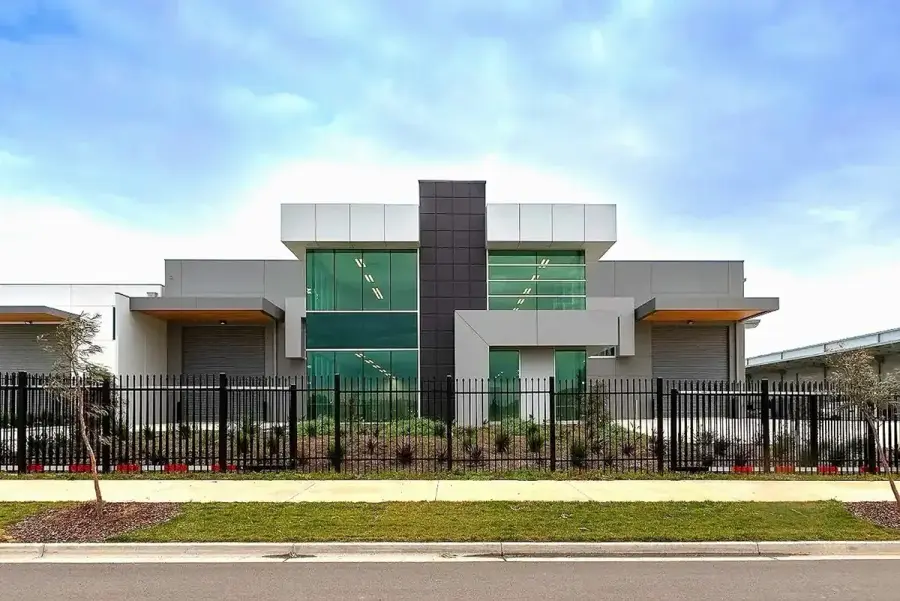
We fund every kind of commercial property in Smithfield: established factory buildings, trade counter and showroom premises, highway-frontage sites, and tenanted buildings held as an investment. The buildings here are older and finer-grained than the newer estates, so a valuation turns on condition, clearance and access as much as on floor area.
We can help you:
- Buy the factory or workshop your business already operates from
- Borrow up to 80% of the property value on standard industrial security. Up to 100% of the purchase price is achievable where you add equity from a property you already own.
- Acquire a Smithfield industrial property as an investment
- Refinance or release equity from a property you already own
- Fund a trade counter, showroom or office fit-out within the building
- Arrange finance for an SMSF commercial purchase
- Fund a refurbishment, extension or new build
- Free up your working capital
- Arrange finance through a trust or company structure
Who we help:
- Established business owners who require finance between $50K to $30M
- First-time borrowers who need a beginner-friendly strategy
- Sophisticated borrowers and investors who need a unique strategy and deal structure
- Urgent, time-sensitive deals that need to move quickly
- Self-employed and trust-structured borrowers who need their income presented properly
- Commercial property owners with multi-tenancy plans



Speak to a specialist today
1,000+
loans settled
$2B+
funded
Commercial property loans in Smithfield
From factories to trade counters, we get you funded
We work with the businesses that trade out of Smithfield: engineering and fabrication shops, joiners, printers, food producers, trade suppliers and wholesalers buying the building they already occupy or the one two streets over. We present the accounts the way a commercial credit team reads them and take the file to lenders who price older industrial stock sensibly. Smaller lot sizes here mean the numbers work at a level where a first purchase is genuinely reachable, and that is most of who we help.
Funding from $50K to $30M
from over 60 bank & non-bank lenders












- ANZ
- Bankwest
- Bluestone
- Bank of Queensland
- Commonwealth Bank
- Firstmac
- ING
- Macquarie
- NAB
- Pepper Money
- Suncorp Bank
- Thinktank
Commercial property lending across Smithfield
Buying an older industrial building is a different piece of work to buying a new one, and it is a conversation we have with Smithfield clients constantly. The purchases we can finance include:
- Owner-occupier commercial property purchase
- Investment commercial property and landlord finance
- SMSF commercial property under a limited recourse borrowing arrangement
- Commercial construction and development finance
- Commercial property refinance and equity release
Smithfield trades on age and lot size rather than on scale. Buildings here have usually been adapted more than once, and what the current owner did to the building is a live question in the valuation. Getting the works history in front of a lender up front changes how the file reads.
Why Smithfield businesses choose Ardent Capital Group as their commercial broker
Execution and strategy
Strategy first, then execution. We structure your deal properly and take it to the lenders we know suit this kind of deal, without sending the same request out four ways.
Clear advice for smart lending
Straight answers on LVR, structure and timing, including when a deal does not stack up.
A long-term partner
We stay with you well beyond settlement, with lasting relationships and ongoing support from the team.
Property types
Smithfield commercial property scenarios we finance
An older factory, a trade counter and a highway-frontage site are priced on different things, even inside the same precinct. Below is how each Smithfield purchase actually reads to a lender, and the suburbs we cover around it.
Established factory buildings
Most of what changes hands in Smithfield is a building that has already had a life. That is not a problem for a lender, but it does change what the valuer is pricing: the structure, the roof, the power supply and the office component as they are today, against recent sales of similar-age stock in the same streets.
Where an older building has been genuinely improved, that work is worth putting on the file. A re-roofed, re-clad or re-powered building supports a different number to one that has not been touched since it was built, and the evidence for it usually sits in invoices the owner still has.
- Standard industrial security reaches up to 80% of value with full financials
- Clearance height, power supply, floor condition and the office-to-warehouse ratio all feed the valuation
- Documented refurbishment works support the valuation, so gather the invoices before the inspection
- Older cladding and site history can narrow the lender list rather than close it
- Prepare two years of financials, tax returns, ATO portals and your entity or trust deed
- GST usually applies unless the sale qualifies as a going concern with tenants in place
Trade counter and showroom premises
Smithfield carries an E3 Productivity Support band alongside its E4, and that is where the trade suppliers sit: a warehouse at the back, a counter and a showroom at the front, and customers coming to the door. It is a hybrid asset and lenders read it as one.
The split between the warehouse and the retail-facing part is what moves the number. A building weighted towards showroom is valued more like commercial retail, one weighted towards warehouse like industrial, and the two do not gear identically. We work out which side of that line your building sits on before an application goes anywhere.
- E3 Productivity Support permits trade-counter and showroom uses that E4 does not favour
- The ratio of showroom to warehouse floor area shifts both the valuation basis and the LVR
- Customer parking and street frontage carry real weight on a trade-counter asset
- Fit-out for the counter and showroom can often be funded alongside the property
- Provide the floor plan with areas marked, plus two years of trading figures
- Terms run 25 to 30 years with non-bank lenders, against the 10 to 15 the major banks commonly publish
Highway-frontage sites
The Cumberland Highway frontage is a different asset to the same building tucked inside the estate. Exposure has commercial value, it attracts occupiers who need to be seen, and it usually supports a higher rent per square metre than a back-street position.
Valuers price that in, and so do lenders assessing a re-letting risk, because a visible site re-lets faster. The flip side is that highway sites can carry access constraints and signage conditions, and both are worth confirming before you exchange rather than after.
- Main-road exposure supports a stronger rent per square metre than an internal position
- Access arrangements and turning movements onto a classified road are worth confirming early
- Signage rights and any development consent conditions attach to the site, not the occupier
- A visible site is treated as easier to re-let, which helps the assessment on an investment purchase
- Provide the survey plan, the current consent and any signage approvals
- Where the frontage is the value, a valuation on vacant possession still reflects it
Tenanted buildings
When the building is leased, the loan is sized on the income it produces: the rent on foot, the tenant standing behind it and the years left to run.
Tenant quality does more work here than in a newer estate. Smaller occupiers on shorter leases are the norm, so the assessment leans on the remaining term, what incentive was given and how quickly the building would re-let at the rent on the schedule.
- Priced on net passing rent, the tenant covenant and the weighted average lease expiry
- Lease doc lending, where the lender verifies the rent rather than your income, runs 65% to 75% and steps down as the loan size rises
- Full doc lending against the same security reaches up to 80%
- A rent-free period or fit-out contribution still running is read into the net figure
- A vacant building is assessed on vacant possession, which narrows the lender list rather than closing it
- Provide the lease, the rent schedule, the outgoings and the tenant's trading history where you have it
Refurbish, extend or refinance
Older buildings reward money spent on them, and Smithfield owners are often better off improving what they hold than moving. A refurbishment, an extension, a mezzanine or a power upgrade can usually be funded against the equity already in the property.
Larger works run on a different product. Construction lending is drawn in stages against certified works, sits interest-only through the build and converts to a term loan on completion, and it is sized against the end value rather than what the building is worth today.
- Release equity to fund a refurbishment, an extension, plant or a second site
- Construction funding is drawn progressively against certified works and priced off the end value
- Move from a bank term of 10 to 15 years to a non-bank term of 25 to 30 to reset the repayment
- Consolidate a commercial loan and a business facility into one structure with one review date
- Prepare recent financials, current loan statements, plans and a fixed-price building contract where one exists
- Break costs on a fixed facility are worth checking before anything is lodged
SMSF commercial property in Smithfield
Yes, a fund can buy Smithfield industrial property, and we arrange these. It is also one of the more intricate purchases in commercial finance, and the detail is what decides whether it works. The fund borrows under a limited recourse borrowing arrangement, the property sits in a separate holding trust, and the lender can only come after that one property.
We know this sounds complicated, and we can assist to make things clearer. We structure the finance, tell you which lenders will take a Smithfield industrial property as SMSF security and on what terms, and bring in the SMSF specialists and licensed advisers who set the fund side up. You will not be working it out on your own.
- From 10 August 2026 a new arrangement can only be used for business real property: a building used wholly in a business generally qualifies, a building with a residence attached generally does not
- Your operating company leases the property back from the fund, in writing, at market rent supported by an independent appraisal, and the rent has to actually be paid
- Cross-collateralisation is not available inside super, so the fund needs its own deposit and the 100% LVR structures described elsewhere on this page do not work here
- Standard commercial security inside a fund is generally available to 65% to 80% of the lender's valuation, with cash left in the fund after settlement
- The arrangement funds a single asset, so fit-out, plant and goodwill are financed separately outside the fund
- The bare trust has to exist before contracts are signed, and in NSW the deed is executed after the contract, by the bare trust trustee rather than the fund trustee
Our complete list of services
- Buy the premises your business operates from
- Acquire a commercial property as an investment
- Borrow up to 60% to 80% depending on the asset class
- Finance medical, industrial, retail, office or hospitality property
- Refinance an existing commercial loan
- Release equity for growth or another purchase
- Structure an SMSF commercial purchase
- Fund a construction or development project
- Arrange finance through a trust or company structure
- Buy specialist assets like childcare or licensed venues
- Free up your working capital
- Bridge a settlement timing gap
- Consolidate a commercial property portfolio
- Move a property into super
- Provide personal and home finance for owners
- Support first-time commercial property buyers
The areas we service
We are based in the Sydney CBD and work across the Fairfield City industrial precinct and the suburbs around it regularly. Wherever your property sits, we know the lenders and valuers active in that pocket and how they read the local zoning, building age and tenant demand. The areas we cover around Smithfield include:
- The adjoining industrial estates — Wetherill Park, Yennora, Greystanes, Pemulwuy, Horsley Park
- The Fairfield centres — Fairfield, Fairfield West, Fairfield East, Fairfield Heights, Prairiewood, Wakeley
- The Guildford and Merrylands corridor — Guildford West, Old Guildford, Woodpark, Merrylands West
- Towards Villawood and Cabramatta — Villawood, Chester Hill, Canley Vale, Canley Heights, Bossley Park
We also arrange commercial property loans in Prospect and commercial property finance in Parramatta, a few minutes away.
Not on the list? We still cover it. We arrange commercial property finance right across Greater Sydney and NSW, and we work with clients Australia-wide.
Our process
How it works
✓We understand your scenario
We talk through the Smithfield property, your business and timeline, and any complexity in your structure.
✓We find the right lender
We match your deal to the lender on our panel best suited to it for that asset and precinct.
✓You receive clear terms and guidance
We present indicative terms and explain what we recommend, and why.
✓We stay with you beyond settlement
We manage everything through to settlement, then stay in your corner well beyond it, with ongoing support from the team.
Lender features compared
How commercial property loans compare across lenders
| Commercial loan feature | Major banks | Non-bank lenders | Availability |
|---|---|---|---|
| Maximum LVR | 60% to 75% | Up to 80% | Standard |
| Owner-occupier finance | Preferred rates | Available | Common |
| SMSF purchase | Up to 65% | Up to 70% | Popular |
| Interest-only periods | Up to 5 years | Up to 5 years | Common |
| Loan term | Up to 25 to 30 years | Up to 25 years | Flexible |
| Lease / WALE (investment) | Longer WALE preferred | Shorter WALE considered | Important |
| Approval timeframe* | 3 to 6 weeks | 2 to 4 weeks | Varies |
| Best suited for | Established borrowers, standard assets | Complex structures, higher LVR, specialised assets | — |
*IMPORTANT: These are indicative figures only. Terms, LVRs and approval timeframes vary with borrower capacity, security type and individual lender criteria, and are subject to change. Figures are a general guide, not a quote or an offer of finance, and not a representation that finance is available on these terms.
Frequently asked questions
Does knowing the Smithfield market change how the file is put together?
It helps to work with a broker who knows the area well. A broker who is across this precinct knows how lenders and valuers read older industrial stock, and which buildings on which streets have been genuinely improved. Ardent Capital Group arranges commercial property finance across Sydney from its Clarence Street office, and works in Smithfield and the rest of Australia.
Do we need to meet in person to get this done?
No. We work across the Fairfield City precinct and the surrounding suburbs, including Wetherill Park, Yennora, Prairiewood, Villawood and Greystanes. Most of the process runs by phone, email and video, and we come to site when it helps, so the distance is never the thing that slows a deal down.
How much finance can you help me access?
Our range is $50K to $30M. Older stock on smaller lots keeps many deals modest, though the same range supports a larger holding or an amalgamation.
What sort of buildings do you work on around here?
Factory and workshop buildings, warehouses, trade counter and showroom premises, highway-frontage sites, smaller freehold lots and the service commercial around the local centres. Lender appetite differs across all of them, which is most of the reason a file ends up at the wrong lender.
One lender turned us down. Is it worth trying again?
Often, yes. A decline from one lender does not mean the deal is not fundable, and on older industrial stock it frequently means the file went somewhere with no appetite for the building age. Non-bank and specialist commercial lenders take a different view on LVR, income presentation and asset condition. We will give you a straight assessment of what is achievable before proceeding.
Why work with Ardent Capital Group?
Ardent Capital Group brings the same method to every client: execution and strategy, clear advice for smart lending, and long-term growth. That means the right lender, structure and timing, straight advice so you borrow with confidence, and today's deal built toward where you want to be tomorrow. We are specialists in helping business owners secure finance to purchase their own property, and we understand the complex structures that often sit around it, including multiple trusts, holding companies and self-managed super funds. In Smithfield that method earns its keep on the building itself. Older stock rewards a file that shows what has been done to it, and we assemble that before a valuer is instructed rather than arguing about it afterwards. We have facilitated more than 1,000 commercial and residential mortgages and funded over $2B. Every figure is subject to serviceability, lender appetite and approval.
What do we need to have on hand?
A typical application needs identification, the contract or property details, recent business and personal financials, tax returns, bank statements, and details of your entity or trust structure. An older building is helped by invoices and consents for any works. Leased property adds the lease and a rent schedule. We give you a specific checklist up front.
How much of the purchase price can we borrow?
Standard industrial security reaches up to 80% of value. Up to 100% of the purchase price is achievable where you add equity from a property you already own. The age and condition of the building can move where you land inside that band, so send us the address and we will give you a real figure.
Does an older building make the loan harder?
It makes the valuation more specific rather than harder. The valuer prices what is there now: the roof, the power, the floor and the office component, against recent sales of similar-age stock nearby. Where money has been spent on the building, that work supports the number, so we ask for invoices and consents up front and put them on the file rather than leaving the valuer to guess.
What moves the rate on a commercial loan?
A commercial rate is set per file rather than off a shelf price. It moves with the building and its condition, the LVR, the loan size, the entity you borrow through, and whether the lender is verifying your full financials or just the lease. We will tell you the range your deal genuinely sits in before you spend anything, and where the levers are.
What is the stamp duty on commercial property in NSW?
Transfer duty is charged on the dutiable value of the property on the general NSW scale, and there is no owner-occupier or first-buyer concession the way there is on a home. Surcharge purchaser duty applies to residential-related property, so a purely commercial purchase is generally outside it. Duty and GST are funds you bring to settlement rather than part of the loan, so we set your funds-to-complete figure with you before you exchange. Revenue NSW publishes the current scale.
How is a trade counter or showroom building assessed?
On the split. A building weighted towards showroom is valued closer to commercial retail, one weighted towards warehouse closer to industrial, and the two do not gear identically. Give us a floor plan with the areas marked and we will tell you which side of the line yours falls on before anything is lodged.
Is an SMSF purchase possible here?
Yes, it is possible, and we arrange these. It is also one of the more intricate purchases in commercial finance, and the detail is what decides whether it works. The fund borrows under a limited recourse borrowing arrangement, so the property sits in a separate holding trust and the lender can only come after that one property. From 10 August 2026 a new arrangement can only be used for business real property: a building used wholly in a business generally qualifies, a building with a residence attached generally does not. Your operating company leases the property back from the fund, in writing, at market rent supported by an independent appraisal, and the rent has to actually be paid. Cross-collateralisation is not available inside super, so the fund needs its own deposit and the 100% LVR structures described elsewhere on this page do not work here. Standard commercial security inside a fund is generally available to 65% to 80% of the lender's valuation, with cash left in the fund after settlement. We know this sounds complicated, and we can assist to make things clearer. Reach out to our team and we will guide you through the entire process. We structure the finance, tell you which lenders will take a Smithfield industrial property as SMSF security and on what terms, and bring in the SMSF specialists and licensed advisers who set the fund side up. You will not be working it out on your own. Get that right and it is a solid, compliant structure. Our business real property page sets out what that test requires and the situations that decide it.
How long should we allow?
A straightforward owner-occupier purchase with clean financials usually settles in four to six weeks, and can be as quick as two weeks where the documentation is ready at the start. SMSF, refurbishment and construction deals take longer. We give you a realistic timeline for your specific property before you commit to an exchange date, so the contract and the finance are working to the same calendar.
Do you charge fees for commercial mortgage broking?
Most of the time, no. Where a deal needs significant preparation or is unusually complex, a small mandate fee may apply, and we will always tell you plainly before any work begins.
What areas do you service?
Although we are based in Sydney, we service clients across all major Australian cities, including Melbourne, Perth, Brisbane, the Gold Coast, Adelaide, Canberra and Hobart, along with their surrounding regional areas. Wherever your commercial property is located, we can arrange your finance.
What other finance can you assist with?
Although our main speciality is property loans for business owners, we also assist with asset finance and working capital for Smithfield businesses. On asset finance, that covers machinery, fabrication and workshop plant, commercial vehicles and fit-out. On working capital, we arrange business overdrafts, lines of credit and cash-flow funding to cover stock, supplier payments and cash-flow gaps. We also arrange home loans, planned alongside your commercial borrowing: cross collateralisation, guarantees, shortfalls and trust income included. See home loans for business owners.
I have been a business owner for a few years, but this will be my first commercial loan. Are you beginner friendly?
Yes. That is our core ethos, helping you understand the right strategy, structure and clear advice from the very first conversation. Our main borrower profiles are established business owners and commercial property investors seeking finance from $50,000 upwards for their company, so a first commercial loan is well within our wheelhouse. Smaller sole-trader and consumer-style ABN lending sits outside our field.
Can you give financial advice?
No. Arranging finance and advising on financial products are two different disciplines, and we do the first. What we bring is the credit analysis lenders require, the structuring of the facility, and the strategy for putting your application in front of lenders whose appetite matches it.
Because we act as a credit representative under an Australian Credit Licence, we do not give financial product, superannuation, taxation or legal advice, and nothing we provide should be taken as such. Where your circumstances need that input, we are happy to work with your accountant, financial adviser and solicitor to understand the full picture before anything is submitted.
The information on this page is general in nature and does not take account of your objectives, financial situation or needs.