

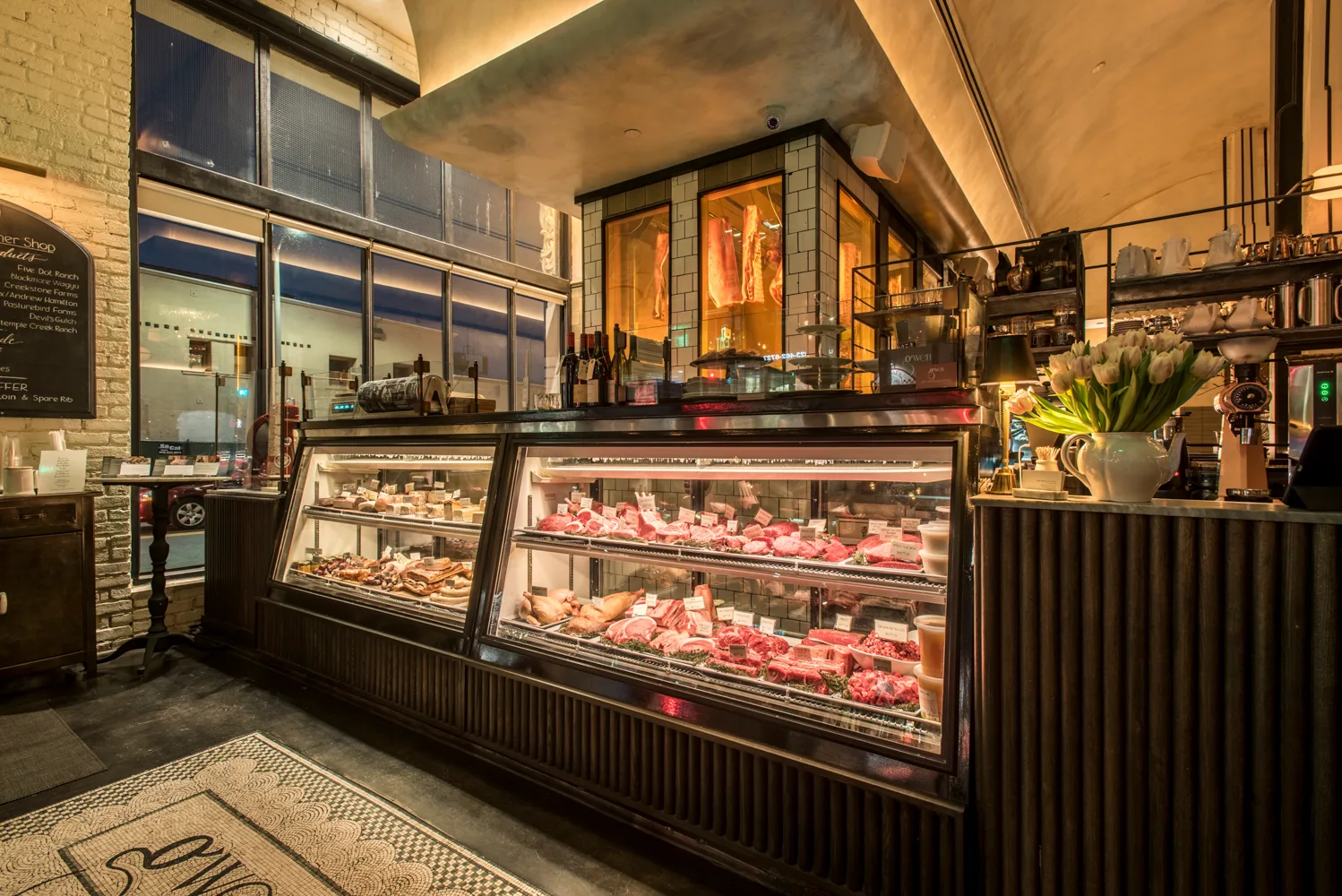
Each of a butcher shop's loans can be refinanced on its own merits. Those are the loan that bought the business, the finance on the cool room and display cases, and the van on the wholesale round. There is also the overdraft that pays for carcases before restaurants pay for the cuts. We go through those loans one by one and ask what a cheaper rate, a longer or shorter term, or a change of security would do to it, with the dollars worked through.
Is a big slice of each week's counter takings going straight back out to repay what you borrowed for the shop itself? Are restaurants on your round settling their invoices after the wholesaler's account has already come out? Is the cool room compressor labouring while the loan on the display cases still has years left? Have four debits stayed untouched because there is never a quiet hour behind the block to deal with them?
IBISWorld counts 3,998 businesses in Australia's fresh meat, fish and poultry retailing industry in 2026, an industry it sizes at $8.2B and which takes in specialist butchers and fishmongers.
Refinancing your shop's loans, one at a time or all together, is work Ardent Capital Group can assist with, and we are happy to begin wherever your own list begins.
How a butcher shop ends up with several loans
A butcher shop is built from a handful of large purchases, and each loan traces back to something the shop needed:
- Taking over the shop. A loan to buy the business as a going concern, meaning the shop was sold already trading. It paid for goodwill, plant (the shop's machinery and equipment) and opening stock. Goodwill is the value beyond the assets, which comes from customers choosing this shop.
- Keeping meat cold. The cool room and freezer room, their refrigeration units and the chilled display cases.
- Cutting and smallgoods. Band saw, mincer, sausage filler, slicer and vacuum packer, plus a smokehouse where the shop cures its own ham and bacon.
- The wholesale round. A refrigerated van delivering to restaurants, cafes and caterers.
- Cash between deliveries. An overdraft, a limit the shop draws on and pays back as money comes and goes. It sits beside trade accounts with the wholesaler or abattoir and, if the business activity statements (BAS) slipped behind, an ATO payment plan. BAS are the regular returns that report goods and services tax (GST) and the tax held back from staff wages.
The squeeze on a butcher's cash comes from timing. Meat is paid for on the supplier's terms, and restaurants pay on the shop's terms. The overdraft carries the difference.
The house mortgage, the car loan and any cards that have paid for shop costs also count when a lender works out what the shop can afford. The house may already be security for the purchase loan.
Example: a leased butcher shop's debts, side by side
Setting the loans out together shows where the counter takings go. This case is illustrative, built for the arithmetic: the owner bought an established shop as a going concern and rents the premises. Every rate is assumed for the sums. A replacement business loan is assumed at 9% or 9.5%, and a home-secured one at 6.5%.
Each loan is listed by what it paid for, with its balance, assumed rate, months to go and what it takes from the shop's account each month. The overdraft is interest only: each month it charges for the money drawn, and nothing comes off what is owed.
| What it paid for | Balance | Assumed rate | Months to go | Monthly debit |
|---|---|---|---|---|
| Buying the business: goodwill, plant and opening stock | $260k | 10% | 48 | $6,594 |
| Display cases and the cool room's refrigeration unit | $65k | 11.5% | 36 | $2,143 |
| Refrigerated van for the round | $40k | 10.5% | 30 | $1,522 |
| Overdraft for stock, $60k limit | $35k drawn | 12% | No end date, interest only | About $350 |
| All four | $400k | $10,609 |
The purchase loan has $260k owing at an assumed 10%, with 48 months to go. It takes $6,594 a month. All four debits take $10,609 a month, and the three loans with an end date account for $10,259 of it. On the overdraft, only the $35k drawn attracts interest, and that balance stays put unless the shop pays it down.
What refinancing can change on the shop's loans
Refinancing moves a shop's loan onto fresh terms, changing the monthly debit and the total repaid. It works on three settings:
- The rate. Cheaper money over the same months shrinks the debit and the lifetime interest together. How cheap is up to the lender, once it has looked over the shop.
- The term. The term is how many months a loan runs. Adding months lowers each debit and raises the lifetime interest. That can suit a shop for a known period, like the year after new refrigeration is installed, if the new contract accepts extra payments later.
- The security. Security is what a lender can claim if a loan goes unpaid. Lending backed by property is generally priced below lending backed by equipment or the business. The property then secures the shop's debt.
The three loans with an end date are amortising. That means each runs down to nil by the end of the term, unless it ends in a balloon, a lump sum left to the final repayment. On these loans, every debit has two parts: interest on the sum outstanding, and principal that whittles it down. Interest takes its largest bite early, while the balance is highest.
Worked example: one debit on the purchase loan
Splitting one debit shows how much of the shop's money goes on interest early on. With $260k owing at an assumed 10%, the coming month's interest is about $2,167. That leaves about $4,427 of the $6,594 debit to reduce the balance. Twelve debits on, about $204k is still owing, and about $23.5k of that year's debits has gone to interest.
Refinancing each of the butcher shop's loans
Each of the shop's loans paid for something with its own working life, from the cool room to the band saw to the van.
Borrowing that bought the shop
The purchase loan let the owner take over the counter, customers and gear in one go, and it is the biggest debt in the example.
A general security agreement usually backs it. Under it, the lender holds a registered claim over the shop's band saw, display cases and other assets. The directors guarantee it, making each personally liable should the company fall short. Sometimes the owner's house is mortgaged too.
A refinance can give it a new rate or a new lender, add or remove months, or secure it with different assets.
If the refinance also pays for a second shop, the licence does not come with it in NSW. A Food Authority licence is not transferable from one person or business to another, so the buyer applies in its own name.
The cool room, the fit-out and the shop lease
The fit-out keeps the meat cold and the floor clean, and in a rented shop it is fixed to the landlord's walls.
A butcher's fit-out is mostly cold storage and wash-down: insulated cool and freezer rooms, hanging rails, stainless benches and sloped floors with drains. Three-phase power runs the compressors.
A lender sets the term on fit-out finance against the lease. Years left plus renewal options mark the outer edge, since panels and drains are fixed to a building the business may one day leave. A renewal option lets the tenant extend the lease for a further period.
The lease also says whether tenant or landlord owns the installed cool room, which governs whether it can be pledged. Its make-good clause sets the condition the shop must be handed back in, and can require the panels and plant to come out when the shop moves.
A cool room also ages unevenly. Effective life is the number of years an asset can be used to produce income, taken from the ATO's determination or worked out by the business. It is a tax figure, not a promise of how long the equipment will run. In its table for supermarket and grocery stores, the Commissioner of Taxation's effective life determination gives cool and freezer room insulation panels 30 years, against 10 for compressors, condensers and evaporators. On those figures, the plant has a third of the panels' life.
Band saws, mincers, display cases and the van
The cutting gear and display cases each carry their own listed life for tax.
The same table gives band saws, mincers, sausage filling machines and refrigerated cabinets and cases 10 years each. Its food retailing table, which covers butchers, lists butchers' plant at 20 years, an entry dated 1 January 2001. Which figure fits your own gear is your accountant's decision.
A 10-year listed life gives room on the term. A loan on a two-year-old band saw can run five more years and still end inside it. When a display case or cooling unit nears the end of its life, the old finance can be cleared and its successor funded together. That avoids two loans on one counter.
The van backs its own loan. It can be refinanced alone or folded in. Where the van's contract carries a balloon, it appears on the payout letter: the lender's written figure to clear the loan.
Trade accounts, the round and the overdraft
A butcher often pays for carcases before restaurants pay for the cuts, and the round stretches that wait.
Carcases and boxed meat come in on an account with the wholesaler or abattoir. That is trade credit, a supplier's terms to pay later, not a loan. A refinance leaves it in place, and every supplier payment shows in the bank statements.
Counter money arrives as card settlements and banked cash. Restaurants, cafes and caterers pay invoices on the shop's terms. So a busier round builds a longer debtor book, the list of unpaid invoices. The overdraft bridges that, and paying it off inside a term loan removes the headroom the round may need next season. Where the debtor book is sizeable, invoice finance, an advance against unpaid invoices, is another working capital option we can assist with.
In NSW the Food Authority refers businesses wholesaling more than 1 tonne of meat in any week of a calendar year to its meat processor requirements. A plan to grow the round should allow for meeting them.
A merchant cash advance is cash up front, repaid through a cut of card takings or a set debit each trading day. It costs a fixed total rather than a rate: the total repayable less the cash received.
An ATO payment plan for overdue BAS, including the tax withheld from staff pay, is owed to the tax office rather than borrowed. A lender may agree to clear it with a business loan. Business loan interest may be deductible. Since 1 July 2025, the ATO's interest on late tax cannot be claimed as a deduction. The shop's accountant can say how each applies.
Putting the butcher shop's loans together
Once each loan makes sense alone, the question is whether the purchase loan and the loans on the refrigeration and the van stay apart or roll into one.
Example: the shop's $365k, handled four ways
This table carries the three loans with an end date in different ways, with the overdraft open throughout. Each choice is measured against the shop carrying on unchanged. The difference each month is cash flow now. The difference in total is what that costs, or saves, by the final payment.
| Choice | Each month | Difference each month | Repaid in total | Difference in total |
|---|---|---|---|---|
| Leave the purchase loan and the refrigeration and van finance where they are Today | $10,259 | Starting point | $439k | Starting point |
| Move only the purchase loan | $10,135 | $124 lower | $433k | $6k lower |
| Roll all three into a single loan over 5 years | $7,666 | $2,593 lower | $460k | $21k higher |
| Roll all three into a single loan over 7 years | $5,966 | $4,293 lower | $501k | $62k higher |
| Roll all three into a 25-year loan secured by the home | $2,465 | $7,794 lower | $739k | $300k higher |
Rounded, illustrative arithmetic. Every rate is assumed purely for the sums; none is a quote or a current market rate. Not counted: early payout charges, a new lender's establishment and valuation fees, and overdraft interest, which is the same under all five choices. An early payout charge is a fee some contracts set for clearing a loan before its end date.
A single 5-year loan frees about $2,593 a month and costs about $21k extra overall. Seven years frees another $1,700 a month for another $41k. Over 25 years against the house, the debit falls by about $7,794 while the total climbs by about $300k. The goodwill and the van would then be repaid against the house for 25 years.
Moving only the purchase loan changes least: an assumed rate one point lower over the same 48 months saves about $6k before costs. The right mix turns on the shop's trading, the lease and when the refrigeration is due, and the owner makes that call. With payout letters in hand we would rerun these sums on the real balances. We would then take the owner's choice to lenders that consider leased butcher shops. None of these numbers is an offer.
What the new loan can be secured against
What backs the new loan, from the band saw to the family home, changes its price and what is at stake.
- The equipment and van. A lender financing a band saw, a display case, a refrigeration unit or the van holds that item as security, and the previous lender's interest ends at payout.
- The business and the directors. A general security agreement and directors' guarantees commonly back business loans. That agreement is lodged on the PPSR, the national register of security interests in personal property. It does not cover land, buildings or fixtures to land. Once each old loan is repaid, it helps to confirm its registration has come off.
- The house. A home-secured loan is usually priced lower and runs longer than one secured by the business, and the house then becomes security for the shop's debts. That is the owner's decision, weighed against the extra interest of repaying the shop's debts over the house for twenty-five years. Where the house is already security for the purchase loan, a later refinance may release it when the shop's figures carry the loan unaided. The mortgage on the house can be reviewed through our home loans for business owners.
- A shop you own. Retail premises are standard commercial security and can be borrowed against up to 80% of a fresh valuation. Bank terms on commercial property commonly run 10 to 15 years and non-bank terms 25 to 30. Our butcher shop premises refinance page explains refinancing the building, including releasing equity for more cold capacity.
More than one shop or entity
Some owners trade a second shop through its own company, or keep the premises in a family trust.
Where two companies run two shops and the same directors guarantee both, a lender assesses both companies and every guarantor at once. If a family trust owns the premises and rents them to the shop, the rent shows as an expense in one set of accounts and as income in the other.
Getting ready to refinance the shop's loans
Getting ready means gathering the shop's payout figures, the sum needed to settle every loan on the day it is repaid, along with lodged tax records and a clear picture of its takings.
Things to settle beforehand
Two things shape the timing: the cost of leaving the current loans, and whether the tax records are up to date.
- Payout figures. Asking each lender for that figure in writing shows what leaving would cost. A fixed equipment contract may set an early payout charge, and its terms are in the contract. If that charge is bigger than the interest saved, the shop can revisit it nearer that contract's end.
- Lodgements. It helps to lodge any overdue BAS and the latest tax return first, so the shop's figures are up to date.
The purchase loan and the overdraft for stock can each come with an annual review. When it falls due, the lender asks how the shop has gone since settlement, from counter takings to the restaurants on the wholesale round. Pulling the figures together ahead of the date also makes it a natural point to compare lenders. We cover what a loan review asks of a business in a separate guide.
The records that show a butcher's takings
A butcher's income arrives over the counter and through the round, beside the meat bill and the wages.
- The counter. Card settlements and cash deposits show the trading week. Where a shop takes Christmas orders for hams and turkeys, twelve months of statements put December beside the rest of the year.
- The round. An aged debtors report lists each wholesale customer, what it owes and how old each invoice is.
- The meat bill. Payments for carcases and boxed meat move with volume and the price per kilo.
- Wages. Butchers, apprentices and counter staff in a stand-alone butcher shop come under the Meat Industry Award, which leaves out meat sold as part of a supermarket. Their wages leave the account every pay run.
- Licence and audits. In NSW, a retail meat premises pays an annual Food Authority licence fee plus fees for its audits and inspections.
Paperwork to gather
Most of these papers sit in the shop's office or with its accountant. The payout letters come from each lender, and each guarantor supplies their own statements.
- Payout letters for each loan and the latest overdraft statement
- Bank statements for every business account and this year's BAS
- The shop's accounts and tax returns for the last two lodged years
- An aged debtors report and the main supplier statements
- The contract of sale from when you bought the shop, and the lease with its options and make-good clause
- Equipment invoices, the refrigeration service records, the food licence and the latest audit report
- Every guarantor's mortgage, car finance and credit card statements
Questions butchers ask about refinancing their loans
How much of my purchase loan's monthly debit is going on interest?
In the example, about $2,167 of the first $6,594 debit is interest. The share falls month by month, so twelve debits in, the balance is down to about $204k.
Restaurants on my round pay well after I've paid for the meat. Can those invoices help me borrow?
They can, subject to the lender. Invoice finance lends against unpaid invoices, and an overdraft limit can be set to cover the gap between supplier and customer terms. Your aged debtors report shows who owes what and for how long.
The cool room compressor has just died. Can the new one go into the refinance?
It can, subject to the lender's assessment, on its own equipment loan or inside a combined one. Bring the installer's quote and, if anything is still owing on the old unit, its payout figure.
My house is security for the loan I used to buy the shop. Can it come off?
That can be the aim once the shop's trading supports the loan by itself. The replacement loan then rests on the shop's figures and guarantees, and its pricing reflects the change.
The van has eight payments left. Should it go in too?
It can be left out. Most of its interest is already paid, and an early payout cost could outweigh what is left to save.
Does an ATO payment plan for GST stop me refinancing?
Not on its own. Lenders check the ATO statement of account, that the instalments are current and that lodgements are up to date.
We make our own sausages, ham and bacon. Does that gear change anything?
It adds the sausage filler, vacuum packer and smokehouse to the equipment that can be refinanced. In NSW, shops making ready-to-eat or fermented lines such as salami have extra Food Authority requirements, and their cost shows in the accounts.
Will asking about a refinance hurt my credit?
No. Talking it through and requesting payout figures are not credit enquiries. Lodging an application does create an enquiry for the company and each director, so we lodge only with lenders suited to the shop.
If I stretch everything to seven years, how much more do I pay?
On the example, about $41k more than over five years, for about $1,700 less each month.
Can I refinance just the purchase loan and leave the rest?
You can, subject to the lender. Refinancing only the purchase loan in the worked example saves about $6k and leaves the finance on the equipment and the van finishing on its current dates.
Going through your shop's loans with us
A butcher shop's loans each paid for something different, from the goodwill to the cool room to the van. At Ardent Capital Group we can assist a butcher with the purchase loan, the equipment finance, rolling debts together, and the butcher business loans that fund stock and the round. Drawing on a background in financial planning, the Ardent Capital Group team can lay out how a new loan fits alongside the shop's other debts and your household's, leaving the tax questions with your accountant. Whenever it suits, bring us the shop's figures and we will go through them together.







