
Refinancing a veterinary clinic's loans starts with what each one paid for. That means the loan used to buy the practice, the equipment loans on the imaging and pathology gear, the fit-out of the wards and kennels, and the overdraft that carries drugs and food stock. This guide sets out what a refinance can change on each loan, what combining them does to the monthly repayments and the interest still to pay, and how a clinic's takings show on its statements.
Is the repayment on the loan you took to buy the practice from a retiring vet still set by the old owner's figures rather than the clinic you run today? Will the ultrasound and the blood analyser be due for replacement before their loan is paid off? With a vet role unfilled and locums covering the roster, do three loan repayments and an overdraft feel like more than the account can carry each month?
The Australian Veterinary Association's 2023/24 workforce survey found that 36.8% of veterinary vacancies took 12 months or longer to fill. For a clinic owner, an empty vet role shows up as consults turned away or locum fees on the bank statements, while the loan repayments stay fixed.
Ardent Capital Group can assist with refinancing every one of those loans, from the practice purchase to the x-ray and the kennels, and we would be glad to go through them with you.
Where a vet clinic's loans come from
A vet clinic's debt builds in layers, starting with the loan that bought the practice. Lining them up by what each paid for shows where a refinance could help.
A clinic bought from a retiring vet can be funded with one practice purchase loan covering the goodwill, the equipment already in the building and the opening stock. Goodwill is the value of the client list, the clinic's name in the area and its trading record. The lender approved the loan on the retiring vet's figures and your plan for the clinic. It took a general security agreement, which gives it a claim over the clinic's assets if the loan goes unpaid. It also took a guarantee from each director, a personal promise to repay if the company cannot, and sometimes the home.
More debt follows settlement. A digital x-ray replaces an old processor, and an ultrasound and in-house analyser cut the wait for outside pathology results. A fit-out loan pays for an isolation ward or new kennel and cattery rooms. An overdraft carries the wholesaler accounts for drugs, vaccines, prescription diets and parasite products between orders.
The reasons to revisit them come from the clinic. You may now have two years of your own lodged financials, or a supplier offering a newer ultrasound. The lease may be up for renewal, or wages and fees for locums, the relief vets who cover a vacancy or leave, may be rising faster than consult fees. Your home loan, car loan and any cards carrying clinic costs go on the same list, because a lender counts them in what you can afford.
Example: one clinic's three loans and an overdraft
Following one clinic through this guide makes each choice easier to picture. The owner bought a small-animal clinic from its retiring principal about two years ago, leases the building, and repays three loans while drawing on an overdraft. The numbers are illustrative, chosen to show loans we can assist with refinancing.
For each loan, the table gives the balance owing, an assumed rate, how many months remain and its cost each month.
| Loan | Owing | Assumed rate | Time left | Each month |
|---|---|---|---|---|
| Practice purchase loan | $650k | 9.5% | 60 months | $13,651 |
| Equipment loan | $140k | 11% | 48 months | $3,618 |
| Fit-out loan | $80k | 12.5% | 36 months | $2,676 |
| Total | $870k | $19,945 |
Rounded, illustrative numbers. Every rate here is assumed for the sums only and is not a market rate or a quote. The overdraft is left out of these figures and of every refinance option.
The practice loan still owes $650k with 60 months left and takes $13,651 a month, most of the clinic's loan outgoings. Together the three loans take $19,945 a month. The overdraft has about $45k drawn and, at an assumed 10%, costs about $375 a month in interest on top.
How a refinance changes the clinic's loans
A refinance replaces a loan with a new one, from the same lender or another. For a vet owner paying locums while a role sits empty, the first question is how much a new loan could take off the month. The second is what that costs over the years.
Three things can change: the rate, the term and the security. Each changes what the clinic pays monthly and what the debt costs overall.
- Rate. A lower rate over the same term reduces the repayment and the total interest together. The lender sets it from the security offered, how the clinic trades and the credit history of the business and its directors.
- Term. The term is how many months the loan runs. More months mean a smaller repayment but more interest, since the balance is owed for longer. That can suit a clinic waiting for a newly hired vet's consult book to fill.
- Security. Security is the asset a lender can claim if the loan goes unpaid. Property security generally carries lower rates than equipment or unsecured lending, though the building or home then backs the vet practice's debts.
The example's three loans are amortising: each one runs down to nil by the end of the term, unless it ends in a balloon, a lump sum left to the final repayment. Each repayment has two parts. Interest is calculated on the balance the clinic owes, and principal reduces that balance. Because interest follows the balance, it takes its largest share of the repayment in the first years and shrinks as the balance falls.
Worked example: the first repayment on the practice loan
One repayment on the practice loan shows how early payments divide between interest and the balance.
On the $650k practice purchase loan at an assumed 9.5%, the first month's interest is about $5,146. The repayment is $13,651, so about $8,505 comes off the balance that month. Across the first year the owner pays about $57k of interest, and the amount owing drops by about $107k.
Refinancing each loan the clinic carries
Each loan in a vet clinic paid for something with its own lifespan. A stainless steel kennel bank outlasts an ultrasound several times over, so each loan is matched to the working life of the thing it bought. The practice loan, the largest, comes first.
The loan used to buy the practice
This loan was approved on the retiring vet's figures. A refinance can be assessed on the clinic as it trades under you, subject to the lender.
Goodwill can be much of a practice purchase price, and it cannot be sold apart from the clinic. A lender has no stand-alone asset to sell if the loan goes unpaid. So lenders secure the loan with a general security agreement and director guarantees.
Your BAS is the business activity statement the practice files with the ATO. On it the clinic reports GST, the goods and services tax added to its vet fees and pet products. It also reports PAYG withholding, the income tax withheld from the wages of its vets and nurses. Two years on, your lodged financials, BAS and bank statements show how the clinic trades under you, and those are what a new lender assesses. A refinance can move the practice loan to another lender, reprice it, reset its term and fold in the debts added since settlement. Where the home went in at purchase, it can also look at taking the home out.
Stretching the practice loan lowers the repayment but keeps the goodwill debt on the clinic for more years, and any loan folded into it takes on those years too.
Imaging, anaesthesia and pathology equipment
The machines in a vet clinic wear out at very different rates. A loan that outlasts its machine leaves the clinic paying for gear it has already replaced.
Effective life is the number of years an asset can be used to produce income, taken from the ATO's determination or worked out by the business. It is a tax figure, not a promise of how long the equipment will run. Effective life is still a useful yardstick. The ATO's effective life determination lists veterinarians' assets with lives from 4 to 20 years. Ultrasound systems and laboratory analysers are set at 5 years, and electrolyte analysers at 4. Patient monitors sit at 7, anaesthesia machines, dental units and surgery lights at 10, and stainless steel cages and treatment tables at 20. Direct radiography, a digital form of x-ray, is excluded from the veterinary list.
In the example, the ultrasound and analyser were bought a year ago on a 5-year loan, which ends about when their effective life does. Fold them into one 7-year loan and the last repayment lands 8 years after purchase, three years past the ATO's figure. An ultrasound upgraded in year five then needs its own loan while the old one is still being repaid.
A refinance can reprice an equipment loan, move it, reset the term or resize a balloon. When a supplier offers a newer ultrasound or a second analyser, the old loan can be paid out and the new machine financed in one deal. Fixed-rate equipment contracts can carry an early payout charge, a fee for ending early, so it helps to ask for that figure in writing.
The fit-out and the lease
A vet fit-out is built for animal care and fixed to the building, so its life is tied to the lease on that building.
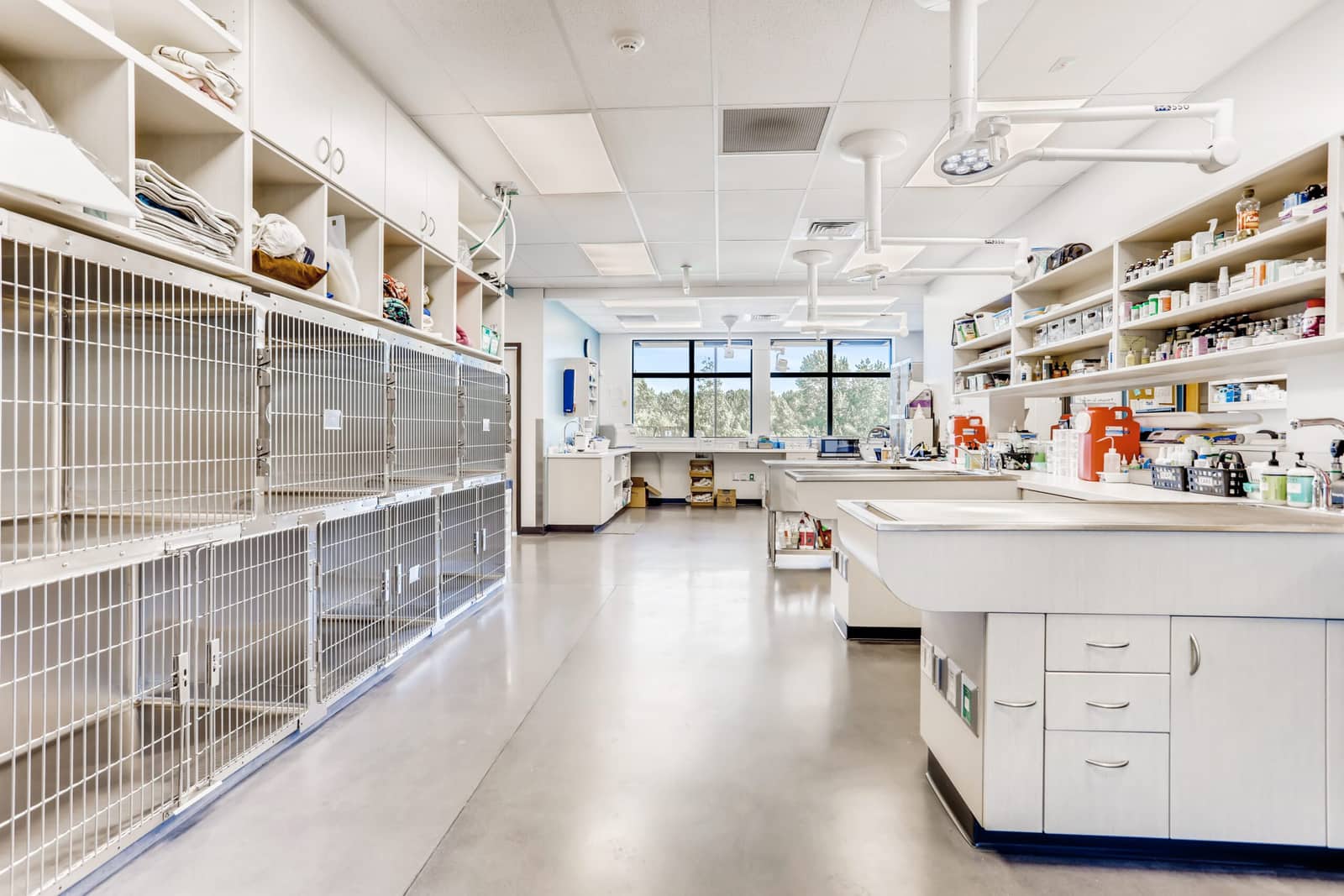
It carries items no ordinary shop needs. An isolation ward has its own entry and drainage, and kennel and cattery rooms have wash-down floors. The theatre has a scrub sink and piped oxygen, and the x-ray room walls are lead lined. None of it moves to a new site. A make-good clause can require the tenant to strip it out and restore the premises when the lease ends.
Lenders set a fit-out loan's term inside the years left on the lease. A signed renewal or exercised option adds years a lender can count, whether the landlord is an investor or the retiring vet who kept the building.
If you own the clinic building
Some vets bought the building with the practice, or hold it in a separate entity. Its loan can be refinanced too.
Bank terms on commercial property commonly run 10 to 15 years and non-bank terms reach 25 to 30. Equity, the building's value less the loan against it, can pay out the practice, equipment and fit-out loans and move those debts onto a far longer term. Our page on veterinary clinic property refinance covers the loan on the building.
The overdraft and any ATO payment plan
A clinic's overdraft does a different job from its loans: it pays the wholesaler for drugs, vaccines and prescription diets before clients pay the clinic for them.
Rolled into a term loan, the overdraft's drawn balance gets repaid but the limit is gone, which is why the example keeps it out of every option. An ATO payment plan, which spreads overdue GST, PAYG withholding or super over instalments, can sit on the same list as the loans. Interest on the clinic's business loans may be deductible. The ATO's general interest charge, the interest it adds to tax paid late, has not been deductible since 1 July 2025. Your accountant can confirm where the clinic stands on both.
Putting the clinic's loans together
Combining the clinic's loans trades a lighter month against more interest over the years.
Example: four ways to refinance the same $870k
The options run from changing nothing to securing everything on the home. Each shows the change in monthly repayments against changing nothing, and what that does to the interest still to pay.
| Option | Monthly repayments | Change on today's $19,945 | Interest from here | Change in interest |
|---|---|---|---|---|
| Keep the three loans as they are Today | $19,945 | Starting point | $219k | Starting point |
| Combine all three into one 5-year loan | $18,272 | $1,673 less | $226k | $7k more |
| Combine the practice and fit-out loans over 5 years, keep the equipment loan | $18,949 | $996 less | $224k | $5k more |
| Combine all three into one 7-year loan | $14,219 | $5,726 less | $324k | $105k more |
| Secure all three on the home over 25 years | $5,874 | $14,071 less | $892k | $673k more |
Rounded, illustrative numbers on assumed rates, not market rates or quotes. Payout charges, establishment and valuation costs, the overdraft and any change in rate are left out.
Combined into one 7-year loan, one repayment of $14,219 replaces the three and takes $5,726 off the month, while the interest still to pay rises by $105k to $324k.
Across the options, the smaller the repayment, the larger the interest bill, because the balance is owed for longer. Over 25 years the home-secured loan adds about $673k of interest. The ultrasound and analyser inside it would be replaced several times before it ended. Leaving the equipment loan on its own term saves $996 a month for about $5k more interest.
Lower repayments now cost more interest later. The right balance turns on how the clinic trades, how long the lease runs and when the imaging and pathology gear will be replaced. We would list every loan with its payout figure and lay out the options in monthly and total terms. A payout figure is the sum needed to close a loan out on a set date. We would then take the option you pick to lenders whose policy suits a veterinary clinic. These figures are illustrations, not quotes or approvals.
Security for the new loan
Whatever option the clinic picks, the security for each loan decides what the owner puts at stake.
- A general security agreement. The practice loan is commonly secured this way. The agreement is listed on the PPSR, the national register of security interests in personal property. It does not cover land, buildings or fixtures to land. On refinance, the outgoing lender's registration comes off and the incoming lender lodges its own.
- The equipment. An equipment lender takes security over the x-ray, ultrasound or analyser it funds.
- Director guarantees. Each director usually guarantees the business loans personally.
- The home. A home-secured loan generally brings a lower rate and allows more years, but it makes the home security for the practice's debts. That choice is yours, made with the extra interest in view. If the home went in at purchase, a refinance can look at releasing it once the clinic's trading supports the loans without it. For the mortgage on the home, see our home loans for business owners.
Co-owners and a second clinic
A practice owned by two vets, or a second clinic, adds owners and entities for a lender to read.
Where two vets own the practice through one company, or a second clinic trades in its own entity, the lender looks at every entity and every guarantor. That means financials for each company or trust, statements for each trading account and every director's personal debts.
Before you refinance the clinic's loans
A lender knows a vet clinic through its statements and paperwork, so what they show shapes the application.
How a vet clinic's takings come in
Vet income has a pattern of its own, with treatment fees and retail sales coming into one account and wages and locum fees going out.
- Payment at the counter. Clients pay for consults, vaccinations, dental work and surgery when the animal goes home. Pet insurance commonly reimburses the owner after they have paid, so the clinic's income lands as card takings on the day of treatment. The exception is a claim made on the spot, where the insurer pays its share to the clinic directly.
- Retail shelves. Prescription diets, flea and worming products and food sales run through the same account, with stock bought on wholesaler terms and paid after delivery.
- Wages and on-call. Employed vets and vet nurses are covered by the Animal Care and Veterinary Services Award 2020, which includes an on-call allowance for associate vets. Locum fees appear beside wages while a role is unfilled.
Timing the application
When the clinic applies can change what a refinance offers.
- An early payout charge bigger than the saving. A written payout figure from each current lender is a useful start. If the charge on the equipment contract exceeds what a new loan saves, the clinic can look again nearer the end of that contract.
- Less than two years under your ownership. It helps to keep the clinic's monthly reports, and to revisit the refinance once your own lodged financials sit beside the retiring vet's.
- BAS or a tax return still to lodge. It helps to lodge it first, because lenders assess lodged figures.
Paperwork for the clinic's refinance
Some of it sits in the practice management system, the sale contract and supplier invoices. The rest comes from the lenders, the bank, your accountant and the lease.
- Payout letters for each loan, with the rate, any balloon and any early payout charge
- The sale contract from the practice purchase and the original loan contract
- Recent business bank statements and the current year's BAS
- Financials and tax returns for the past two years, lodged, for each entity
- The lease, showing when it ends, the options to renew and the make-good terms
- Invoices for the x-ray, ultrasound and analyser, with make, model and purchase date
- Practice management system reports of monthly revenue by service
- Statements for the home loan, car loans and cards of each director and guarantor
Questions vet owners ask about refinancing
Part of the price is still owed to the vet I bought from. Can a refinance pay that out?
It can be included, subject to the new lender's assessment. Bring the sale contract and the amount still owing to the vendor to the first conversation.
Can I refinance only the practice loan and leave the equipment loan to run out?
Yes. A loan with a year or less to run has already paid most of its interest. Letting it finish also keeps its term matched to the equipment it paid for.
My co-owner wants to retire. Can a new loan fund buying their share?
A business loan can fund a buyout of a departing partner, assessed on the clinic's trading and the remaining owner's guarantee. The price and the agreement are settled by your accountant and solicitor; we arrange the finance around them.
I'm two vets short and paying locums. What do my statements show?
Your statements show the locum fees beside the takings those locums bring in. A note of the role you are recruiting for, with consult numbers over the year, shows the fees are covering a vacancy.
Can I add a new dental unit to the refinance?
Yes, new equipment can be funded in the same application. Bring the supplier's quote. A dental unit has a 10-year effective life against 5 for an ultrasound, so the two may suit different terms.
Do the food and flea treatments we sell count as income?
Yes, retail sales are business income on your statements and BAS. A report separating retail from services shows the margin left once the wholesaler is paid.
Why does the payout letter on the equipment loan for the x-ray show more than my balance?
The difference can be an early payout charge under the contract, a fee to release the security, and interest up to the payout day. The payout letter lists each one separately.
We run monthly wellness plans for pets. How do they show in the clinic's figures?
Plan payments arrive as direct debits each month, separate from counter takings. A report of active plans and cancellations shows how steady that income is.
Does a refinance application show up on my credit report?
A lodged application is listed on the credit report of the company and of each director. Asking your lender for a payout figure is not, and neither is talking it through with us. We send the application only to lenders whose policy fits a vet practice.
Should the overdraft go into the new loan as well?
It can, and the balance is then repaid like the rest of the loan. The clinic loses the limit it draws on to pay wholesalers, so a smaller overdraft beside the term loan is an option to compare.
Going through your clinic's loans with you
The practice, the imaging gear and the wards were each financed at a different moment, for a different working life. A refinance lines each loan up with how long its asset will last, how long the lease runs and how the counter takings come in. Ardent Capital Group can assist vet clinic owners with refinancing practice purchase loans, equipment and fit-out loans, and with the veterinary clinic business loans and working capital behind the day-to-day. Drawing on a background in financial planning, the Ardent Capital Group team can map out how the new loans fit across the clinic's debts and your household's, with your accountant settling the tax questions first. If the repayments on the practice feel heavy, we would be glad to work through the numbers with you.