

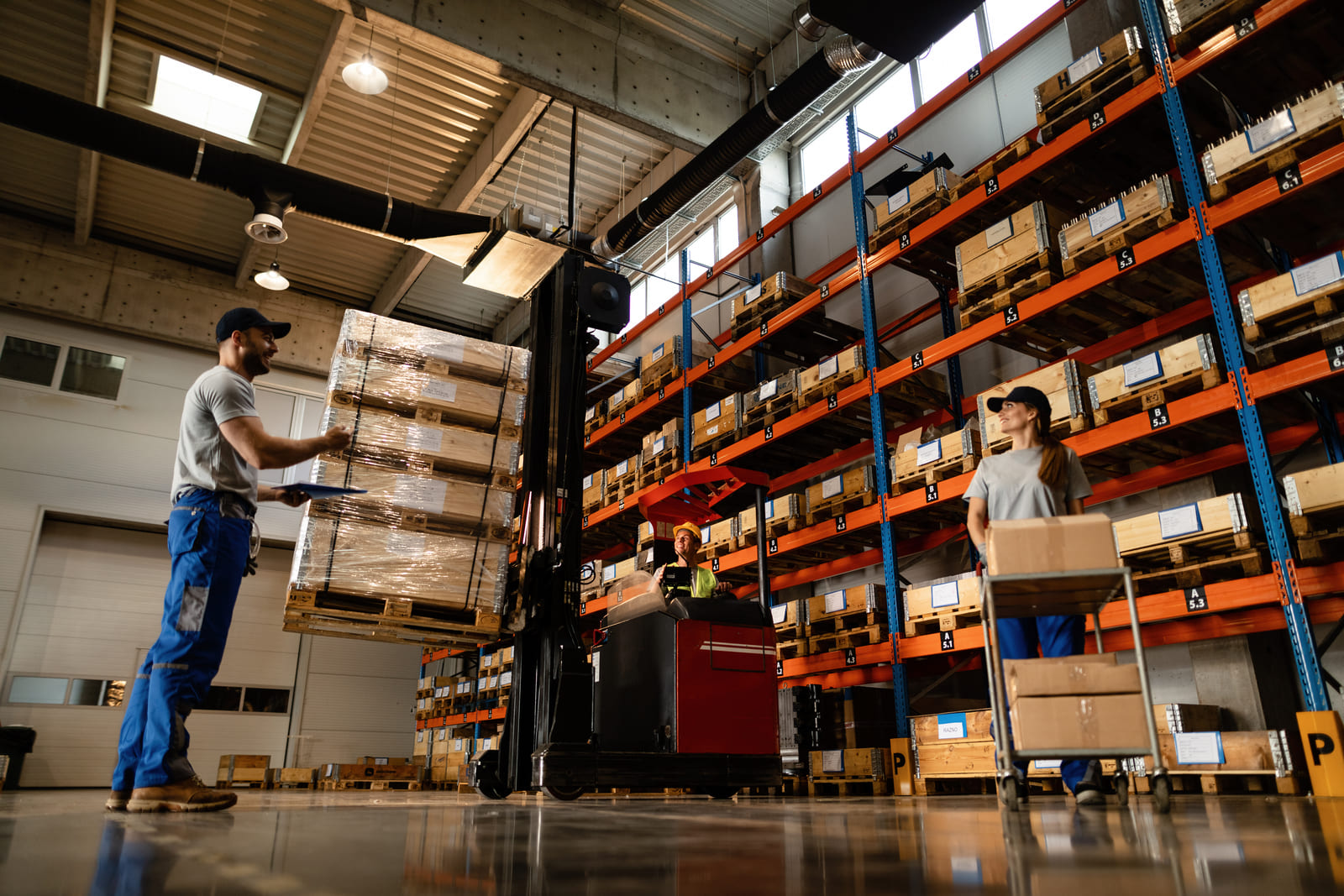
This guide is for owners of a warehouse who want to refinance the property loan together with the loans on the forklifts, the racking finance and the overdraft the business carries. That holds whether your own business operates from it or a tenant leases it.
Is the property loan nearing the end of its interest-only period? Those repayments pay the interest alone, so the amount owed stays flat, and a larger monthly repayment follows. Has the property gone up in value since you bought it, while the forklifts and racking still sit on separate loans? Is your home still tied up as security for the business overdraft? Have you held off reviewing any of it because untangling several loans at once seems like a big job?
At Ardent Capital Group we arrange commercial property finance, and refinancing a warehouse with the business debts around it is a specialist area we can assist with. CBRE's July 2026 report put national industrial and logistics vacancy at 3.2% for the first half of 2026, with Sydney at 3.5%. If your warehouse is leased, market vacancy bears on how long the space could take to re-let if the tenant left.
Ardent Capital Group can help you refinance the loan on the warehouse together with the forklift, racking and overdraft debts, and we would be happy to go through each one with you.
When the interest-only period or term on the loan over your warehouse ends
An interest-only period runs for a set number of years, and the amount owed on the building stays where it began. When that period ends, the monthly repayment on the loan over your warehouse rises.
The end of an interest-only period and the end of the loan term are both written in your loan contract. An annual review can bring either conversation forward.
Example: a $1.4M loan coming off interest only
Once interest only ends, repayments switch to principal and interest across whatever is left of the term. Each payment then covers the interest and pays down the amount owed on the building as well.
These figures are illustrative and round, at an assumed rate of 7% a year. They set the loan today beside the new repayment over the years left and over a fresh term, with the interest each one adds up to.
| Option | Monthly repayment | Change on today | Total interest over the term |
|---|---|---|---|
| Interest only Today | $8,170 | Starting point | Interest only: none of it repays the loan |
| Principal and interest over the 15 years left | $12,580 | $4,410 more | $865K |
| Principal and interest over a fresh 25-year term | $9,890 | $1,720 more | $1.57M |
Illustrative round figures at an assumed rate of 7% a year. Not a quote or a current rate.
Repaying the $1.4M over the 15 years left lifts the repayment to $12,580 a month. That is $4,410 more than today, and the interest over those years comes to $865K. A fresh 25-year term keeps the rise to $1,720 a month instead. Its total interest climbs to $1.57M, because the balance stays owing for ten more years.
Bank terms on commercial property commonly run 10 to 15 years, and non-bank terms 25 to 30. Refinancing before the date gives you the choice of a new interest-only period, a fresh principal and interest term, or a split of the two. A split divides one loan into parts, each with its own repayment type. Each choice applies where the lender's policy and your income support it. Notice periods and each step are set out in our guide to refinancing a commercial property loan.
How much equity a warehouse can release
If the warehouse has risen in value, the gap between its worth and the loan can help pay out the forklift and racking debts.
Equity is the current value of the warehouse less what you owe against it. A lender lends a share of the value. The share is capped by the lender's loan-to-value ratio (LVR), meaning the loan measured as a percentage of the property's value:
- Warehouses, factories and industrial units on full financials: up to 80%. Full financials means the lender assesses your lodged accounts and tax returns. Lenders class these buildings as standard commercial property, alongside shops and offices.
- Lease doc loans, where the lease and the rent are the main evidence assessed: 65% to 75%, with the percentage stepping down as the loan size goes up.
- Hardstand or vacant industrial land: 65%. Hardstand is a hard-surfaced yard used for parking trucks, storing containers or holding materials outdoors.
- The major banks: no published owner-occupier commercial LVR, with each loan assessed case by case.
The arithmetic is value times LVR, less the current loan, less refinance costs. A warehouse valued at $3.2M supports a loan of up to $2.56M at 80%. With $1.4M owing, up to $1.16M is available before costs.
The income then decides how much of that you can use. The business, or the rent if the warehouse is leased, must meet repayments on the bigger balance at the lender's own assessment rate. That is the rate a lender uses to test whether the income can carry the loan. The application states what released money is for, here paying out the equipment loans and the overdraft.
Reading the interest and principal in a forklift or racking repayment
Seeing how one repayment on the forklift splits makes the refinance options easier to weigh.
The loans on the forklift and racking are amortising. An amortising loan runs down to nil by the end of the term, unless it ends in a balloon, a lump sum left to the final repayment. Each repayment is made of two parts: interest charged on the balance, and principal that reduces it. The interest share is largest at the start, because the balance is largest at the start. It then shrinks with every repayment.
Take a $90K loan on a forklift over three years at an assumed 10% a year. The repayment is about $2,900 a month. In the first month about $750 is interest and about $2,150 is principal. By the final year almost the whole repayment is principal. On the $1.4M interest-only property loan, none of the $8,170 repayment reduces the balance.
Your loan statements show the interest charged each month and the balance after each repayment. A payout figure from each lender gives the sum needed to close each loan on a set date, early payout charge included. Early payout terms on fixed-rate equipment contracts vary from contract to contract.
The forklift or truck may sit on a chattel mortgage. Under one, the business holds the machine and the financier registers a security interest over it. With hire purchase, ownership of the machine stays with the financier until the last instalment is paid. The contract shows whether either one ends in a balloon, which a refinance can cover.
Rolling the loans on forklifts, racking and trucks into the property loan
With equity in the building, the equipment debts can be folded into the property loan, and that changes how long the business pays for each forklift.
Moving equipment debt onto the warehouse changes three things in one step: the rate it is priced at, how many years it runs and what it is secured against. The rate on a loan secured by the property is generally lower than on equipment or unsecured lending. The term stretches from a few years to the term of the property loan.
The assets inside a warehouse last for very different lengths of time:
- Forklifts, reach trucks and delivery trucks wear out and are replaced on a cycle of years, and they never form part of the property.
- Pallet racking and mezzanine floors last far longer. Whether they form part of the property or stay as equipment depends on how they are fixed and what they are fixed for.
- The office fit-out, three-phase power upgrades and hardstand become part of the property itself. Three-phase power is the higher-capacity electricity supply that larger machinery and many forklift chargers run on.
Folding a forklift balance with three years left into a 25-year property loan lowers the monthly repayment. It also stretches that debt across more than 20 extra years. You could still be repaying that forklift while financing its replacement. Our warehouse and industrial refinance page covers bringing the property loan, equipment finance and overdraft under one structure.
A worked example: equity, forklifts and racking
The numbers here follow a distribution company whose family trust owns the building, from the valuation through to the overdraft.
This is an illustrative scenario that shows the kind of situation we can assist with, and how the thinking might run. The figures are round, and the interest rates are assumptions chosen to show the arithmetic. They are 7% a year on the property loan and 10% a year on the equipment loans. They are not quotes or current market rates.
A family trust owns a warehouse and leases it to the owner's distribution company under a written lease at market rent. On a fresh valuation the warehouse could come in at around $3.2M. The property loan is $1.4M, and its interest-only period ends in six months. The company carries:
- $90K owing on a forklift, with three years left
- a $60K loan for a new run of pallet racking, with four years left
- an overdraft drawn to $80K
The equity. A lender starts from the valuation and the maximum LVR, then takes off what is already owed. The LVR shows how much of the building's value each loan amount uses.
| Step | Amount | LVR |
|---|---|---|
| Valuation | $3.2M | |
| Maximum loan at 80% | $2.56M | 80% |
| Current property loan Today | $1.4M | About 44% |
| Equity available before costs | $1.16M | |
| New loan after paying out the forklift and racking finance | $1.55M | About 48% |
| New loan if the overdraft is cleared as well | $1.63M | About 51% |
Paying out the forklift and racking finance takes the property loan from $1.4M to $1.55M. That uses about 48% of the warehouse's value, well inside the 80% limit. Clearing the overdraft as well lifts it to $1.63M, or about 51%.
The $150K of equipment debt, three ways. The two loans can stay as they are, or move onto the property, either over the full property term or as a short split. Both moves onto the property lower the monthly repayment, by $3,370 and $840, and only the short split also lowers the interest.
| Option | Monthly repayment | Change each month | Interest still to pay | Change in interest |
|---|---|---|---|---|
| Keep both loans as they are Today | $4,430 | Starting point | $27,600 | Starting point |
| Roll both into the property loan over 25 years | $1,060 | $3,370 less | $168,100 | $140,500 more |
| Roll both in as a separate 4-year split | $3,590 | $840 less | $22,400 | $5,200 less |
Illustrative figures, rounded. Rates are assumptions for the arithmetic, not quotes. Valuation, legal, discharge and early payout charges are left out.
Rolling both loans into the property loan over 25 years takes the monthly repayment from $4,430 to $1,060.
The 25-year option frees about $3,370 a month and costs about $140,500 more in interest. That trade can still suit an owner who needs the cash. The property loan's own repayment may be about to rise as interest only ends. A large contract may be starting, or stock may be building for the pre-Christmas peak. Extra repayments on a variable loan, where the contract allows them, reduce the extra interest.
The four-year split takes about $840 off the monthly repayment and clears the equipment debt in four years. That is when the racking finance ends today, and a year after the forklift would have been paid off.
The overdraft. Paying out the drawn $80K inside the property loan clears it at the property loan's rate. It also removes the buffer the company uses to pay wages and freight before customers pay their invoices, unless a limit stays open beside the property loan.
- How we would approach it: we would collect a payout figure for every debt. We would then model each option side by side with the repayment and the total interest. The scenario would go to lenders that suit industrial property held in a trust and leased to the operating company. The figures above are illustrative, not confirmed outcomes, and every loan is subject to valuation, serviceability and lender approval.
- Tax: interest on a business loan may be deductible, and your accountant confirms how that applies to you.
Owner-occupied or leased: where the warehouse's income comes from
Whether your own trading or a tenant's rent pays for the warehouse decides which records show the income that repays the loan.
Your business operates from the warehouse
When your own business runs from the warehouse, the money for the loan starts with your storage and freight customers. Your company's trading pays the rent, and the rent pays the loan, so the credit team works through the company's financials.
The financials and your customer contracts show how your revenue arrives. That covers storage charged per pallet per week, handling fees for goods in and out, freight and pick-and-pack, and the length of each customer contract. Where a single customer provides most of the revenue, that customer's contract shows when it ends. A pre-Christmas peak shows in the BAS for those months. Your BAS, short for business activity statement, is the statement lodged with the ATO for each month or quarter. Where a trust owns the building and a company operates from it, the lender expects a written lease at market rent, with the rent paid as the lease requires.
A tenant leases the warehouse
With a tenant in the building, the rent and the lease are the main income records. A leased warehouse is valued on its rent and its lease as well as the building.
The lender reads the weighted average lease expiry (WALE), meaning the average time left on the leases weighted by rent. It also reads the rent review method, any options to renew and any incentive given to the tenant. A lease with five years left supports a higher value than one with twelve months left. If the tenant has given notice, the valuer allows for the time and cost of re-letting. The loan is then assessed on that value and on your other income.
Where your business uses part of the building and a tenant leases the rest, the lender reads your business's financials for one income line and the lease for the other.
What secures the refinance, including your home
Security is what a lender can call on if a loan is not repaid. Across the old loans, the warehouse, the forklifts and perhaps your home may each be pledged.
- The warehouse. The new lender takes a first mortgage over the property, which gives it the first claim on the building.
- The equipment. Forklifts and trucks on a chattel mortgage secure their own loans. The lender registers its interest on the PPSR, the national register of security interests in personal property. It does not cover land, buildings or fixtures to land.
- A general security agreement over the company, also on the PPSR, is released when you move and replaced where the new lender asks for one. It covers all the company's assets, from forklifts and stock to invoices customers still owe. If your mortgage secures every debt you owe that lender, the overdraft and equipment loans held there move or are paid out at the same settlement.
- Your home. If the home was added when you bought the warehouse, a refinance can test whether the warehouse now supports the loan alone. Directors' guarantees are separate and usually stay. A guarantee makes a director personally liable for the company's debt if the company cannot pay. Our page on home loans for industrial business owners covers keeping the home out of the business's security and how equipment debt is read when a lender assesses the home loan.
- Personal debts. Your home loan, car loans and credit card limits count in what a lender assesses, because your drawings from the business pay them. A card limit counts whether or not it is used.
- A warehouse held in an SMSF. A self-managed super fund can refinance its loan only against the same warehouse, and only for the amount owing plus accrued interest. It cannot release equity, so it cannot fund paying out the company's equipment loans. SMSF LVRs on standard commercial property run from 65% to 80%. The fund side is confirmed by your accountant together with the fund's SMSF specialists and licensed advisers.
The building and what it costs to run
Part of a warehouse's value comes from the building, from the loading docks to the roof, and the business's accounts show what it costs to run.
The building
Two warehouses with the same floor area can be valued differently, because of features like these.
- Clearance height, the clear internal height under the roof structure, which sets how many pallet levels the racking can reach.
- Hardstand, yard and truck access, including whether a semi-trailer or B-double can turn on site, and the number of on-grade and recessed loading docks and roller doors.
- Zoning that permits warehouse and distribution use, and council approval for any mezzanine or extension.
- Services: three-phase power, fire sprinklers and the condition of the roof.
- Office share of the floor area, and whether the building is freestanding or a strata unit. A strata unit is one of several separately titled units within a shared complex.
The valuer compares recent sales of similar industrial property. The valuer also capitalises the market rent the building could earn, converting that yearly rent into a value using a market yield.
The warehouse's own cost lines
Every pallet stored and every truck sent out carries a running cost, and those costs come out before the repayments do.
The profit and loss shows the costs of running a warehouse. They include forklift servicing, LPG or battery replacement, racking inspections and repairs after a forklift strike, and truck registration and fuel. They also include the council rates, land tax where it applies and building insurance the owner carries.
Wages for storehands and licensed forklift operators come under the Storage Services and Wholesale Award. Since 1 July 2026, super is paid with each pay run under Payday Super. The lender tests whether what is left covers the repayments on every loan in the group.
When to wait, and what to line up first
A refinance can be timed around the fixed rates, tenant leases and storage contracts already running.
- A fixed rate with a large break cost. A break cost is a fee for ending a fixed rate early. The more rates have fallen since the rate was fixed, the bigger it is. It helps to ask for the break cost in writing. If it outweighs the saving, the refinance can wait for the fixed period to end.
- An equipment loan in its last months. A loan close to its end costs little to keep. It can be left to finish while the rest is refinanced.
- A tenant lease about to end. A renewal or a new lease signed before the valuation gives the valuer more income to work with.
- A contract won or lost this year. Current draft financials, the new contract documents and a profit and loss for the year so far show the lender where revenue stands now.
- BAS or tax returns not yet lodged. It helps to lodge them first. Some lenders accept BAS and an accountant's declaration while the returns catch up.
- Works without a matching approval. It helps to have the council approval for a mezzanine, office or extension ready, because a valuer may leave unapproved works out of the value.
Documents for a warehouse and equipment refinance
Your loan statements, your leases and your accountant's files already hold most of these papers for the warehouse and the business.
- A payout figure, recent statements and the contract for every debt: the property loan, the loan on each forklift and truck, the racking finance and the overdraft.
- Every lease on the building, including the lease between your trust and your company, and a rent ledger for any tenant.
- Building details for the valuer: site plan, clearance height, dock and roller door count, and approvals for any mezzanine or extension.
- Equipment schedules and invoices for the forklifts, racking and trucks.
- Lodged financials and tax returns for the last two years for the trust and the company, current-year drafts, an ATO portal statement and recent BAS for both.
- A statement of personal assets and liabilities, and photo identification, for each director and guarantor.
Warehouse refinance questions
The interest-only period on our property loan ends in six months. What can we do?
You can refinance before the date to a new interest-only period, a fresh principal and interest term, or a split of the two. That applies where the lender's policy and your income support it. It helps to ask for a payout figure first, so any break cost is known before you compare offers.
Can I use the equity in my warehouse to pay out the loans on our forklifts?
Yes, where the valuation and your income allow it. On full financials a warehouse can gear up to 80% of its current value. Taking what you owe and the refinance costs off that figure shows the equity available. The business must still meet repayments on the bigger balance.
If the forklifts go onto a 25-year loan, am I still paying for them after they are gone?
Yes, unless you pay that part off faster. A separate split with a short term, or extra repayments where the contract allows them, clears the forklift balance before the forklift is replaced.
Our tenant's lease ends next year. Can I still refinance the building?
Refinancing is possible, subject to the valuation and the lender. The valuer allows for the lease ending, which can lower the value and the loan amount. A renewal signed before the valuation gives the valuer more income to work with.
Will the valuer care about our clearance height and the size of the yard?
These features are part of what is valued. Clearance height, hardstand, truck access, loading docks and site coverage all feed the comparable sales and the market rent a valuer uses. It helps to give the valuer the site plan and building details up front.
We lost our biggest storage contract this year. Will lenders hold that against us?
It will show in the figures. Current draft financials, any contracts signed since and the profit and loss for the year to date show where revenue stands now. Drafts with an accountant's letter can be accepted, subject to the lender.
The bank took our house as extra security when we bought the warehouse. Can it come off now?
It can, if the warehouse now carries the loan by itself. If the loan sits within 80% of what the warehouse is worth today, on full financials, some lenders will take the warehouse alone. Directors' guarantees are a separate thing and usually stay in place.
Should the overdraft be rolled into the new loan as well?
That is your choice, and each way has a cost. Rolling the drawn balance in clears it at the property loan's rate. It also removes the buffer you use for wages and freight while customers pay. Keeping a smaller limit beside the loan is another option.
Part of our property loan is fixed. How do I know if moving still adds up?
Start with the break cost in writing, then add the new lender's establishment, valuation and legal costs. Dividing that total by the monthly saving gives the months it takes to recover them. Refinancing at the end of the fixed period avoids the break cost.
The warehouse is in our family trust and the business is a company. Will the lender look at both?
It can, subject to the lender's policy. The trust that owns the property and the company that pays the rent can be assessed together. The lender asks for the accounts of both, the lease between them and every guarantee each director has given. We arrange the finance around the entities you already have.
Talk to us about refinancing your warehouse
A refinance can reset the property loan at an expiry, release equity on today's value and bring the forklift, racking and overdraft repayments into one comparison. At Ardent Capital Group we arrange finance for warehouse and industrial owners on purchases, refinances and equity release. We know which lenders will consider industrial property owned in a trust and leased to the operating company or to a tenant. We model the repayment and the total interest each way and leave the choice with you. We arrange the finance around the trust, company and leases you already have, and your accountant signs off the tax and ownership side before you commit. If you are weighing up a warehouse property loan or a refinance of the one you have, the Ardent Capital Group team would be glad to talk it through.